

What Is Guidewire Software and How Is It Used in the Insurance Industry?
Navigate through this article using the table of contents below
Table of Contents
No headings found in this article.
After a storm damages hundreds of homes in one weekend, an insurer has to open claims, check coverage, assign adjusters and release payments before customers call a second time. Much of that work runs on Guidewire software, a platform most policyholders never hear about, yet one that keeps creating demand for professionals trained through options like Guidewire training in India.
So what does it actually do, and why do insurers trust it with their most critical operations? The answer explains how modern insurance works behind the scenes.
Guidewire Software Explained in Plain Language
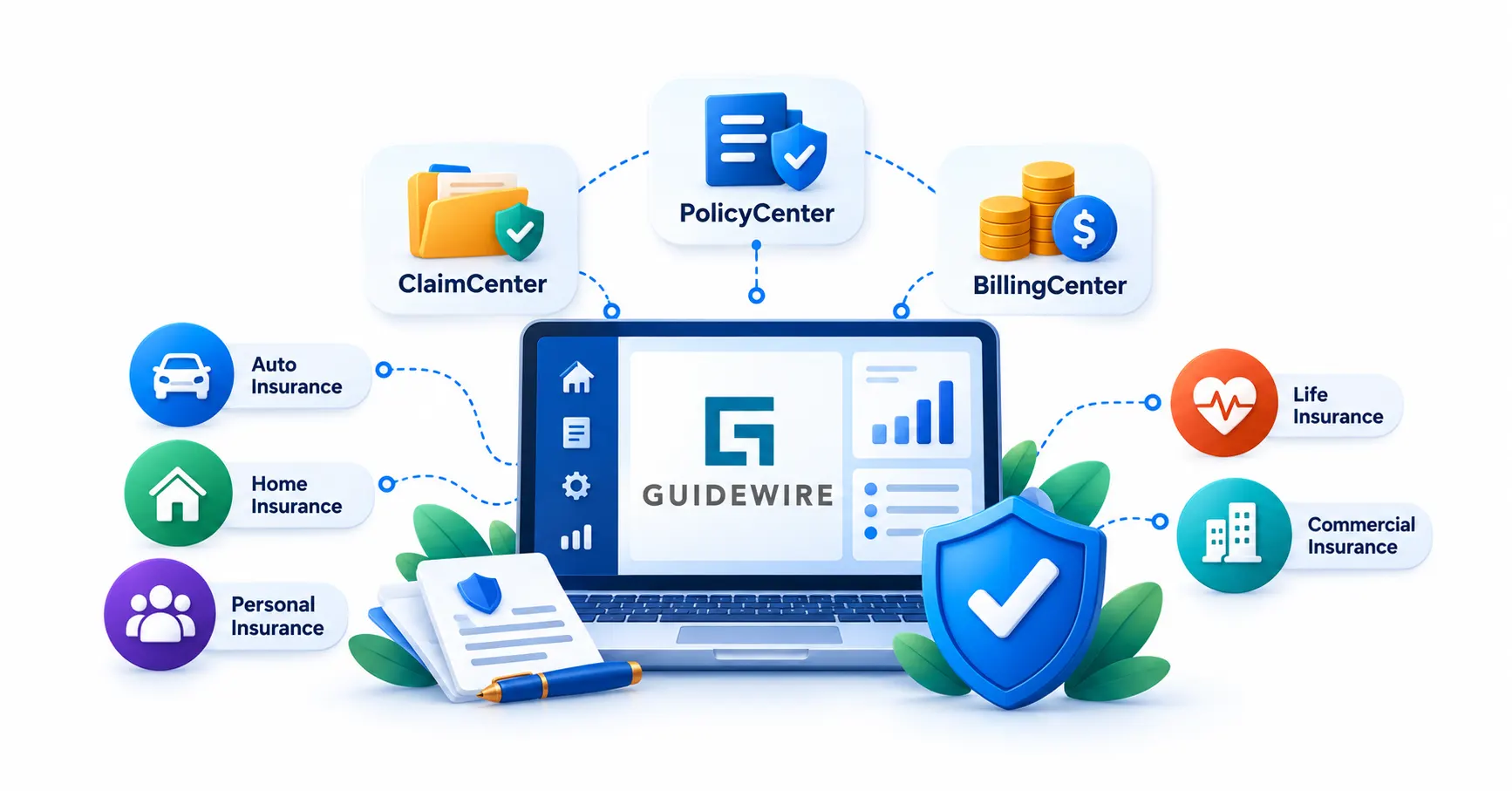
Guidewire software is a set of enterprise platforms that property and casualty (P&C) insurers use to run their core business. Think of it as the operating system of an insurance company. It handles issuing policies, processing claims and billing customers, and it keeps all three connected.
Guidewire the company was founded in 2001 and is based in California. It builds software almost exclusively for P&C insurers, the companies that cover homes, cars, businesses and liability risks. That narrow focus is a big reason insurers adopt it: the products are designed around how insurance operates, not adapted from generic business software.
Before platforms like this, many insurers ran on decades-old mainframe systems. Those systems worked, but they were slow to change. Launching a new product, such as a coverage option for electric vehicles, could take months of programming. Modern core systems let insurers configure products, rules and workflows far more quickly.
A common misconception is that Guidewire is a single application. It is better understood as a family of products. The best known is InsuranceSuite, which combines policy, claims and billing applications. Around it sit cloud, data, digital and integration tools. An insurer might use all of them or only the pieces it needs.
It also helps to know what Guidewire is not. It is not a customer relationship tool, an accounting package or a website builder. It is the system of record for policies, claims and billing transactions, and other systems connect to it rather than replace it.
That distinction becomes clearer when you look at the three applications at the center of the suite.
PolicyCenter, ClaimCenter and BillingCenter: The Core Trio
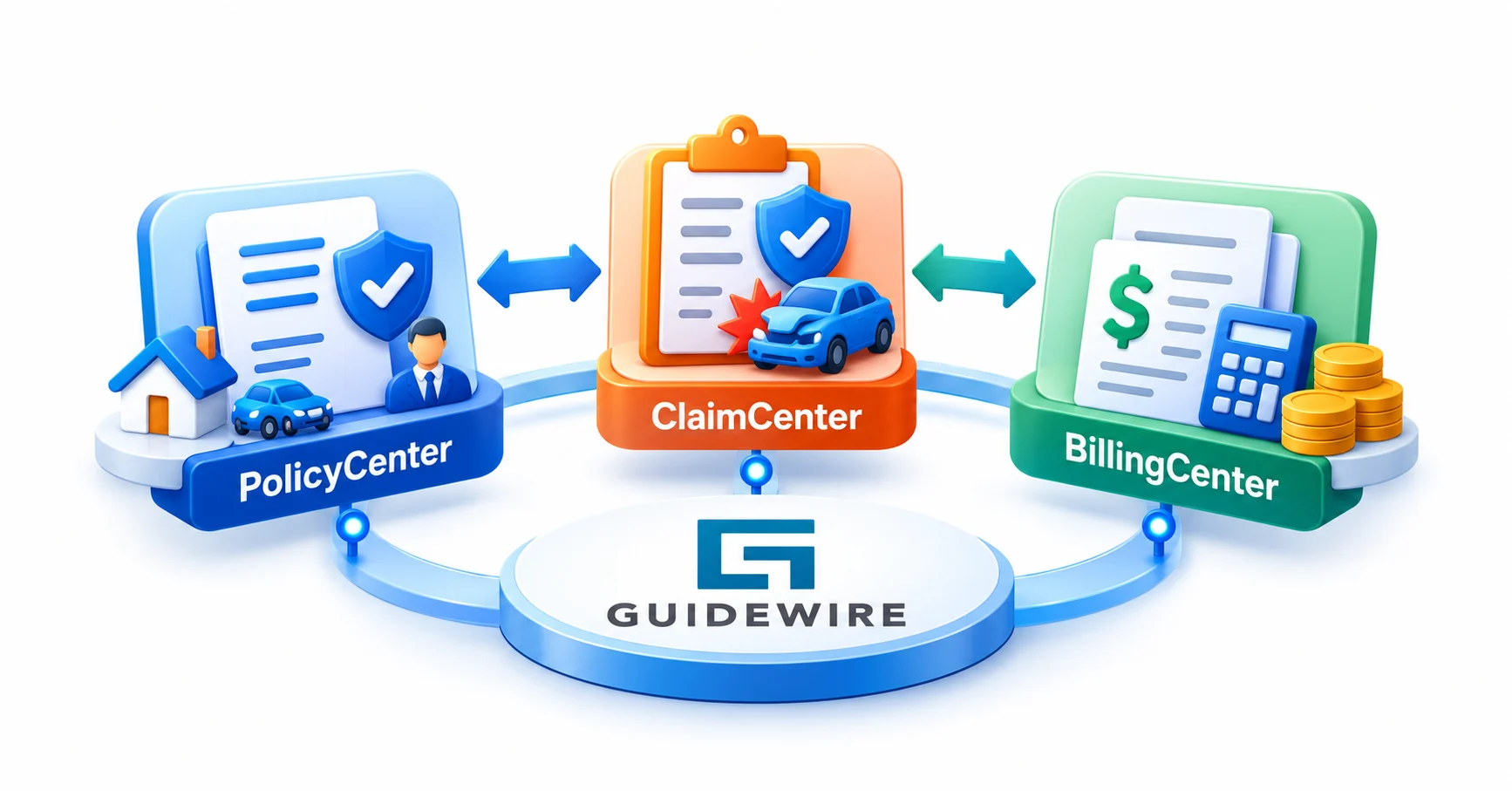
PolicyCenter manages the policy lifecycle. It supports quoting, underwriting, issuing a policy, mid-term changes, renewals and cancellations. Underwriters use it to apply risk rules, and it stores the coverages, limits and deductibles that define what the customer has bought.
ClaimCenter takes over when something goes wrong. It records the first notice of loss, verifies that the policy was in force, assigns an adjuster, tracks reserves and payments, and supports investigation of fraud or disputes. It also guides claims handlers through workflows so that similar claims are treated consistently.
BillingCenter deals with money flowing in and out. It generates invoices, applies payments, manages installment plans, handles late fees and cancellations for non-payment, and tracks commissions owed to agents and brokers.
The real value appears in how these applications talk to each other. When a customer misses payments, BillingCenter can signal PolicyCenter, which may start a cancellation. When a claim is filed, ClaimCenter reads policy details straight from PolicyCenter instead of asking someone to look them up manually.
Each application has its own data model and business rules, which is why learners usually study them one at a time. Seeing how they connect is just as important, because real projects rarely touch only one application. Resources such as the Guidewire certification preparation program reflect this by organizing study around the individual applications as well as their combined behavior.
To see how they work together, it helps to follow one policy from start to finish.
One Policy, Start to Finish: A Hypothetical Example
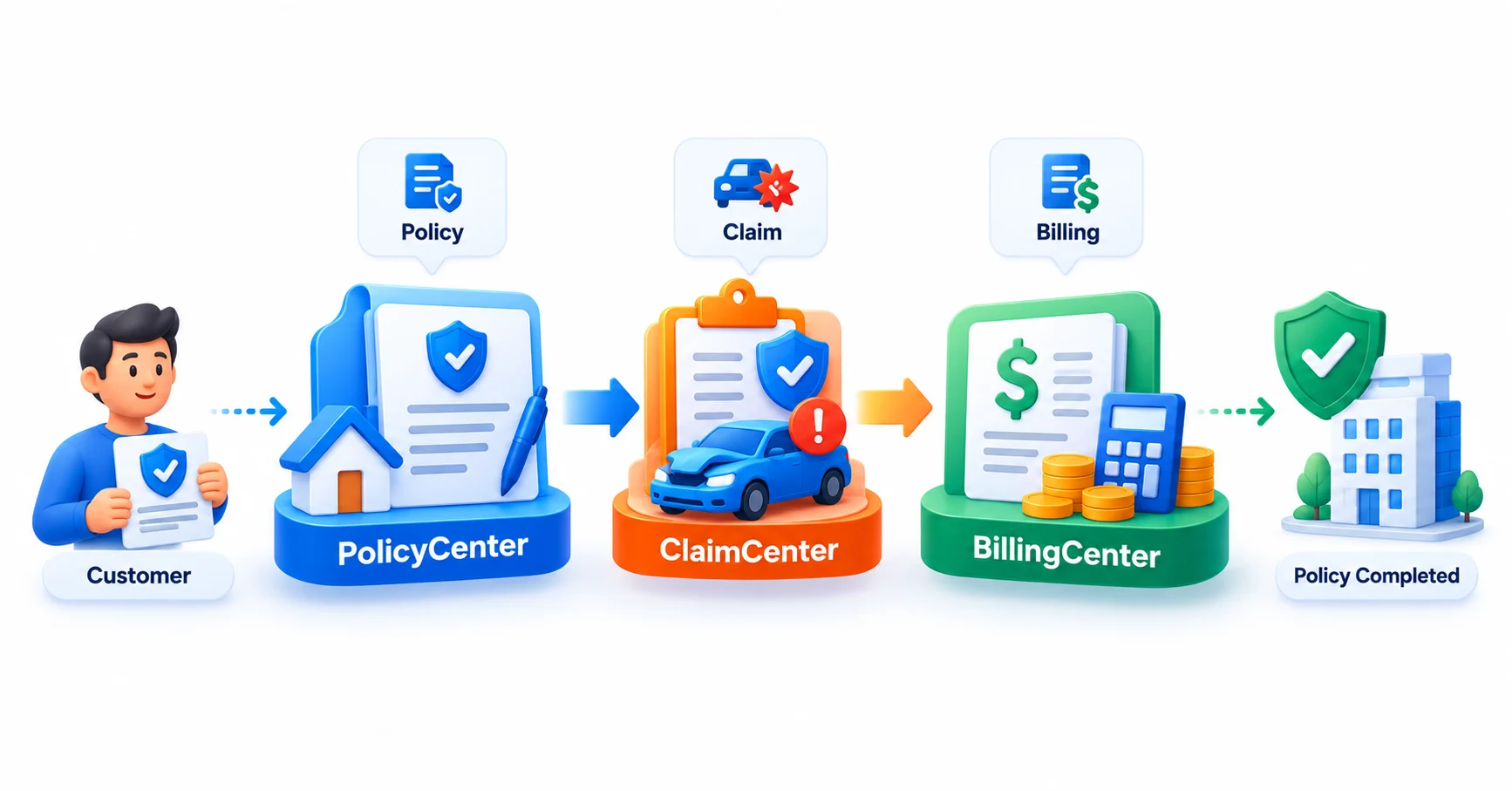
Consider a fictional customer, Priya, who buys a homeowner’s policy. This is an illustration, not a real case, but it reflects how insurers typically use the suite.
An agent enters her details in PolicyCenter. The system checks underwriting rules, such as roof age or distance from a fire station, and calculates a premium. If the risk looks unusual, the quote can be routed to an underwriter for approval. Once Priya accepts, the policy is issued, and its details move to BillingCenter, which sets up her monthly installments.
Months later, a pipe bursts. Priya reports the loss by phone, through an app or via her agent. ClaimCenter creates a claim and confirms that her coverage was active on the date of loss. It then assigns an adjuster, who inspects the damage and sets a reserve, the amount the insurer expects to pay.
As repairs are approved, payments are issued through ClaimCenter. Meanwhile, her billing continues uninterrupted. At renewal, PolicyCenter can take the claim into account when pricing the next term.
Notice how many people touch this single policy: agents, underwriters, adjusters, billing staff and finance teams. Each sees a different part of the same record. Guidewire’s job is to keep that record accurate and make each person’s work easier.
This is also where developers and analysts earn their keep. Someone has to decide which rules apply to a roof-age check, configure the claim screens the adjuster sees, and test that changes in one application don’t break another. Behind each step in Priya’s story is a project team doing exactly that.
Of course, the core applications are only part of what insurers now buy.
Beyond the Core: Cloud, Data, Digital and Integration
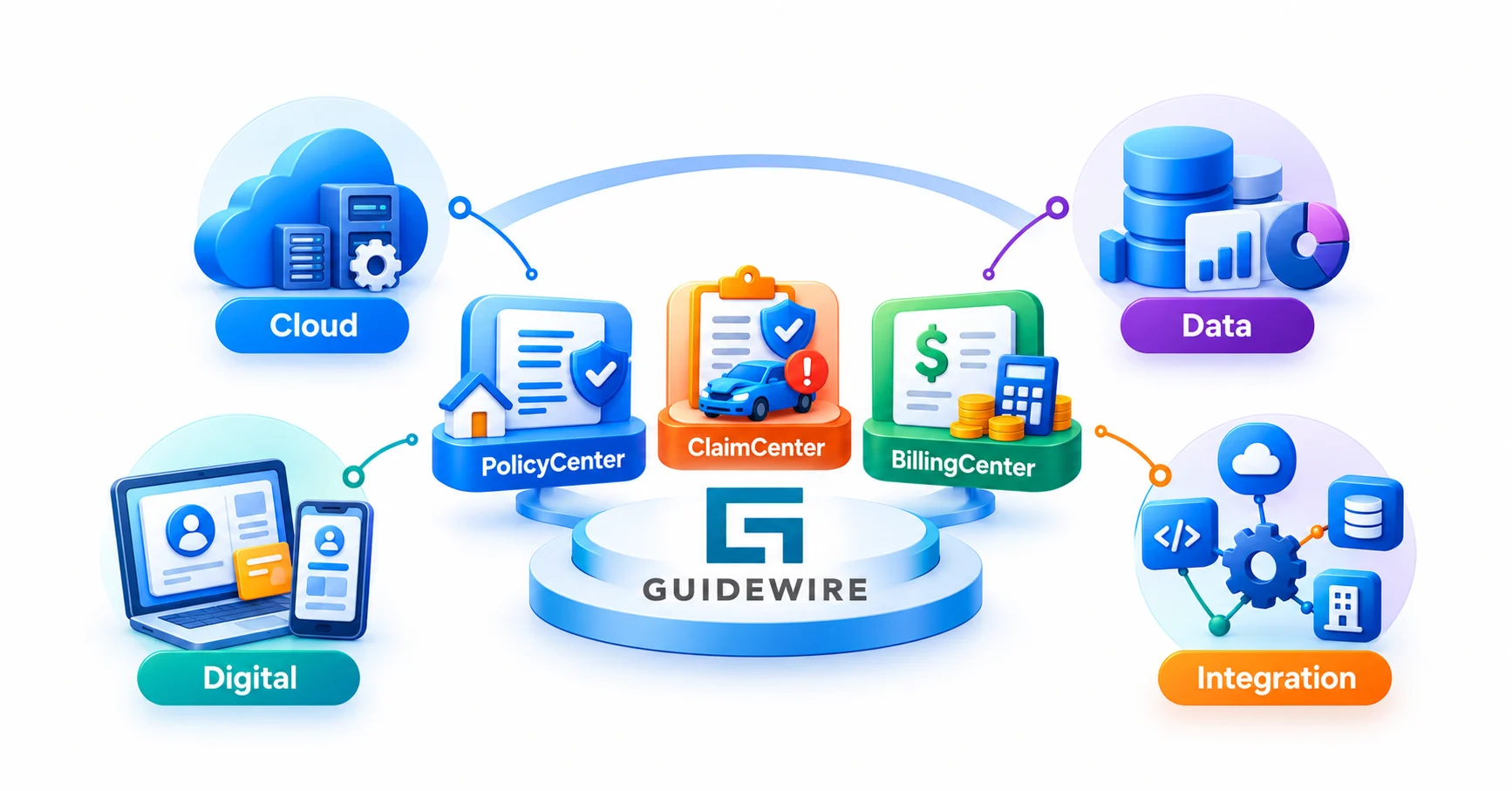
Insurers rarely run core systems in isolation. Over the past several years, Guidewire has moved much of its offering to the cloud, and the Guidewire Cloud Platform now sits at the center of its strategy. Running in the cloud shifts infrastructure management and upgrades away from the insurer’s own IT team, which has historically been one of the most painful parts of owning a core system.
Data is another growing area. Insurers collect enormous amounts of information about policies, losses and customer behavior. Guidewire’s data and analytics offerings help bring that information together so teams can report on it and use it for pricing and risk decisions.
Digital tools sit on the customer-facing side. Portals and apps let policyholders buy coverage, upload photos after an accident and track claim status, while the core applications handle the processing underneath. For smaller and mid-sized insurers, InsuranceNow offers a more packaged route to the same goals.
Then there is integration. A claim might need data from a credit bureau, a repair network, a payment gateway or a government database. Guidewire applications expose services and messaging mechanisms so they can exchange information with these outside systems, and Guidewire Marketplace lists partner solutions that connect to the platform.
Integration is where many projects succeed or struggle. An insurer may run dozens of surrounding systems, and each connection needs careful design, testing and monitoring. This is why integration specialists are so valued on Guidewire teams.
Understanding these layers shows why Guidewire careers are not limited to one narrow skill.
The People and Skills Behind Guidewire Projects
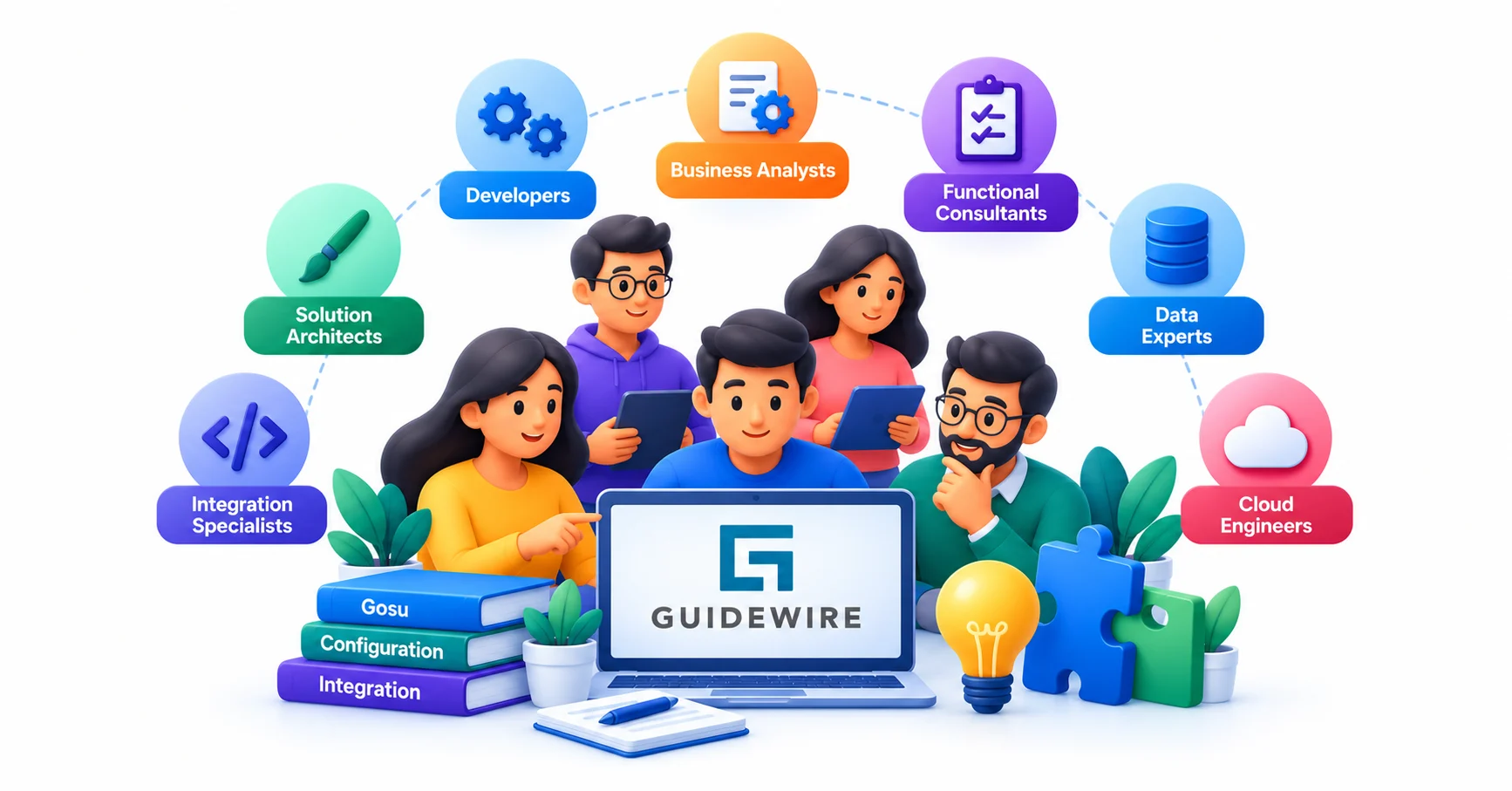
Guidewire projects need several kinds of professionals, and not all of them write code.
Developers configure and extend the applications, mainly using Gosu, Guidewire’s own programming language that runs on the Java Virtual Machine. They also work with the data model, rules, workflows and user interface files.
Business analysts translate insurance processes into requirements. Knowing how underwriting or claims handling works matters as much as knowing the software.
QA testers verify that configurations behave correctly across products, states and edge cases.
Integration engineers connect the applications to external systems.
For developers, a solid grounding in Java, SQL and object-oriented thinking makes Gosu easier to learn. For analysts, insurance domain knowledge is the real differentiator. One practical discussion of how these capabilities shape a technology career is this piece on Guidewire development skills that can strengthen an IT career.
Certification is another factor employers notice. Guidewire offers its own certifications through its education program, and structured preparation, including the Guidewire certification preparation course, can help candidates build both exam readiness and practical confidence. A certificate alone does not guarantee a job, but it signals that someone understands the platform’s concepts.
Newcomers often make the same mistake: they memorize screens and terms instead of understanding the insurance process behind them. Interviewers tend to probe the reasoning. Why does a policy change create a new version of the policy? What happens to a claim if coverage has lapsed? Candidates who can answer in business terms stand out.
Still, a realistic picture of Guidewire includes its difficulties too.
Challenges, Limits and Common Misunderstandings
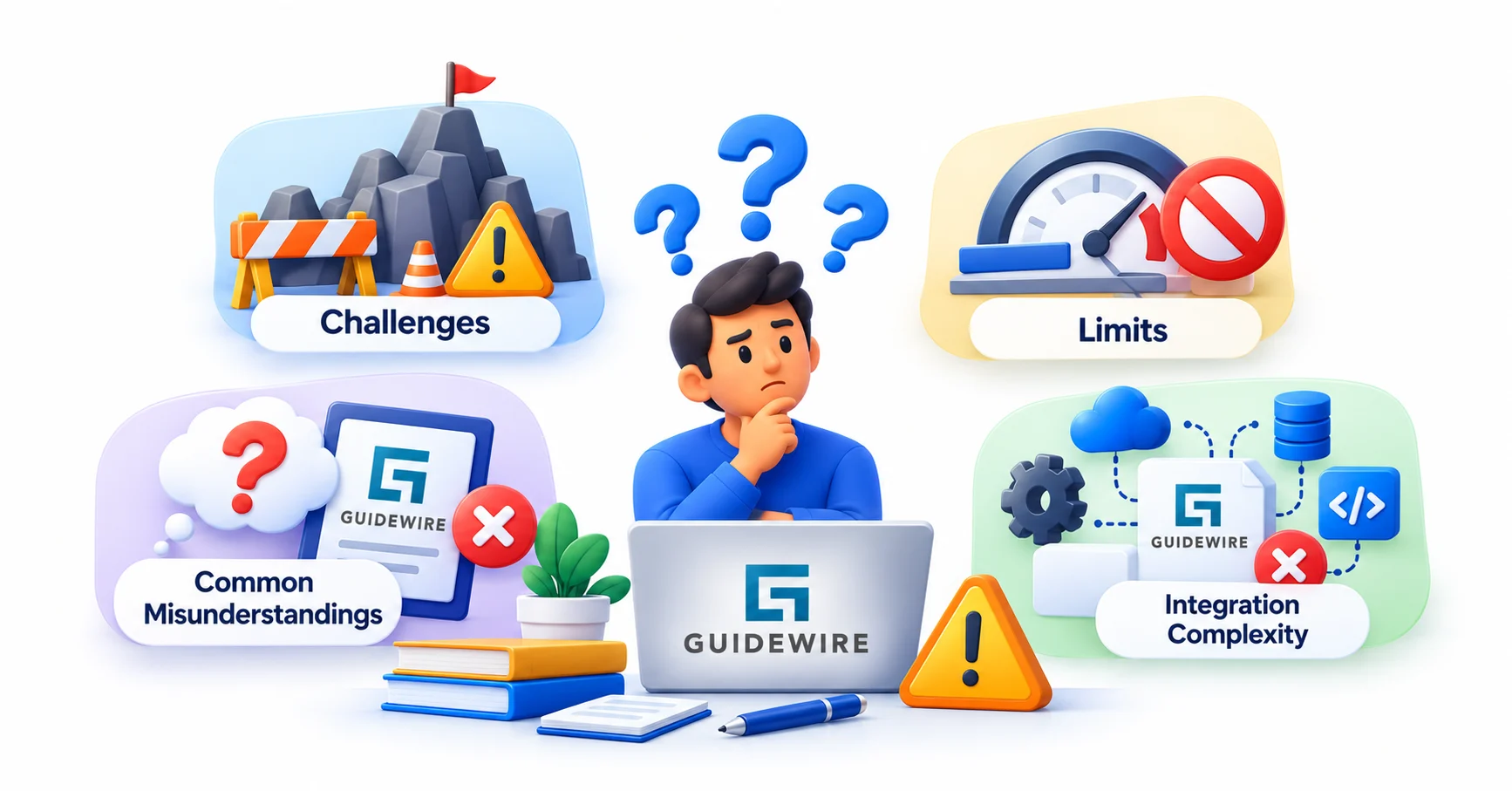
Guidewire is powerful, but it is not simple or cheap to adopt. Implementations are large projects involving business teams, system integrators and sometimes years of planning. A poorly scoped implementation can exceed its budget or timeline, regardless of how good the software is.
Customization is a particular tension. The platform is highly configurable, and it is tempting to bend it to match every legacy process. Over-customization makes upgrades harder and raises maintenance costs. Experienced teams try to use standard features wherever possible and customize only where the business truly needs it.
Cloud migration brings its own considerations. Moving to the cloud can reduce infrastructure work, but insurers still need to plan data migration, testing and change management for staff who will work differently.
Several misunderstandings also come up repeatedly:
Guidewire is not only for large insurers. Different products suit different sizes of organization.
It is not only for coders. Analysts and testers are central to every project.
It does not replace insurance expertise. The software enforces rules, but people still define them.
For learners, the practical lesson is to treat Guidewire as a combination of technology and domain knowledge. Someone who understands both is far more useful on a project than someone who knows only one.
Conclusion
Guidewire software gives property and casualty insurers a connected way to sell policies, settle claims and collect premiums, with cloud, data and integration tools built around that core. Understanding it means understanding how modern insurance actually runs. For anyone considering this field, JastTech and similar training providers can help turn that understanding into practical skills, while the platform’s reach keeps growing.