


What Projects Should Freshers Build for a Post-Silicon Validation Career?
Navigate through this article using the table of contents below
Table of Contents
No headings found in this article.
Getting your first semiconductor job requires more than understanding digital electronics or writing basic C programs. Companies want engineers who can interact with hardware, investigate failures and understand how chips behave in real operating conditions. But which projects actually demonstrate these abilities?
A well-planned project portfolio can help freshers demonstrate practical engineering knowledge even without access to expensive semiconductor laboratory equipment. The right projects can showcase debugging, programming, hardware integration and analytical thinking.
Board Bring-Up and Power-On Sequence Validation
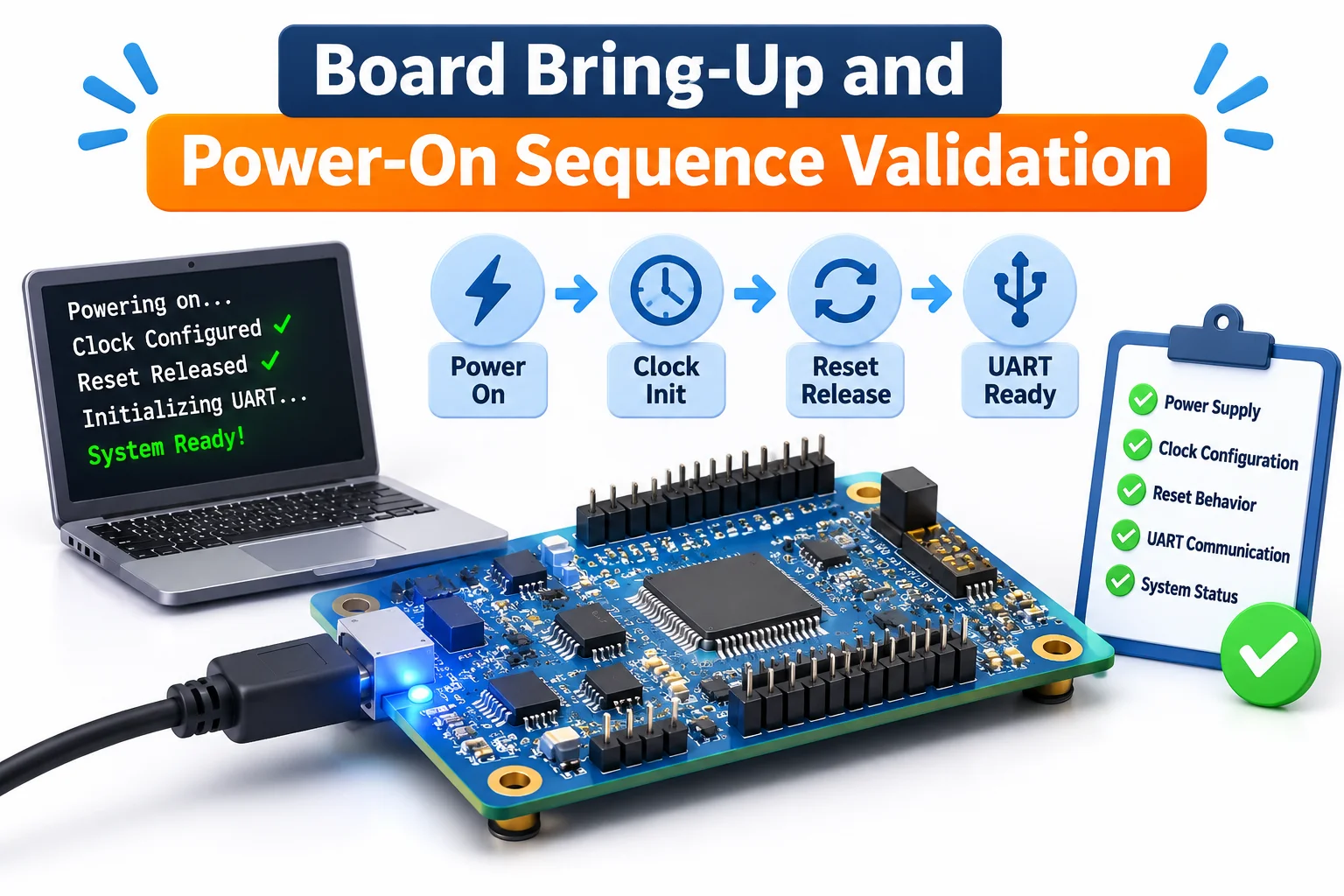
Board bring-up is one of the most valuable starting projects for aspiring validation engineers. Before testing chip functionality, engineers must establish that the hardware platform powers up correctly and that essential components operate as expected.
Freshers can build this project using an STM32, ESP32 or another microcontroller development board. The objective is to understand the sequence of power, clock, reset and boot initialization.
Project implementation:
Understand the board's power supply requirements.
Configure the microcontroller clock.
Verify reset behavior and startup conditions.
Initialize UART communication.
Develop a basic boot-status monitoring program.
Record startup messages and initialization failures.
For example, introduce an incorrect clock configuration or modify a reset condition and observe how system initialization changes. Document the expected behavior, actual observation and debugging process.
Skills demonstrated: Hardware initialization, embedded C, clock fundamentals, reset sequencing, UART communication and systematic debugging.
This project introduces the foundation of silicon bring-up activities performed during Post Silicon Validation.
Embedded C-Based Register Read and Write Validation
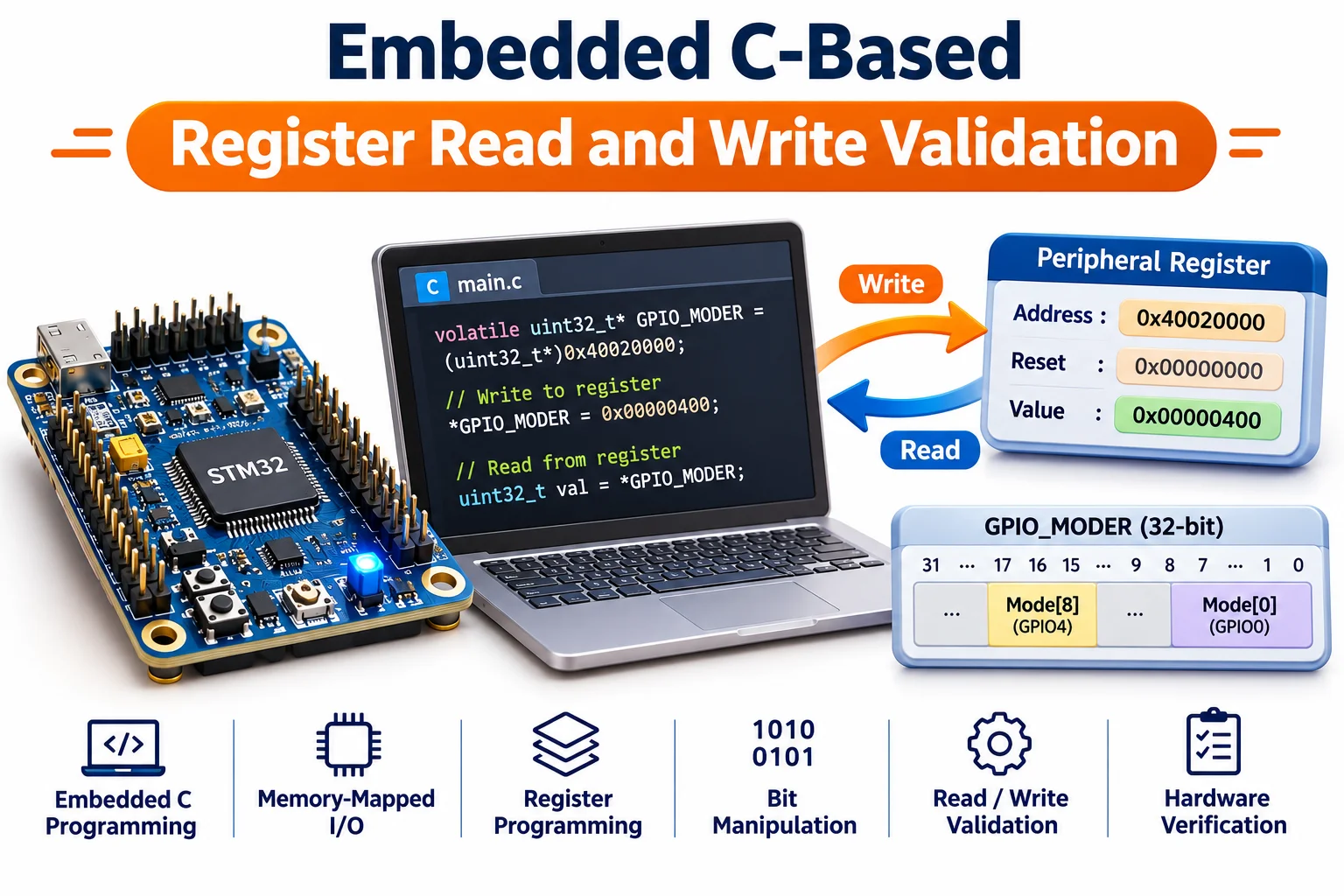
Register validation is another essential project because hardware registers control the functionality of processors, peripherals and other SoC components.
Freshers should develop a program that reads and writes memory-mapped registers on a microcontroller or development platform. The objective is to understand how software communicates with hardware at a low level.
Project implementation:
Study the microcontroller reference manual.
Identify GPIO, timer and UART registers.
Understand register addresses and bit fields.
Write programs using bitwise operations.
Verify register reset values.
Test individual bits and register configurations.
Check whether hardware responds correctly to configuration changes.
For example, configure GPIO direction registers and output registers to control an LED. Read back the available register values and compare them with expected configurations.
Students should also explore register masks, bit shifting, read-modify-write operations and the importance of using volatile for memory-mapped hardware access.
Skills demonstrated: Embedded C, memory-mapped I/O, register programming, bit manipulation and hardware-software interaction.
This project is particularly useful for demonstrating low-level programming knowledge during technical interviews.
UART, SPI and I2C Protocol Validation
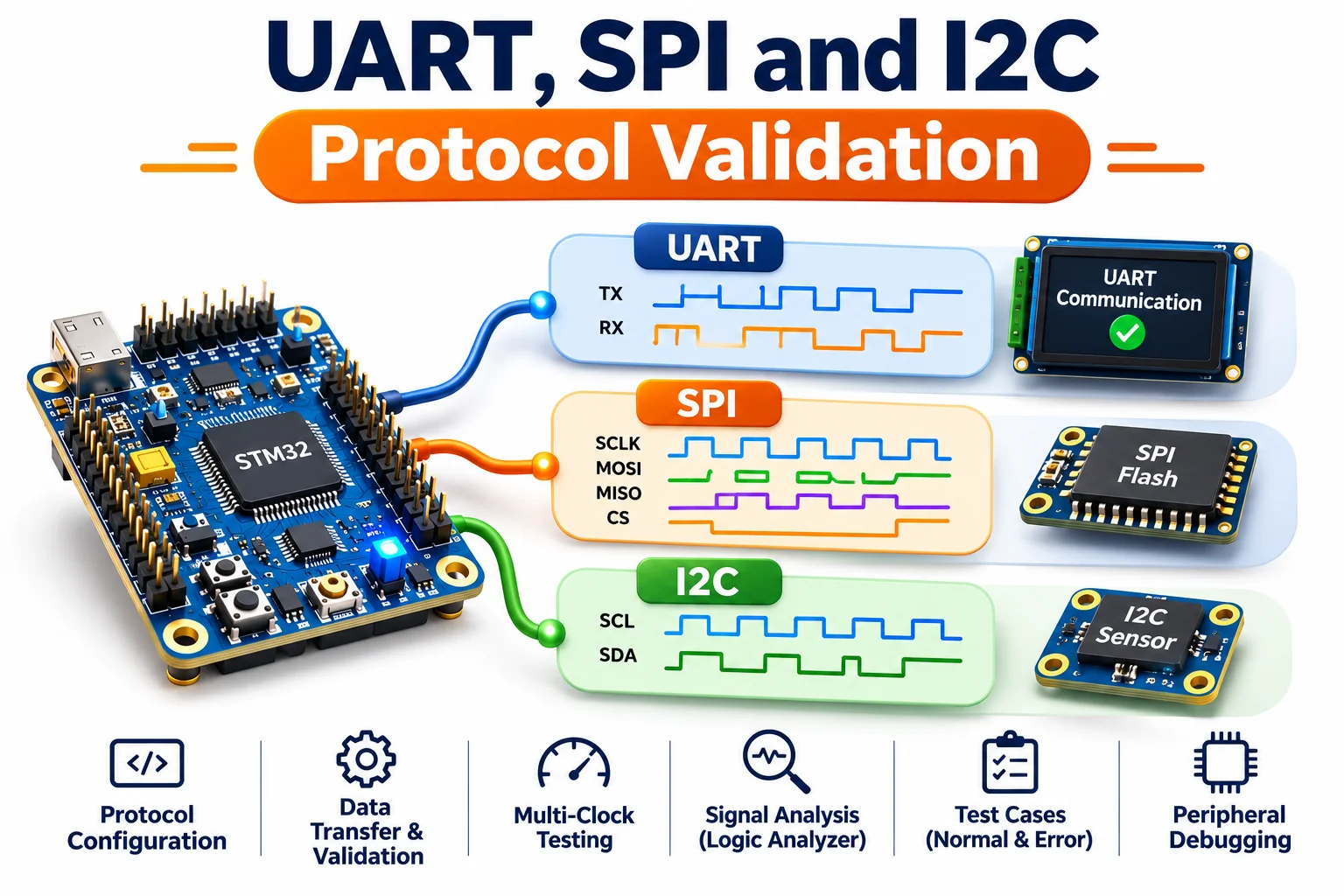
Communication interfaces connect processors with external devices such as sensors, memory components and controllers. Understanding these interfaces is important for engineers working on SoC and peripheral validation.
A practical project can involve validating UART, SPI and I2C communication using two development boards or a microcontroller connected to external peripherals.
Project implementation:
Establish UART communication between two devices.
Configure SPI master and slave communication.
Connect an I2C sensor or compatible peripheral.
Transmit and receive different data patterns.
Test communication at different supported clock frequencies.
Introduce incorrect configurations to observe communication failures.
Capture and analyze signals using a logic analyzer.
For example, an I2C validation project can involve reading sensor identification registers, checking acknowledgment responses and investigating communication failures caused by incorrect addressing.
Freshers should prepare test cases covering normal communication, invalid configurations, missing acknowledgments and data mismatches.
Skills demonstrated: Communication protocols, embedded programming, signal analysis, test-case development and peripheral debugging.
These projects help demonstrate the ability to validate hardware interfaces rather than simply understand their theoretical operation.
Hardware Debugging Using Oscilloscope and Logic Analyzer
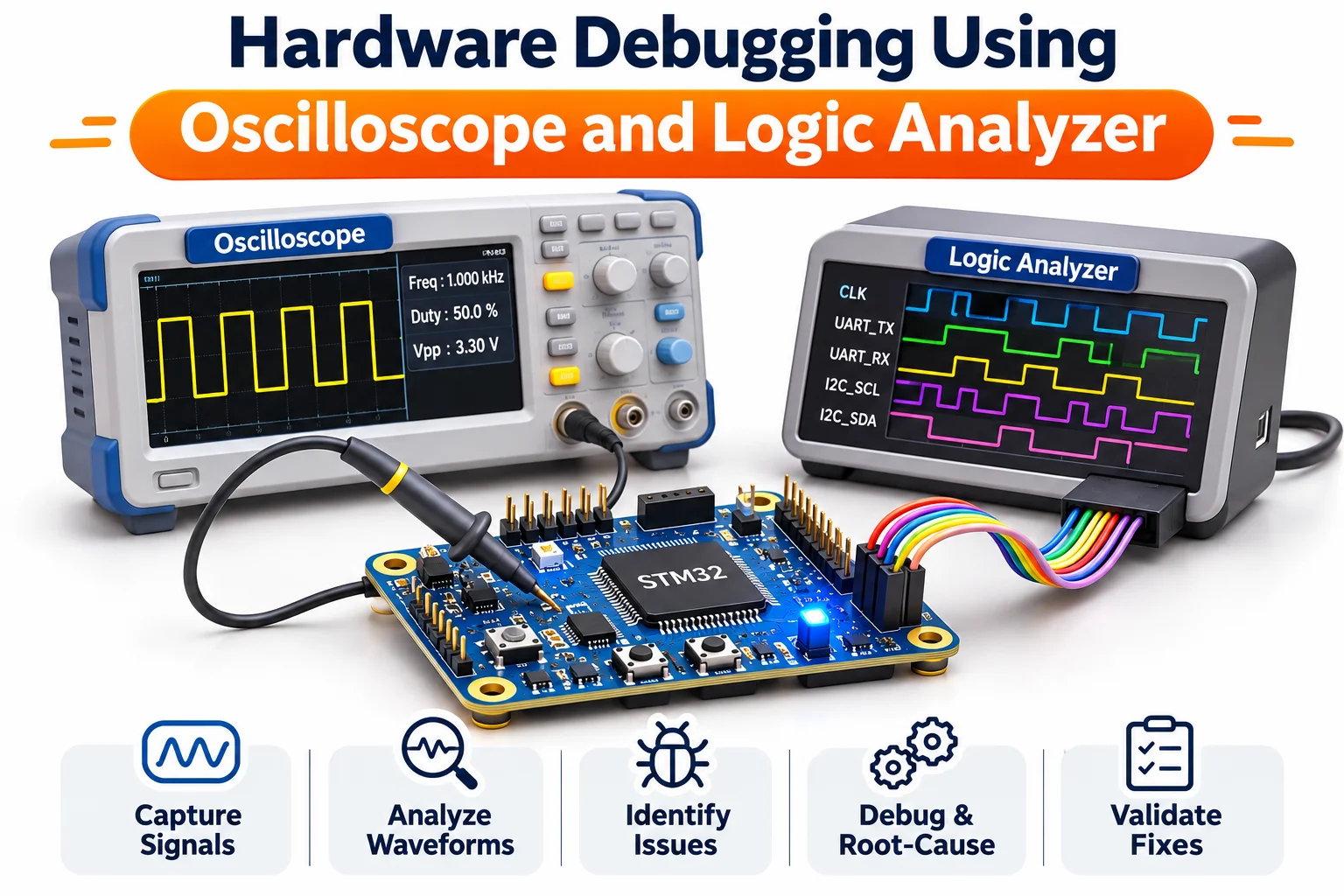
Understanding how to identify hardware failures is a major advantage for entry-level validation candidates. A project focused on hardware debugging demonstrates practical knowledge that cannot be developed through programming alone.
Students can use an accessible development board to investigate GPIO signals, clock outputs, UART communication and timing-related problems.
Project implementation:
Generate periodic signals using GPIO.
Measure signal frequency and duty cycle.
Observe UART transmission waveforms.
Compare expected and actual signal behavior.
Introduce timing or configuration errors.
Capture waveforms using appropriate instruments.
Prepare a debugging report explaining the findings.
An oscilloscope helps examine voltage levels, signal timing, rise time and waveform characteristics. A logic analyzer is useful for decoding digital communication protocols and observing multiple digital signals.
For example, configure an incorrect UART baud rate and investigate the resulting communication failure by examining the transmitted waveform.
Students without laboratory access can begin with simulation tools and later repeat the exercises using physical instruments.
Skills demonstrated: Waveform analysis, electrical measurements, timing investigation, signal debugging and root-cause analysis.
These capabilities are particularly relevant when investigating hardware-software interaction problems.
Python-Based Validation Automation and Test Reporting
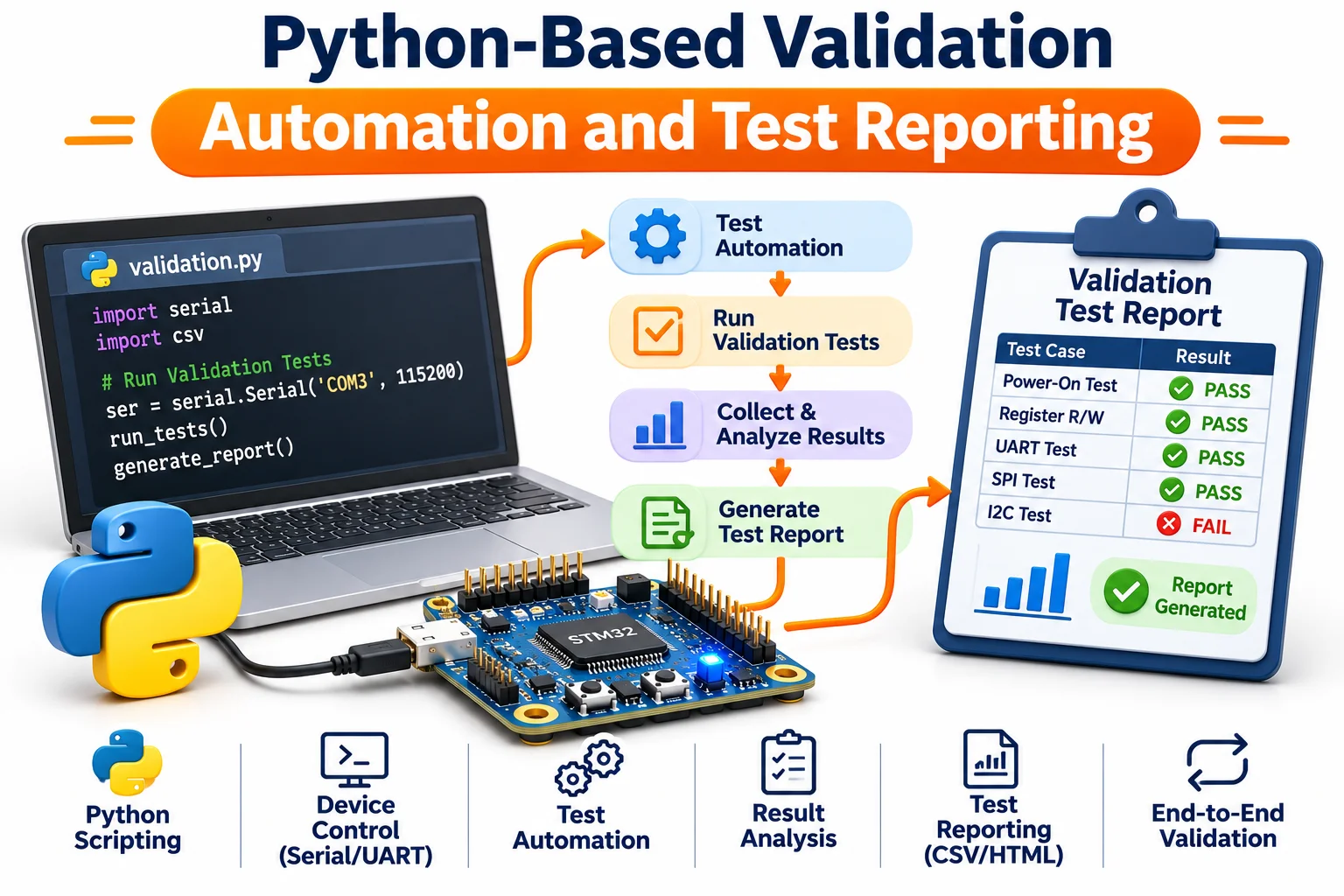
Modern semiconductor validation involves executing large numbers of test cases and analyzing results efficiently. Python automation is therefore a valuable addition to a fresher's project portfolio.
Students can develop a basic validation automation framework that communicates with a development board through a serial interface, executes predefined tests and generates reports.
Project implementation:
Develop Python scripts for serial communication.
Create reusable test functions.
Send commands to the development board.
Capture device responses and execution logs.
Identify failed test cases automatically.
Generate pass/fail summaries.
Export results into CSV or HTML reports.
For example, create an automated UART validation script that sends multiple data patterns, receives responses and checks whether transmitted and received values match.
Introduce incorrect data or communication settings to verify whether the automation framework detects failures correctly.
A good project should include test descriptions, execution logs, error messages and summary reports.
Skills demonstrated: Python, test automation, serial communication, log analysis, debugging and validation reporting.
This project demonstrates that candidates understand both hardware testing and the software infrastructure required to execute repeatable validation activities.
Complete SoC Validation and Debugging Portfolio Project
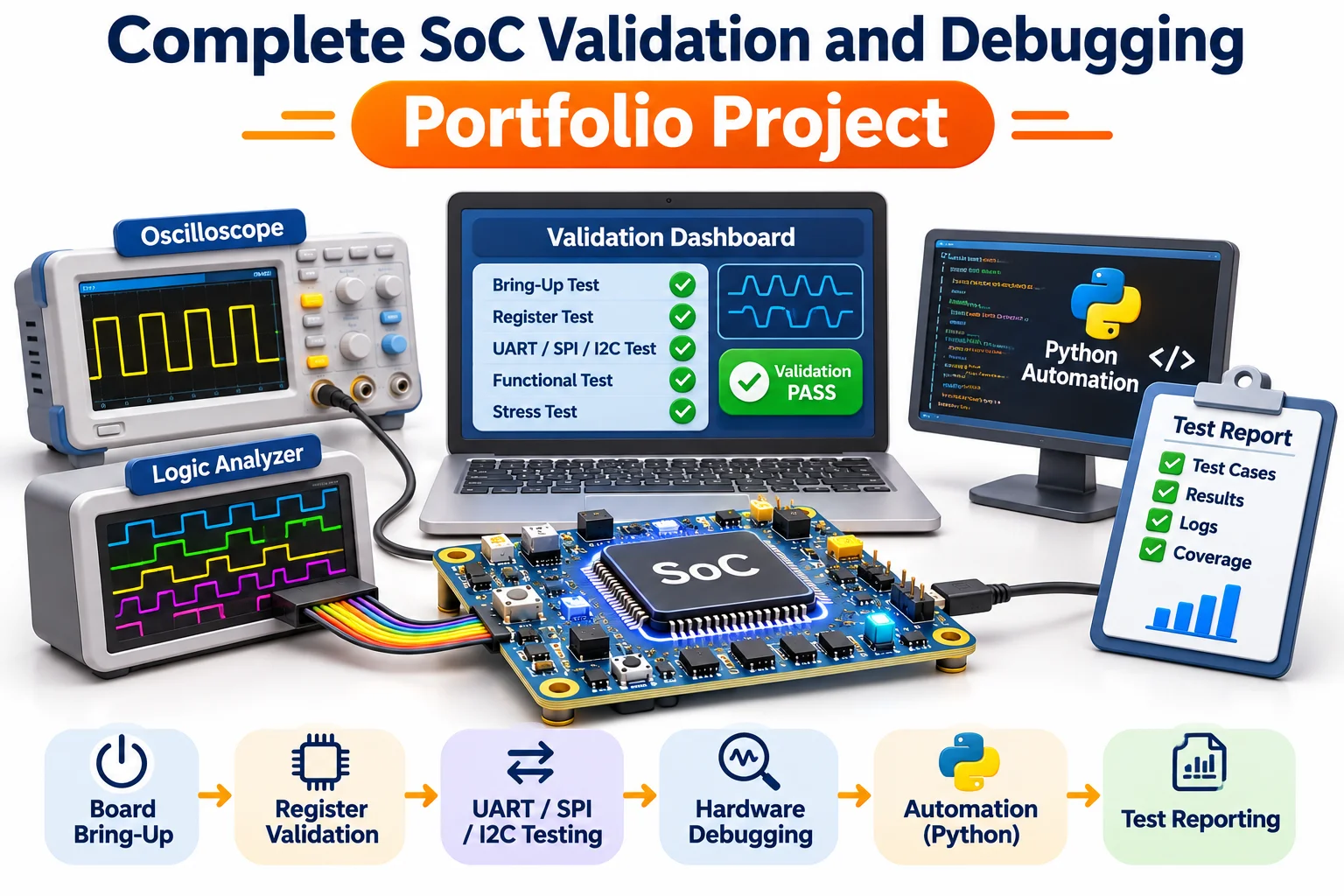
After completing individual projects, freshers should combine their knowledge into a comprehensive SoC validation simulation or development-board-based project.
The objective is to demonstrate an end-to-end engineering workflow covering initialization, functional testing, peripheral communication, failure investigation and reporting.
Students can use a microcontroller development platform or an FPGA-based system to build a simplified validation environment.
Project implementation:
Prepare a basic system architecture diagram.
Define functional requirements and test objectives.
Develop Embedded C test programs.
Validate GPIO, UART, SPI and I2C functionality.
Execute register-level checks.
Automate repetitive tests using Python.
Introduce controlled failures.
Investigate failures using available debugging tools.
Prepare a final validation report.
The report should include:
Project objectives and architecture.
Hardware and software configurations.
Test plans and test cases.
Expected versus actual results.
Failure observations and root-cause investigation.
Corrective actions and final test results.
An important distinction is that a microcontroller or FPGA project is not equivalent to validating a newly fabricated ASIC. However, it can demonstrate transferable engineering skills required for entry-level validation responsibilities.
Skills demonstrated: System-level understanding, embedded programming, validation planning, automation, debugging and technical documentation.
This capstone project brings together the knowledge developed through the previous exercises and provides a strong foundation for technical interviews.
Conclusion
Building the right projects can significantly improve a fresher's preparation for a semiconductor engineering career. Instead of completing several unrelated mini-projects, candidates should focus on demonstrating a complete engineering workflow involving hardware initialization, register programming, interface testing, debugging and automation. Each project should include working implementation details, test cases, observations and technical documentation.
JastTech encourages practical, industry-oriented learning that connects engineering fundamentals with real-world semiconductor requirements. Through structured learning, hands-on assignments and project-based practice, aspiring engineers can develop the technical confidence required to pursue opportunities in Post Silicon Validation. A strong portfolio will not guarantee a job, but it can provide meaningful evidence of practical knowledge and problem-solving ability during recruitment.