

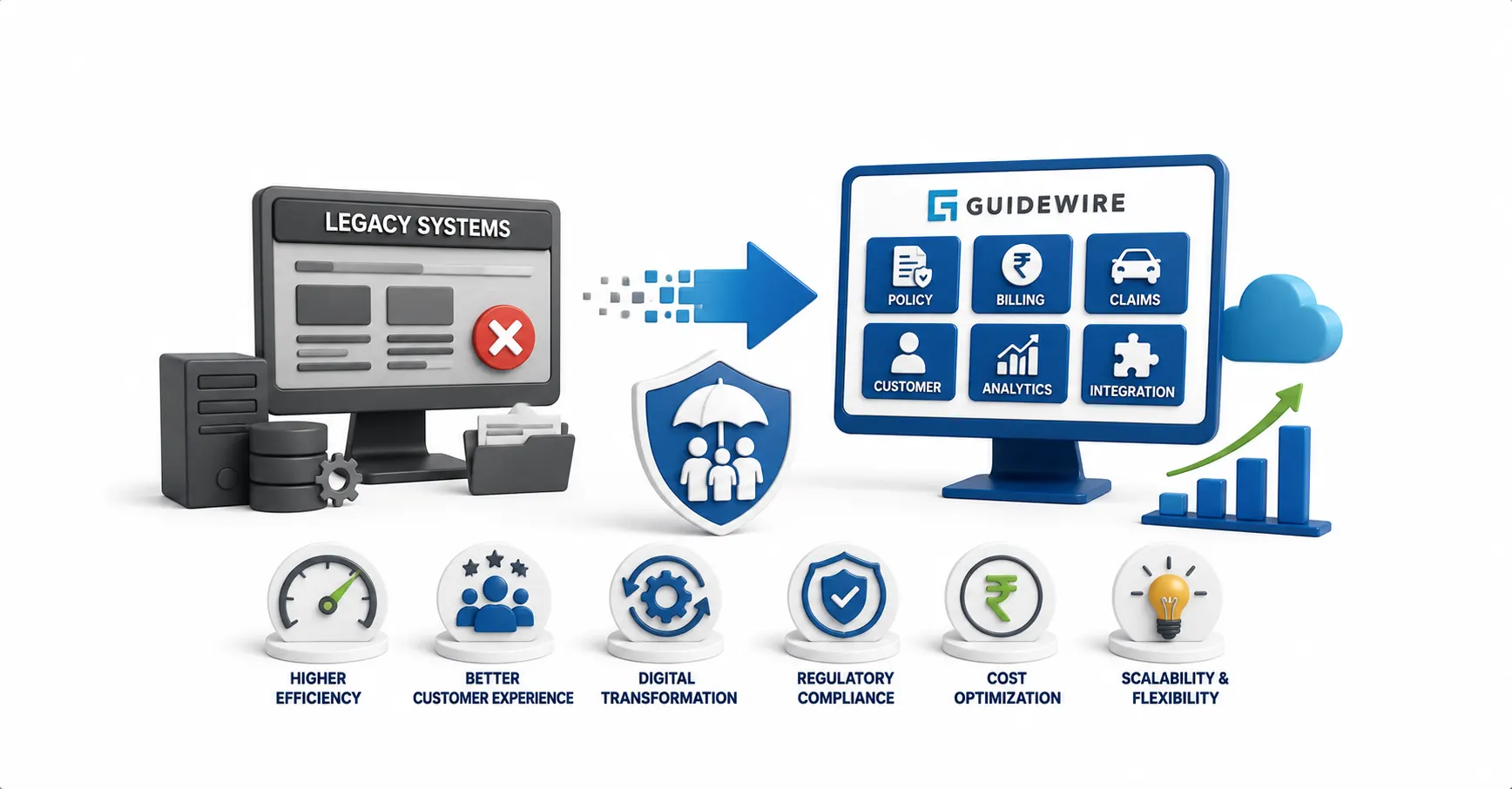
Why Indian Insurance Companies Are Replacing Legacy Systems with Guidewire
Navigate through this article using the table of contents below
Table of Contents
No headings found in this article.
Picture a claim that once took three weeks to settle now closing in three days. That's not a sales pitch — it's what happens the moment a creaky, decades-old policy admin system gets swapped out for something built for how insurance actually works today.
Across India, insurers are quietly making this exact move, and the reasons go far deeper than "new is better." Guidewire has become the name most often mentioned in these conversations, and understanding why tells you a lot about where the entire industry is headed.
Why Legacy Systems Are Becoming a Liability, Not an Asset

Most Indian insurers built their core systems fifteen or twenty years ago, often stitched together from separate modules for policy, billing, and claims. At the time, that approach made sense. Today, it's a slow-moving problem.
These systems weren't designed for real-time data exchange, mobile-first customers, or the sheer volume of policies Indian insurers now handle. Every new product launch means custom coding. Every regulatory change from IRDAI means weeks of manual rework instead of a configuration update.
There's also a hidden cost that rarely shows up in boardroom presentations: the people who understand these old COBOL-based or heavily customized systems are retiring, and few younger developers want to learn a language built for a different era. That knowledge gap alone has pushed several insurers to act sooner than planned.
Maintenance budgets tell the same story. A large share of IT spending at legacy-heavy insurers goes toward simply keeping old systems alive rather than building anything new. When most of your technology budget goes to standing still, competitors who've already modernized start pulling ahead — not because they're smarter, but because they're faster.
What Makes Guidewire Different From Everything Before It
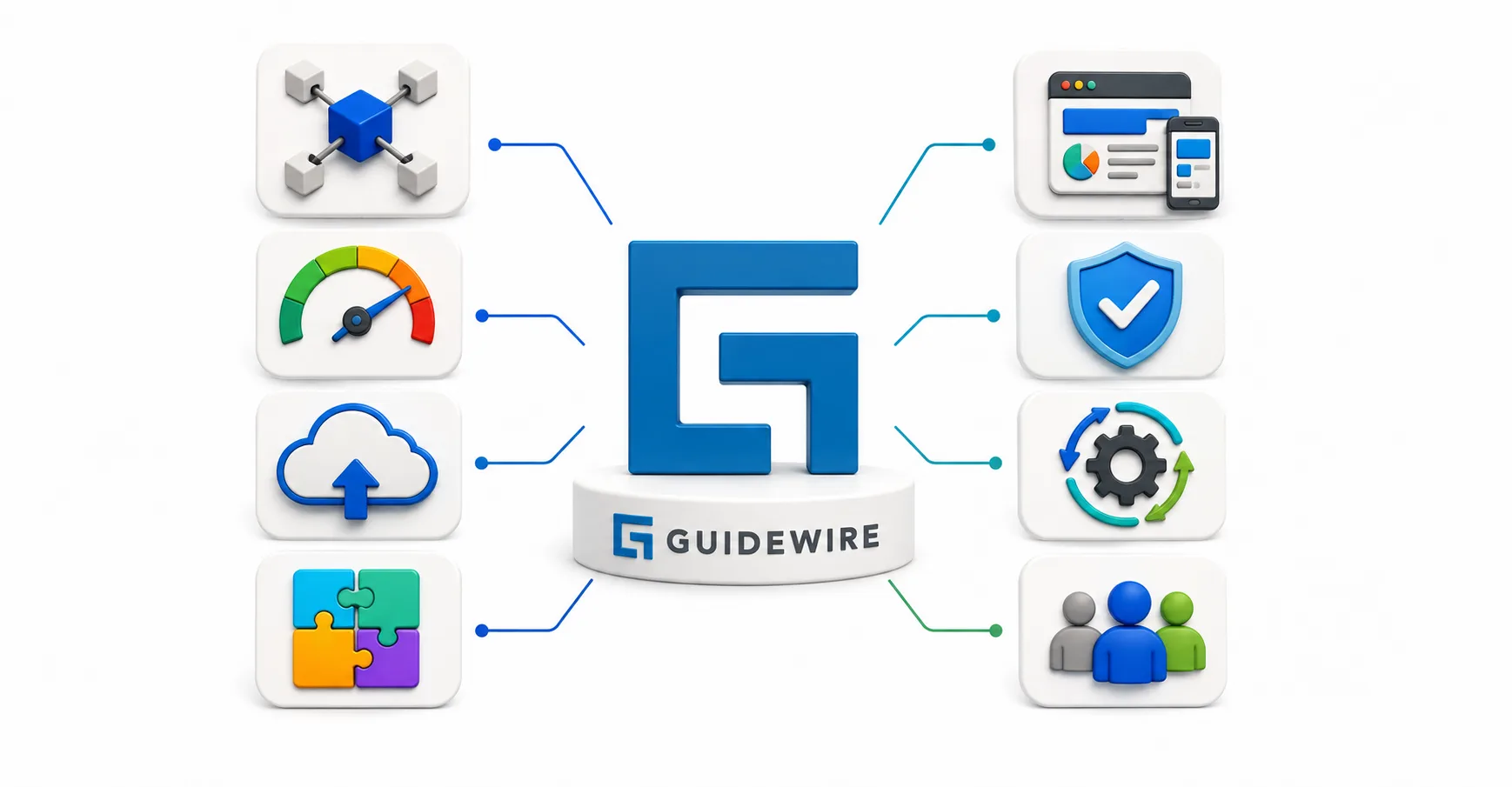
Guidewire isn't just another software vendor — it's a purpose-built insurance platform, which changes the conversation entirely. Instead of forcing insurance workflows to fit generic enterprise software, Guidewire was designed around how policies, claims, and billing actually function in this industry.
The platform is built on three core products: PolicyCenter, ClaimCenter, and BillingCenter. Insurers can run one, two, or all three together, which matters a lot for companies not ready for a complete overhaul in one go.
What genuinely sets it apart is configurability. Business teams can adjust rating rules, underwriting workflows, and product structures without waiting months for a developer to rewrite core code. That single shift — from custom coding to configuration — is often the biggest efficiency gain insurers report after migration.
Guidewire also runs natively on the cloud through Guidewire Cloud Platform, which means insurers get automatic updates, built-in analytics, and integration options that legacy systems simply can't offer without expensive add-ons. For an industry under constant pressure from regulators and increasingly digital-savvy customers, that combination of flexibility and speed is hard to ignore.
Claims Processing: Where the Change Feels Immediate

If there's one area where policyholders actually notice the difference, it's claims. Nothing damages trust in an insurer faster than a slow, confusing claims process — and nothing rebuilds it faster than a smooth one.
With ClaimCenter, adjusters get a single view of the entire claim: policy details, prior history, documents, and communication, all in one place instead of scattered across five systems. That alone cuts down the back-and-forth that used to eat up days.
Automated triage is another quiet game-changer. Straightforward claims — a minor car dent, a small property repair — get routed for fast-track settlement, while complex or high-value claims are flagged for closer review. This means adjusters spend their time where it actually matters, rather than treating every claim identically.
Fraud detection also improves, since the system can flag unusual patterns automatically rather than relying purely on an adjuster's instinct. For customers, faster settlement builds loyalty. For insurers, faster settlement means lower operational cost per claim. It's a rare case where the customer experience improvement and the internal efficiency gain point in exactly the same direction, which is probably why claims modernization is often the first phase insurers tackle.
How Indian Insurers Are Actually Making the Switch
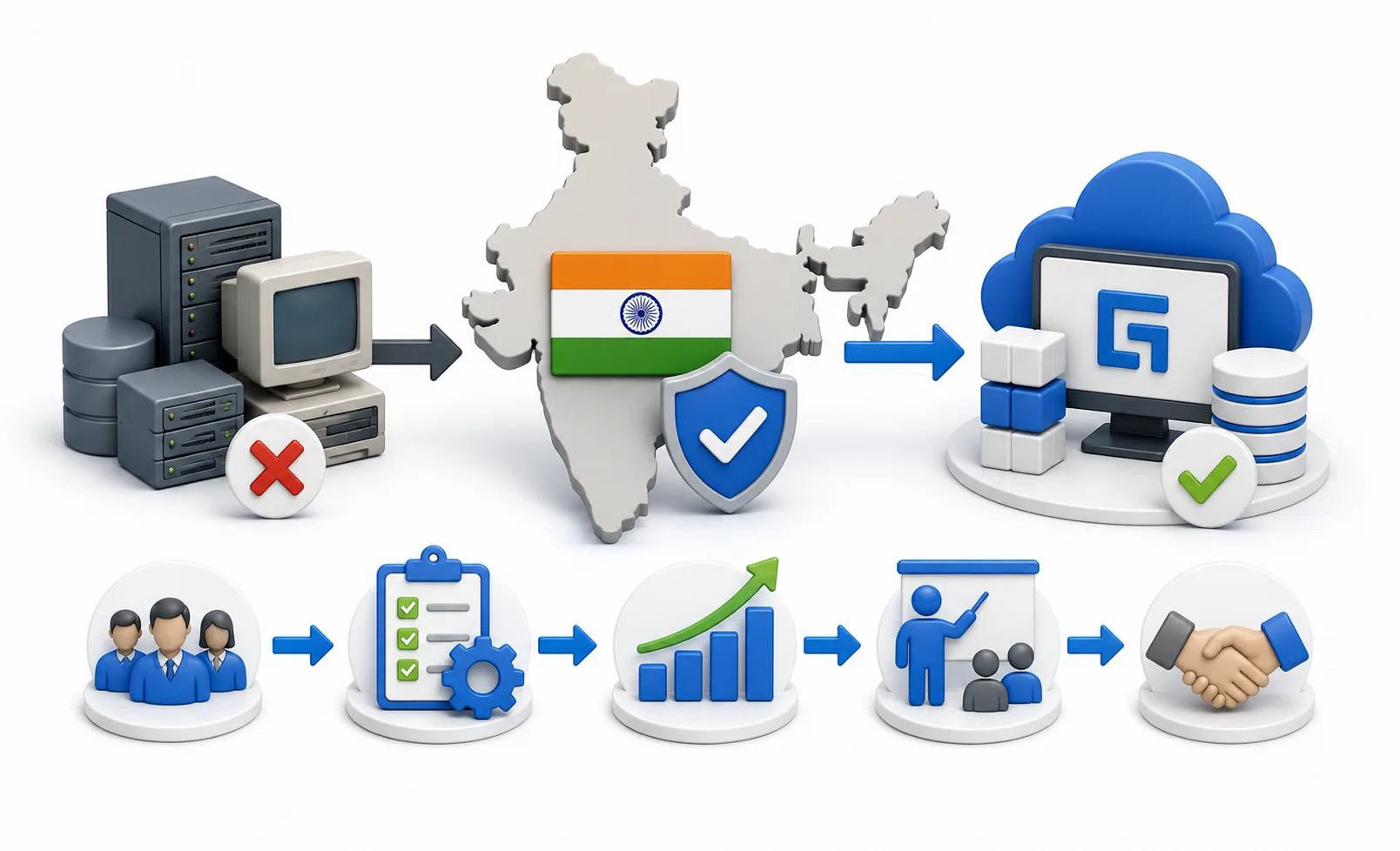
Nobody sensible rips out a core system overnight — the risk of disruption to millions of active policies is simply too high. Most Indian insurers follow a phased migration instead, and the pattern is fairly consistent across the market.
Typically, claims processing goes first, since it delivers visible results quickly and carries somewhat lower risk than touching policy or billing data. Once that's stable, insurers move to policy administration, and billing usually comes last, since it's tightly linked to finance and regulatory reporting.
Data migration is the part that keeps IT teams up at night. Years of policy history, endorsements, and claims records have to move across cleanly, with nothing lost and nothing duplicated. Insurers often run old and new systems in parallel for a stretch, comparing outputs before fully cutting over.
Partnering with experienced implementation specialists matters enormously here. A rushed migration creates more problems than the legacy system ever did, while a well-planned one — often spread across 18 to 36 months depending on company size — sets the insurer up for a decade of easier scaling. Patience during this phase tends to pay off far more than speed.
The Skills Gap Nobody Talks About

Here's something insurers discover fast: buying Guidewire is the easy part. Finding people who actually know how to configure, implement, and maintain it is where the real challenge begins.
Guidewire expertise isn't something most Indian IT graduates pick up in college. It requires specific training in GOSU scripting, the platform's data model, and its integration framework — skills that sit somewhere between traditional software development and deep insurance domain knowledge. That combination is rare, and demand for it currently outpaces supply.
This gap has created real opportunity for professionals willing to upskill. Insurers and implementation partners are actively hiring for PolicyCenter, ClaimCenter, and BillingCenter specialists, and salaries in this niche have climbed accordingly. For developers or insurance professionals looking to move into a genuinely in-demand specialization, structured Guidewire training in India — like the programs offered through Jastech's Guidewire training course — has become one of the more practical paths into this field.
It's a reminder that technology transformation isn't just an IT project. It's also a workforce transformation, and insurers who invest in people alongside platforms tend to see smoother rollouts.
Is Guidewire Worth the Investment for Every Insurer?

This is the question every CIO eventually has to answer honestly, and the truth is: it depends on where the company stands today.
For large insurers handling millions of policies with growing product complexity, the case is usually strong. The efficiency gains in claims and underwriting, combined with the ability to launch new products faster, tend to justify the upfront investment within a few years.
For smaller or regional insurers, the calculation is trickier. Implementation costs, licensing, and the need for trained talent represent a real commitment, not a minor upgrade. These companies often benefit from starting with a single module — claims is the common choice — rather than attempting a full platform switch immediately.
What's fairly consistent across company size, though, is the direction of travel. As IRDAI pushes for faster digital adoption and customers grow less tolerant of slow, paper-heavy processes, staying on legacy infrastructure becomes progressively harder to justify. The insurers moving early aren't necessarily the biggest — they're the ones who've decided that modernization is no longer optional, just a matter of timing.
Conclusion
Legacy systems didn't fail Indian insurers overnight — they simply stopped keeping pace. Guidewire represents a shift toward platforms built for how insurance actually operates now: fast, configurable, and cloud-ready. The insurers who move early aren't just upgrading software; they're rewriting how they compete.