

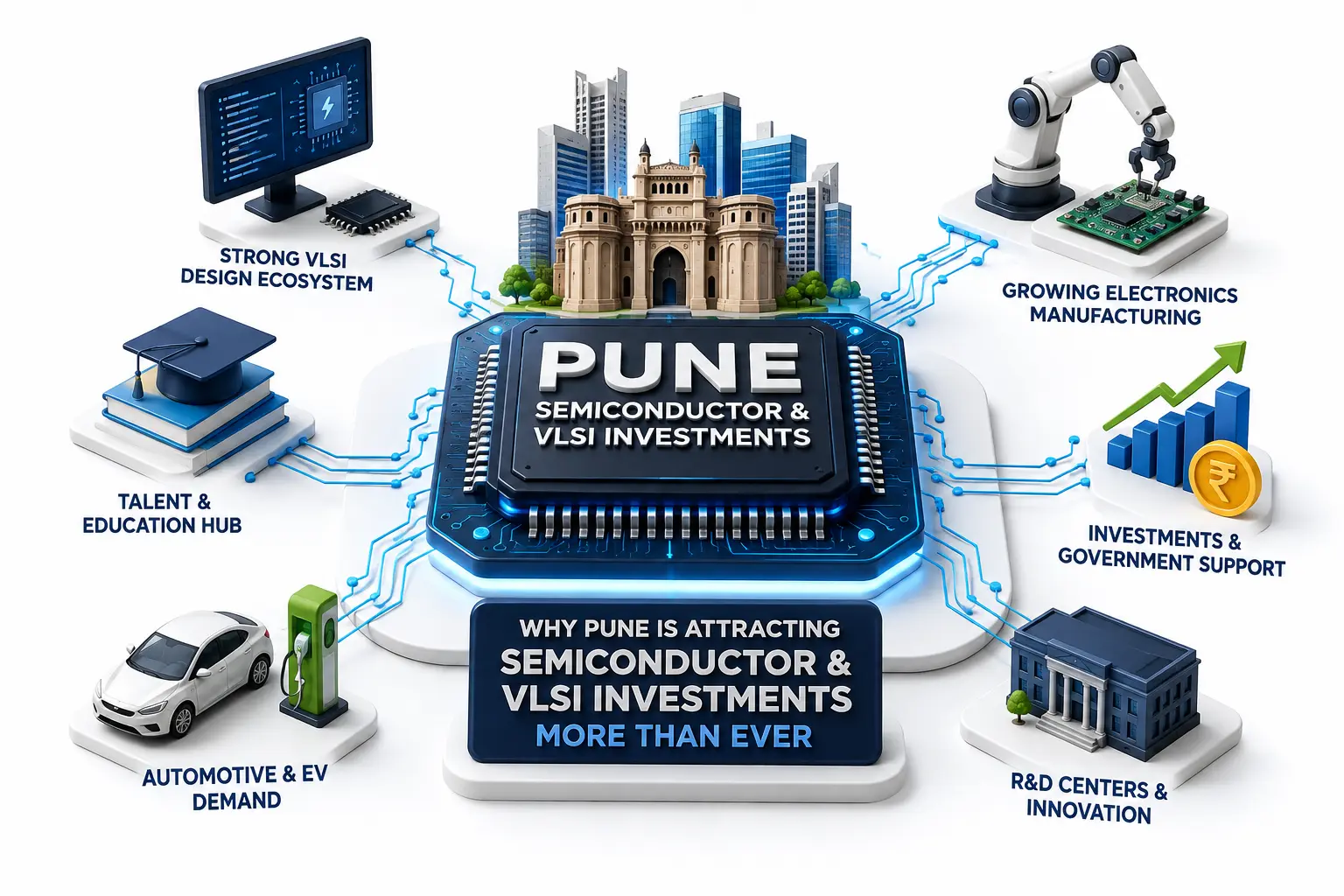
Why Is Pune Attracting More Semiconductor and VLSI Investments Than Ever
Navigate through this article using the table of contents below
Table of Contents
No headings found in this article.
Pune is no longer simply an automotive and IT city. A combination of chip-design expertise, electronics manufacturing, EV development and engineering talent is quietly strengthening its position in India’s semiconductor ecosystem—and investors are paying closer attention.
What makes Pune particularly interesting is that its semiconductor opportunity is not dependent on a single mega-project. The city is building interconnected capabilities across VLSI design, embedded engineering, electronics, research, automotive technology and advanced manufacturing.
Pune Already Has the Engineering Base Semiconductor Companies Need
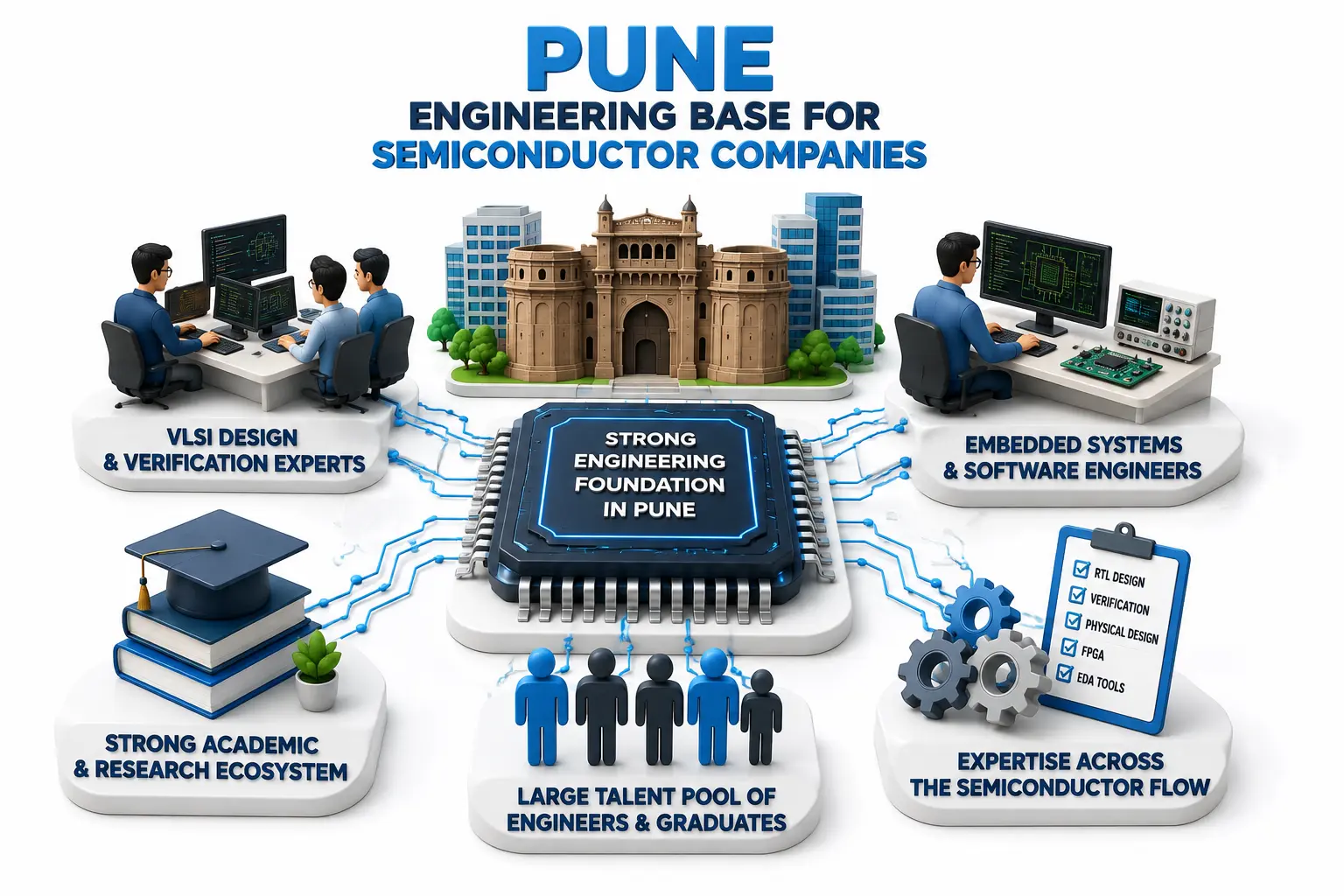
Semiconductor ecosystems rarely appear overnight. They develop around concentrations of specialized engineers, research institutions, technology companies, suppliers and customers. Pune already possesses many of these ingredients.
The city has experience across semiconductor design, embedded systems, automotive electronics, software engineering and product development. Companies working in and around Pune participate in areas such as RTL design, verification, analog and mixed-signal engineering, EDA, firmware, validation and system development.
This existing base reduces one of the biggest challenges for semiconductor companies: building technical teams from scratch. Pune can offer access to engineers familiar with the broader chip-development environment while also maintaining a steady pipeline of electronics and electrical engineering graduates.
The city’s semiconductor advantage therefore begins with capabilities rather than factories. That distinction matters because chip design and engineering can attract additional R&D operations before capital-intensive manufacturing reaches full scale.
Automotive and EV Industries Are Creating Local Semiconductor Demand
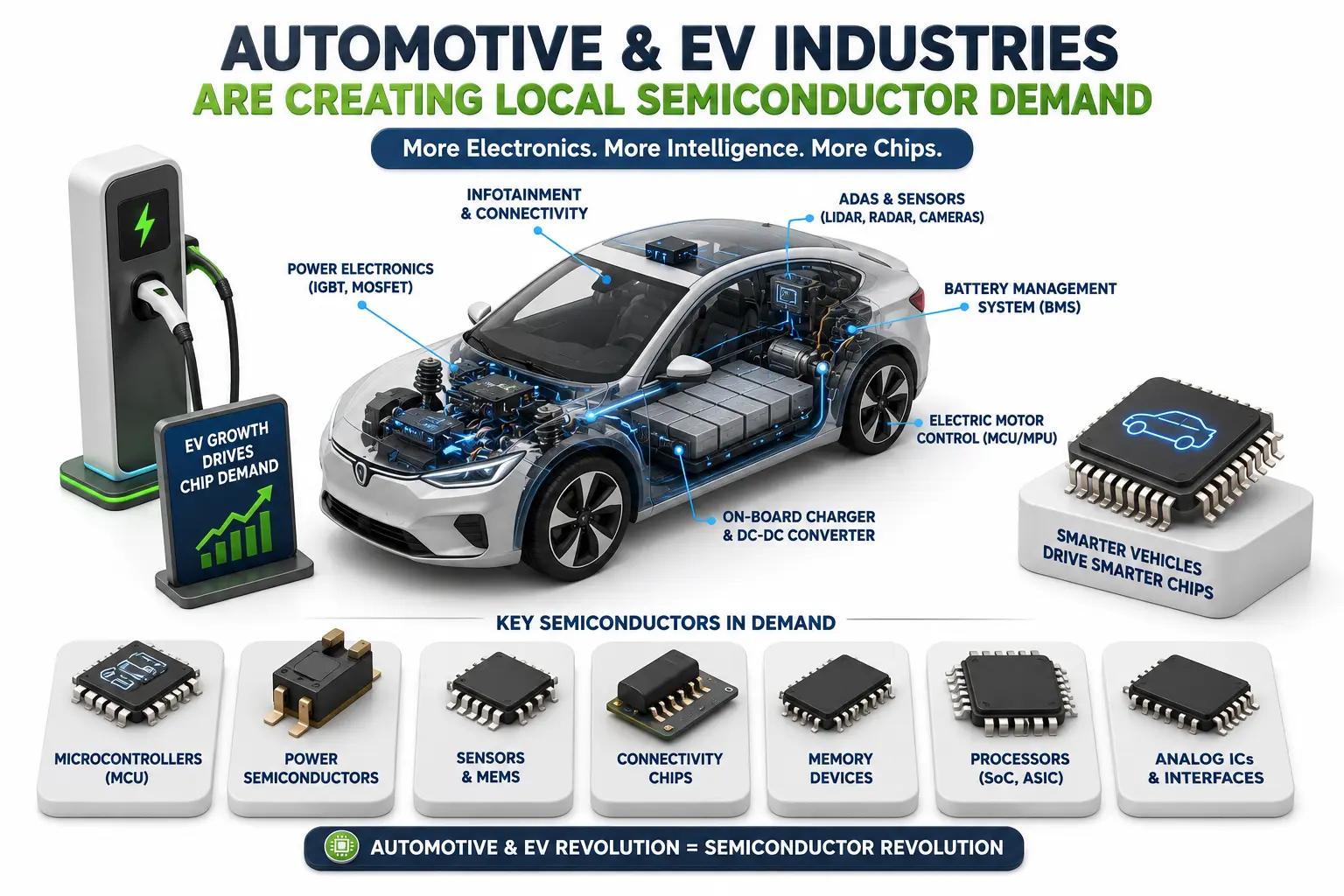
Pune has another advantage that pure technology hubs may not possess at the same scale: a major automotive and industrial manufacturing ecosystem.
Modern vehicles require far more semiconductor content than traditional mechanical vehicles. Electronic control units, battery-management systems, advanced driver-assistance systems, infotainment, connectivity, sensors, power electronics and motor-control systems all depend on chips.
Electric vehicles accelerate this requirement further. Semiconductor opportunities connected to Pune’s industrial base include:
Automotive microcontrollers and processors
Power semiconductor devices
Battery-management electronics
Sensors and MEMS
Connectivity chips
Automotive-grade analog components
Embedded control systems
Semiconductor validation and testing
This creates the possibility of a stronger chip-to-product relationship. Semiconductor engineering does not have to exist in isolation when nearby automotive, EV, industrial automation and electronics companies can become customers, development partners or testing environments.
That combination could make Pune particularly relevant for automotive semiconductors, power electronics and embedded-chip development.
Ranjangaon Strengthens Pune’s Electronics Manufacturing Story
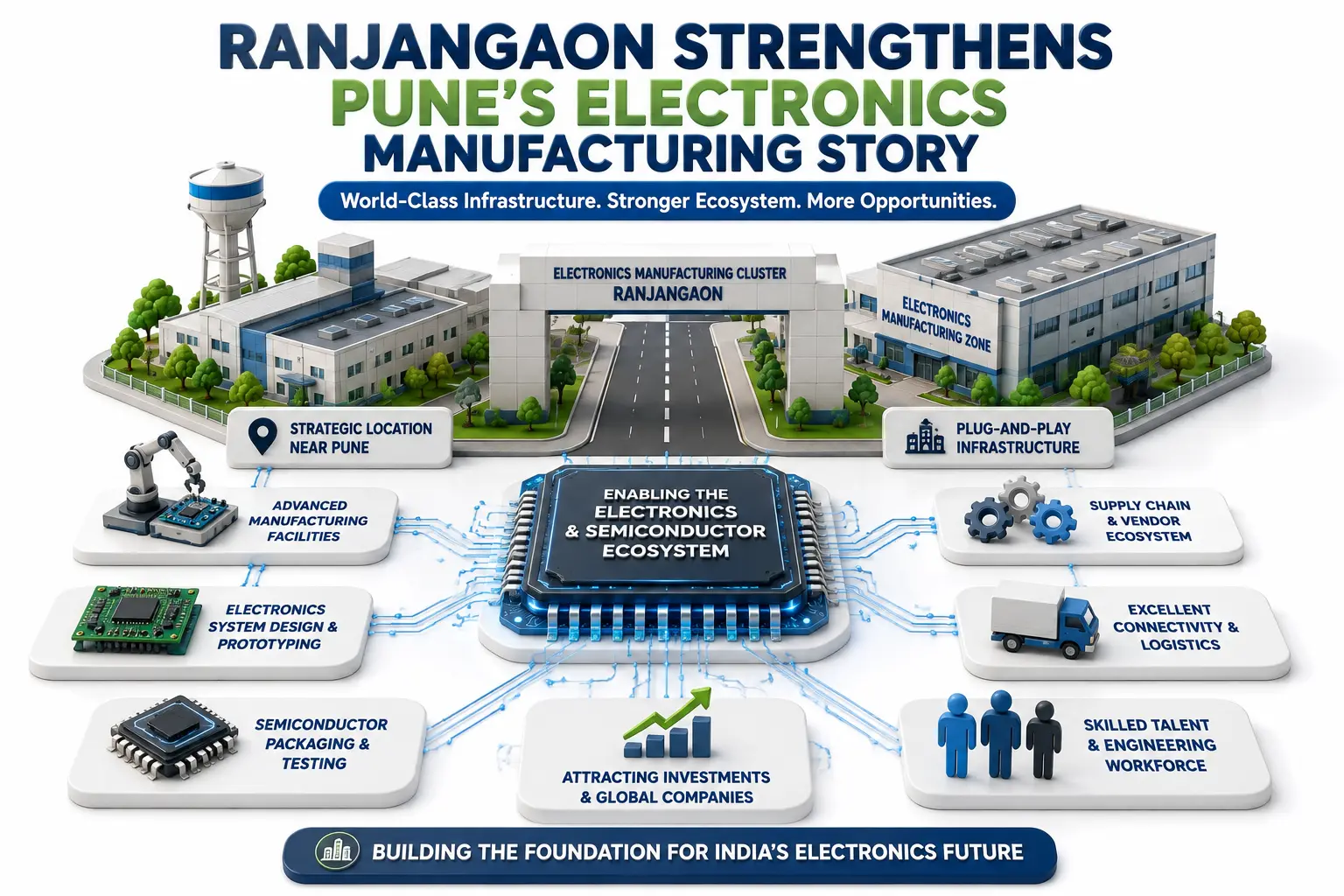
Design talent alone cannot create a complete semiconductor ecosystem. Companies evaluating manufacturing locations also consider industrial land, electricity, logistics, suppliers and supporting infrastructure.
The Electronics Manufacturing Cluster at Ranjangaon is therefore strategically important. The project was designed to provide organized infrastructure for electronics manufacturing and encourage additional private investment around Pune.
Ranjangaon also fits into a larger industrial geography. Pune already has manufacturing corridors such as Chakan, Talegaon and surrounding MIDC areas. Instead of developing an entirely new industrial identity, electronics and semiconductor-related activity can connect with an established manufacturing environment.
This is important because semiconductor growth is broader than constructing a leading-edge wafer fabrication plant. Opportunities can emerge across:
Semiconductor and electronics design
Advanced packaging
Testing and validation
Electronics manufacturing
PCB and system development
Power electronics
Equipment and engineering services
Supply-chain support
Pune can therefore participate in multiple stages of the semiconductor value chain even as India’s fabrication capacity develops elsewhere.
Talent Is Becoming Pune’s Strongest Competitive Advantage
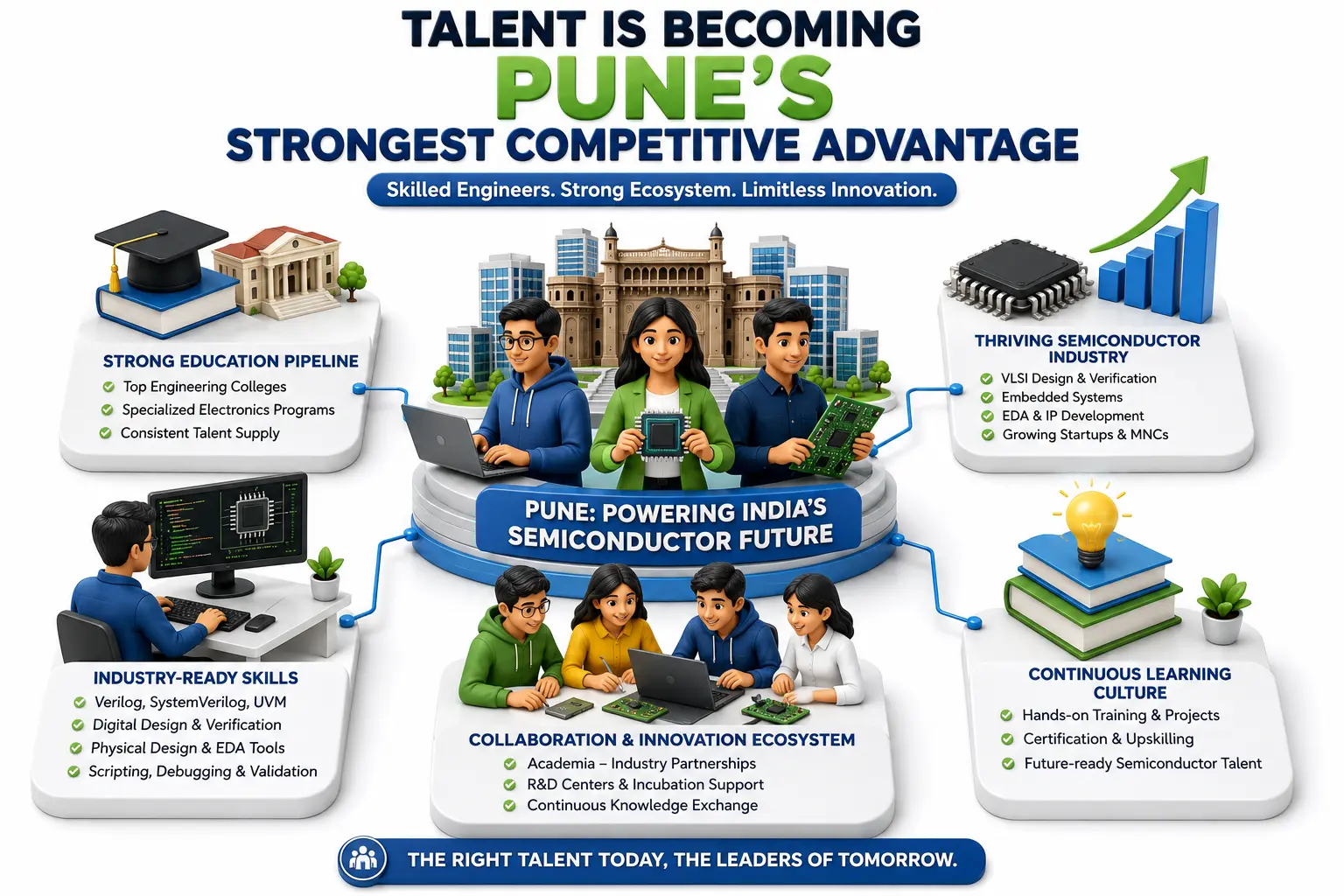
Semiconductor investment ultimately depends on people. Expensive infrastructure has limited value if companies cannot recruit engineers capable of designing, verifying, implementing and validating complex chips.
Pune has a large education ecosystem producing graduates in electronics, electrical engineering, telecommunications, computer engineering and related disciplines. The challenge is converting that academic supply into semiconductor-ready talent.
Employers increasingly require practical capabilities in areas such as Verilog, SystemVerilog, UVM, digital electronics, computer architecture, scripting, verification methodologies, physical design and EDA workflows. This is where universities, companies and specialized skill-development organizations can strengthen the ecosystem.
For engineers researching a vlsi training institute in pune, the important question should therefore go beyond certificates. Practical labs, projects, tool exposure, debugging ability and understanding of real semiconductor workflows are more closely aligned with industry expectations.
Organizations such as JastTech can contribute to this talent-development layer by helping learners connect semiconductor fundamentals with practical VLSI skills. As investment expands, job-ready talent will become increasingly important to Pune’s ability to convert announcements into sustainable engineering employment.
Government Policy Is Reducing the Risk of Semiconductor Expansion
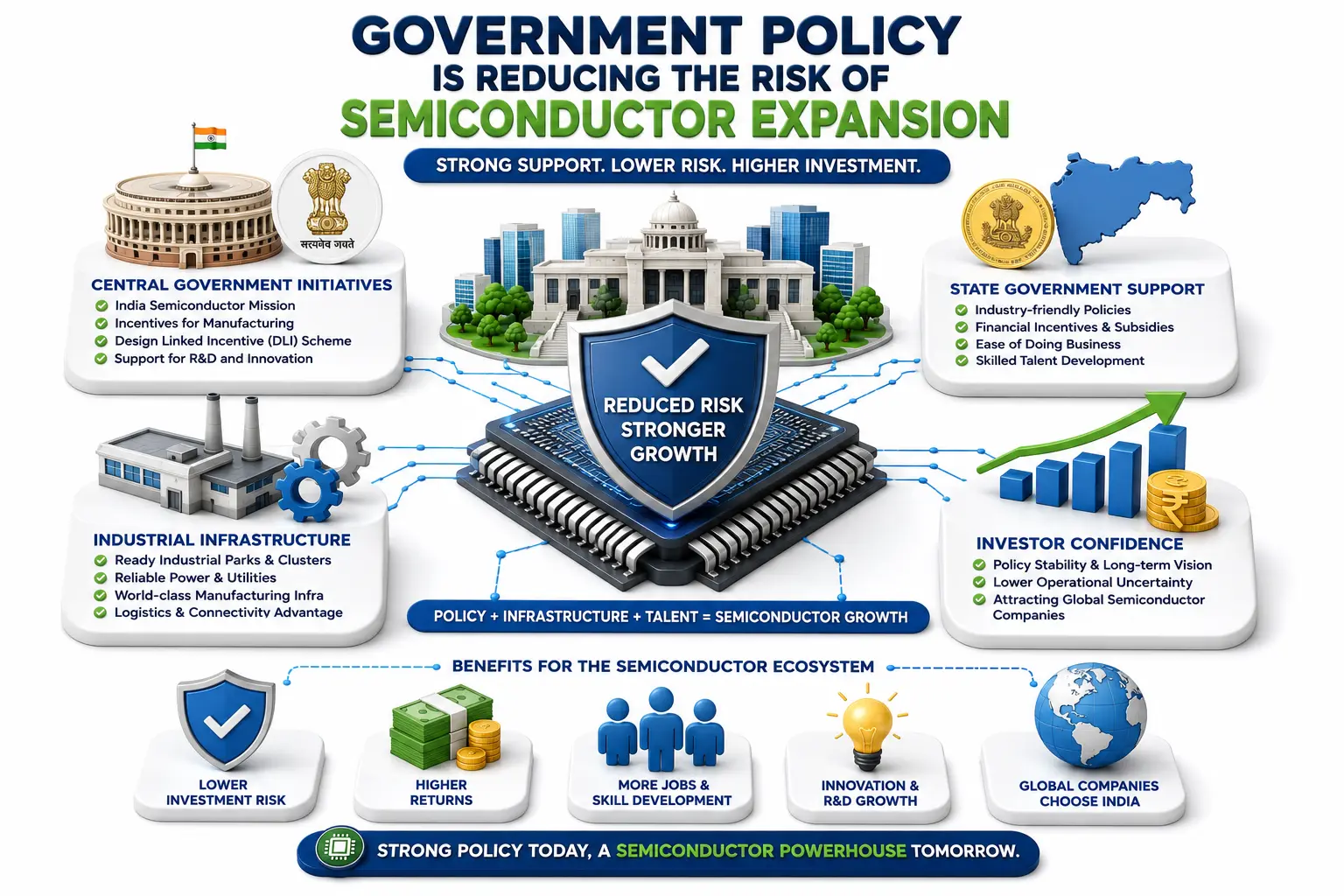
Semiconductors require unusually high investment, specialized infrastructure and long development cycles. That makes government policy an important part of almost every emerging semiconductor ecosystem.
India’s semiconductor strategy has changed the investment environment by supporting areas including semiconductor manufacturing, packaging and chip design. Maharashtra is simultaneously trying to strengthen its electronics and high-technology manufacturing base.
For Pune, the impact is significant because policy support can complement capabilities the region already has. Rather than trying to create an ecosystem without an industrial foundation, incentives can help accelerate expansion around existing engineering and manufacturing strengths.
The most promising model is therefore not government incentives alone. Pune becomes more competitive when several factors work together:
Central semiconductor initiatives
State-level industrial support
MIDC infrastructure
Electronics manufacturing clusters
Existing engineering talent
Universities and research organizations
Automotive and electronics customers
Semiconductor design companies
Investors generally look beyond headline subsidies. They evaluate whether a location can support operations for years. Pune’s diversified industrial base makes that long-term ecosystem argument increasingly compelling.
The Next Opportunity Is Building a Complete Semiconductor Ecosystem
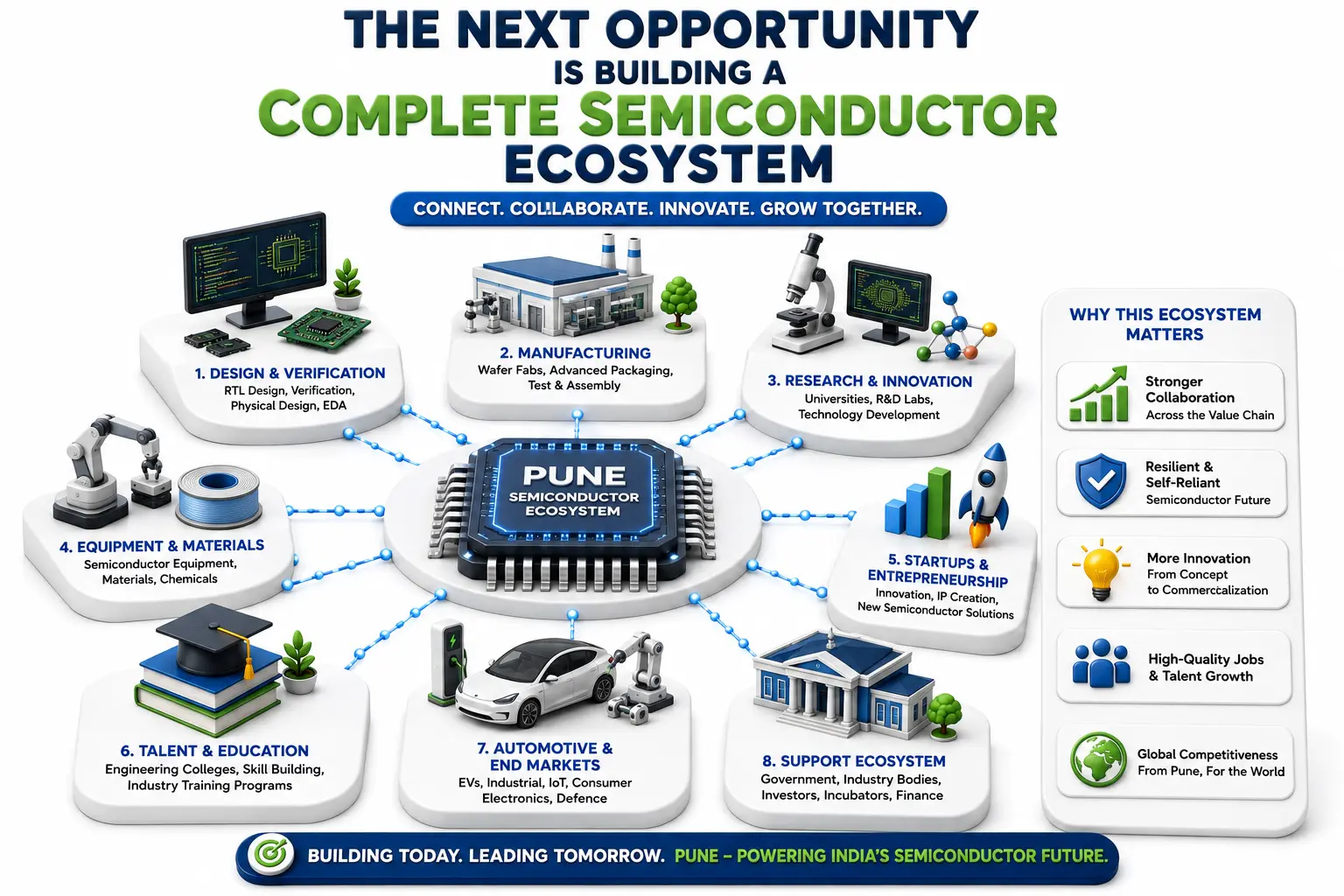
Pune’s next stage will depend on whether it can move from having semiconductor companies to developing deeper connections between companies, universities, manufacturers, startups and skilled professionals.
Design and verification remain logical strengths because Pune already has a technology workforce. But the opportunity can expand toward automotive chips, power semiconductors, embedded silicon, validation, advanced packaging and specialized electronics manufacturing.
For students and engineers, this means semiconductor career preparation should follow where the ecosystem is moving. Strong opportunities could develop in:
RTL design and verification
Physical design
Analog and mixed-signal design
Design-for-test engineering
Post-silicon validation
Semiconductor packaging and testing
Embedded systems
Automotive electronics
Power semiconductor engineering
For businesses, Pune offers something equally valuable: proximity between engineering and end-use industries. A semiconductor team can potentially interact with automotive manufacturers, EV developers, industrial companies, embedded-product businesses and engineering-service providers within the same regional ecosystem.
That network effect may ultimately matter more than any individual investment announcement.
Conclusion
Pune’s semiconductor momentum is being driven by convergence. The city already possesses engineering talent, VLSI expertise, automotive manufacturing, embedded-system capabilities and a large educational ecosystem. New electronics infrastructure and national semiconductor initiatives are adding another layer to those existing strengths.
The real opportunity is not simply to label Pune as another semiconductor hub. It is to build an ecosystem where chip design, verification, manufacturing, packaging, automotive electronics, research and workforce development reinforce one another. If Pune can make those connections stronger, its role in India’s semiconductor industry could become considerably more important over the coming decade.