

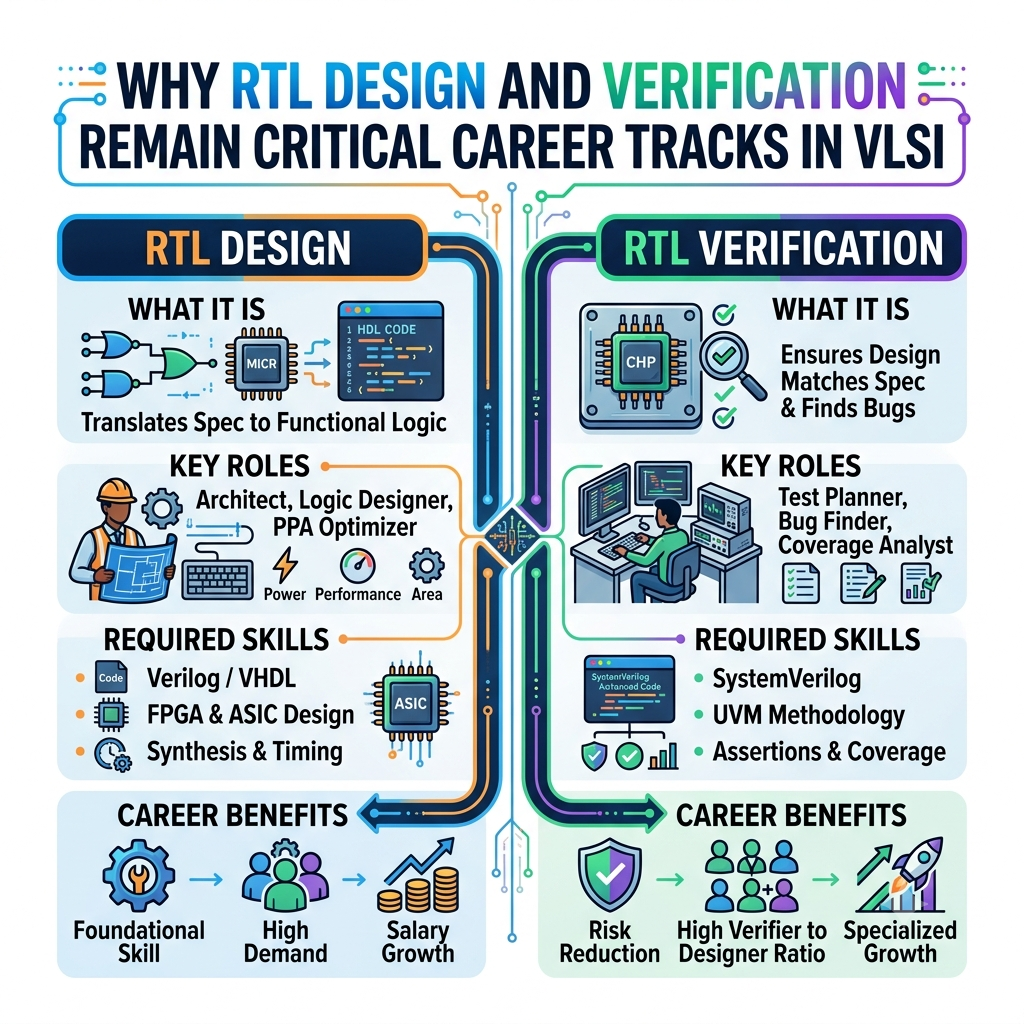
Why RTL Design and Verification Remain Critical Career Tracks in VLSI
Navigate through this article using the table of contents below
Table of Contents
No headings found in this article.
Every smartphone, car, and data center running today owes its existence to a handful of engineers who wrote lines of code that never touch a screen or an app icon, yet decide whether a chip works at all. That invisible layer is RTL design and verification, and it remains one of the most stable, in-demand, and future-proof paths inside the semiconductor world.
While the industry keeps talking about AI accelerators, 5nm nodes, and chiplets, the foundation underneath all of it is still the same: someone has to describe the logic correctly, and someone has to prove that logic behaves exactly as intended before it becomes silicon. That combination of design and verification is not a passing trend. It is the backbone of chip development, and it continues to open doors for engineers who understand it deeply.
1.The Backbone Behind Every Modern Chip
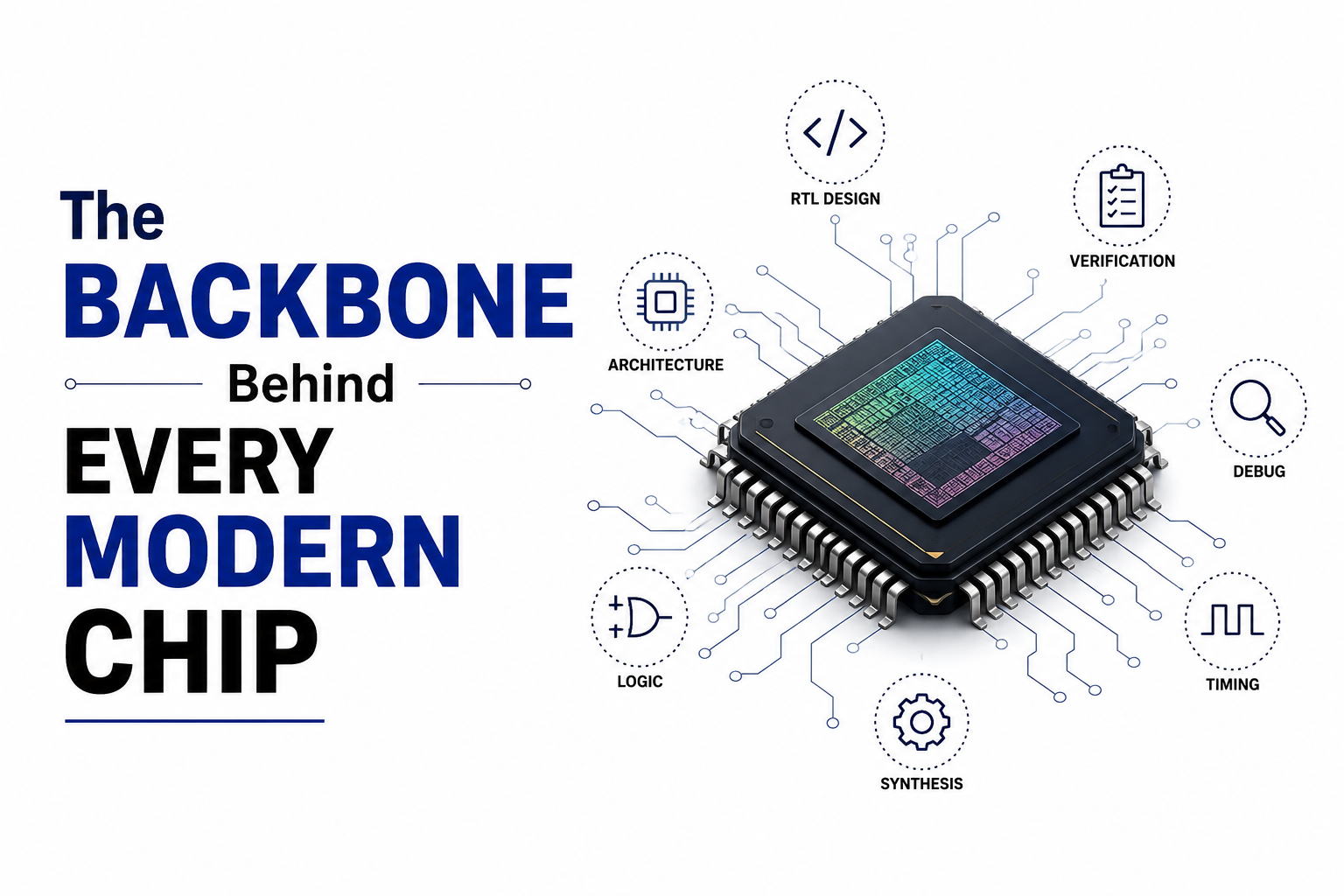
RTL, or Register Transfer Level, is the stage where an idea for a chip turns into actual digital logic. Engineers describe how data moves between registers, how operations happen on clock edges, and how different blocks talk to each other. This is not a cosmetic step in chip development; it is the actual blueprint. If the RTL is wrong, everything built on top of it, from layout to fabrication, inherits that mistake.
This is why RTL work has never lost relevance. New chip categories keep appearing, from automotive safety processors to edge AI devices, but they all still need someone to write and structure this logic correctly using Verilog or SystemVerilog. The tools around it evolve, but the core skill of translating a specification into clean, synthesizable RTL code stays just as valuable as it was two decades ago.
2.Verification: The Quiet Gatekeeper of Chip Quality
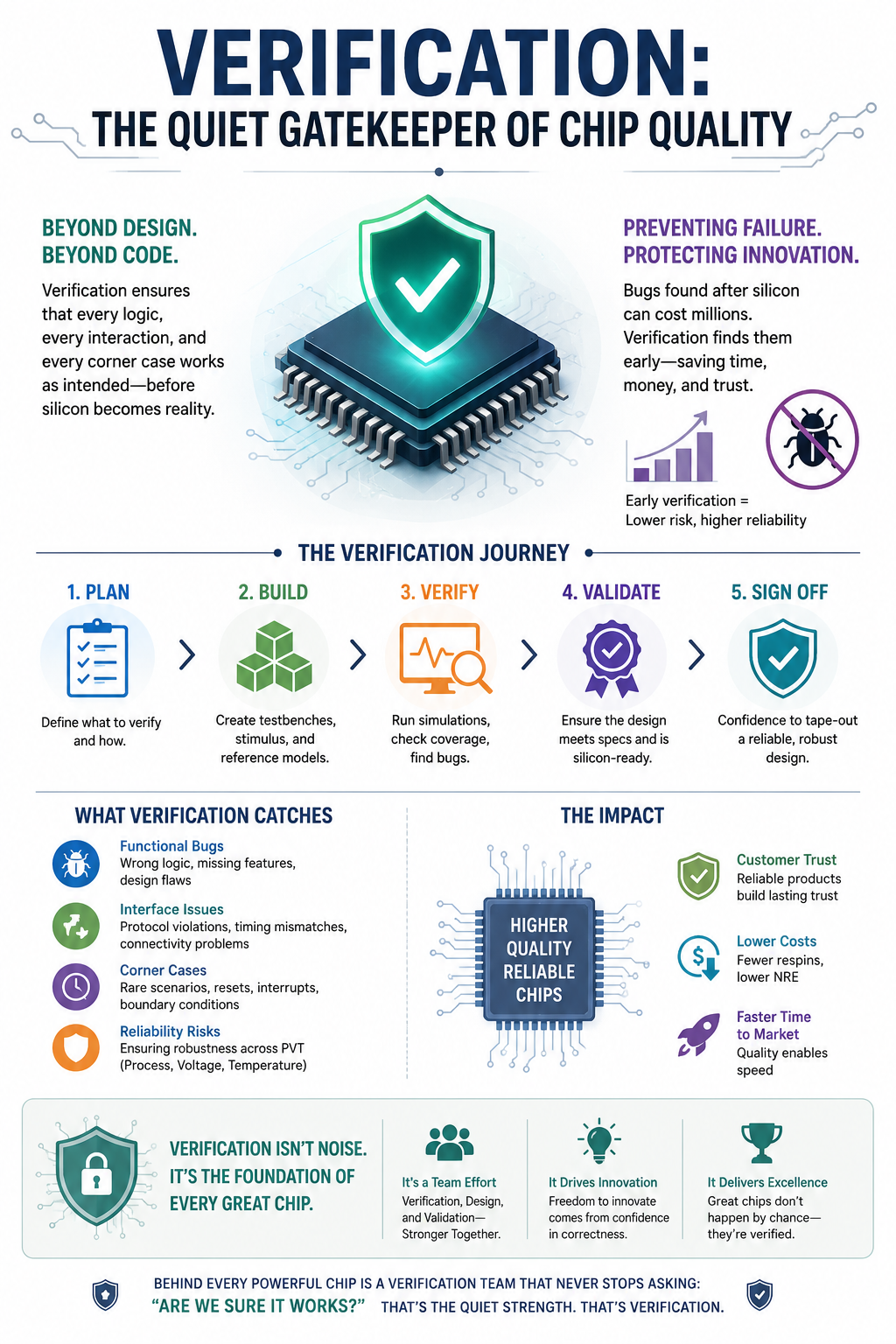
If RTL design is about building the logic, verification is about breaking it before someone else does, at a much higher cost. A single undetected bug that reaches silicon can cost a company months of delay and enormous amounts of money for a re-spin. This is exactly why verification engineers are treated as gatekeepers rather than support staff.
Modern verification is not just about writing testbenches anymore. It involves constrained random testing, functional coverage, assertions, and formal methods to make sure every corner case is caught early. As chips grow more complex with multiple cores, memory controllers, and interconnects, the verification effort often takes longer than the design itself. That single fact tells you how critical this role has become inside any serious chip development team.
3.Why This Combination Creates Long-Term Career Stability
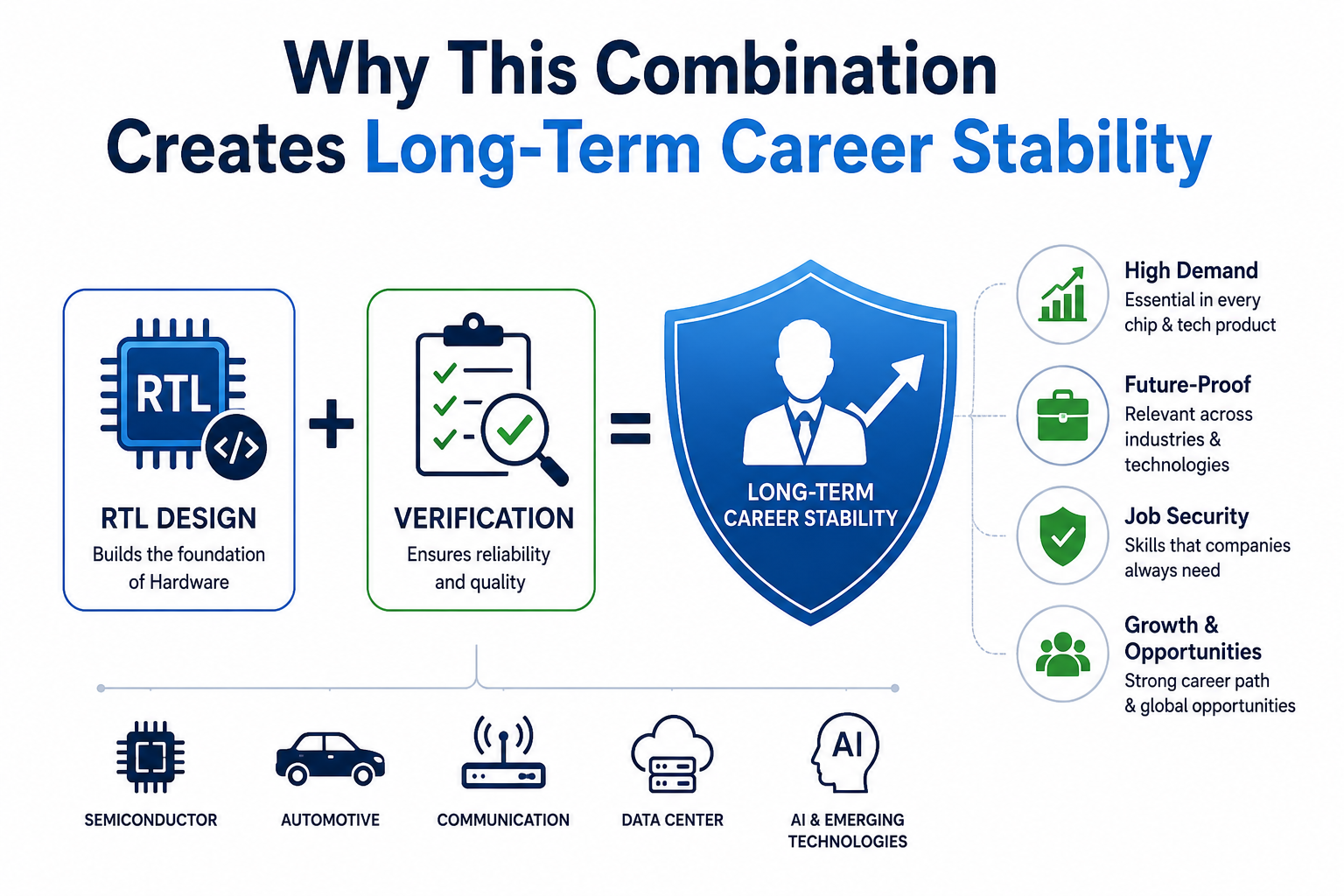
A lot of technology roles rise and fade with hype cycles. RTL design and verification are different because they are tied to physical products that must work correctly the first time. You cannot patch a chip after it ships the way you patch software. This makes companies extremely cautious about who they hire for these roles, and equally serious about paying well for proven skills.
Another reason this track stays strong is transferability. Once someone understands digital logic design and the verification methodology around it, that knowledge applies across domains: processors, automotive electronics, networking chips, or even space-grade hardware. The underlying concepts of clocking, timing, coverage, and functional correctness don't change much even when the end application does.
4.Building Real Skills Through Structured Learning

Reading a textbook on digital logic is very different from actually writing RTL for a real block and debugging why your simulation waveform doesn't match your expectation. This gap is exactly why proper rtl design and verification training has become so valuable. Good training programs push learners through real coding exercises, actual testbench development, and debugging sessions using industry-standard simulators, instead of just covering theory on slides.
The value of such training shows up later, during interviews and on the job. Someone who has personally written a UVM testbench, chased a functional coverage hole, or fixed a timing violation in RTL speaks a different language than someone who has only read about these concepts. Hands-on, project-based learning is what turns a beginner into someone a design team actually trusts with production code.
5.Hyderabad's Growing Role in Shaping VLSI Careers
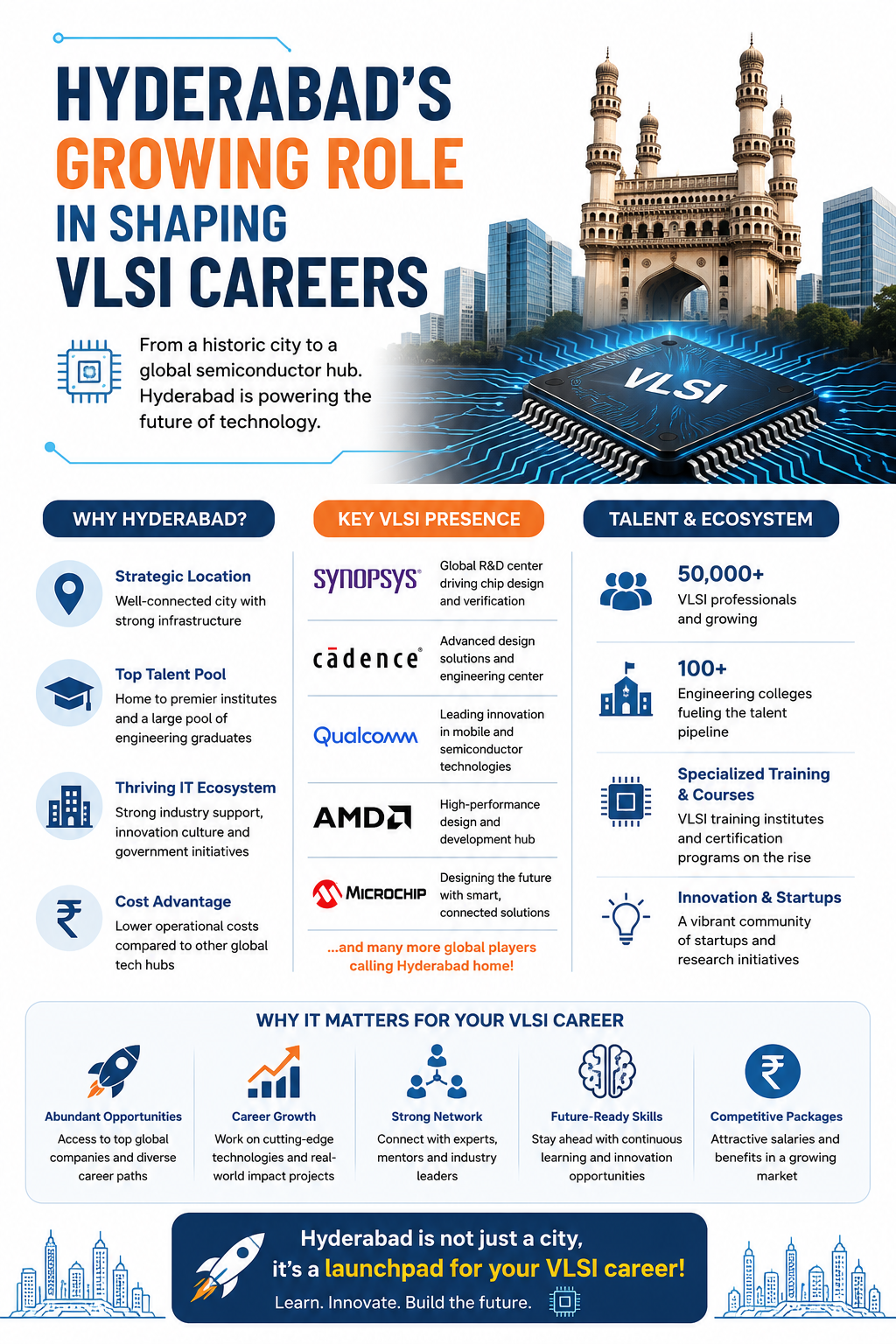
Location matters more than people often admit when building a career in chip design. Being close to design centers, having access to mentors who work in the industry, and getting exposure to real project flows accelerates learning in a way that self-study rarely can. This is part of why a well-regarded vlsi institute in hyderabad has become a starting point for many engineers building a career in this field.
Hyderabad has steadily grown into a serious hub for semiconductor design activity, with several global companies running design and verification teams out of the city. That local ecosystem means training centers here are often closely aligned with what actual design teams expect from new hires, from tool exposure to project structure. For someone serious about entering RTL design or verification, learning in a location with this kind of industry presence adds a practical advantage that generic online courses simply cannot replicate.
Conclusion
Chips are becoming more complex, not less, and that complexity guarantees continued demand for people who can design correct RTL and verify it thoroughly before tape-out. This is not a career track riding a temporary wave of interest; it is the foundation that every other innovation in electronics depends on. For anyone weighing where to invest their time and effort in the semiconductor space, RTL design and verification remain one of the safest, most rewarding choices available today.