

Why Semiconductor Startups Are Hiring More VLSI Engineers in 2026
Navigate through this article using the table of contents below
Table of Contents
No headings found in this article.
The semiconductor industry is entering one of its fastest growth phases in decades, and startups are at the center of this transformation. From AI processors and automotive chips to IoT devices and RISC-V innovation, emerging semiconductor companies are actively recruiting skilled VLSI engineers to build next-generation technologies.
If you're a student, fresher, or experienced chip designer wondering where the best opportunities lie in 2026, understanding why semiconductor startups are expanding their engineering teams can give you a significant career advantage. Here's what is driving this hiring boom and how you can position yourself for success.
The Global Semiconductor Boom Is Creating Thousands of New VLSI Opportunities

The worldwide demand for advanced semiconductor solutions continues to rise as industries adopt artificial intelligence, cloud computing, electric vehicles, 5G infrastructure, consumer electronics, and edge computing. Instead of relying only on established chip manufacturers, many investors are funding semiconductor startups that specialize in niche technologies.
Unlike traditional companies that often focus on incremental improvements, startups are developing innovative chip architectures, AI accelerators, custom SoCs, and low-power processors. These projects require engineers who understand the complete VLSI design flow, making skilled professionals highly valuable.
Several factors are contributing to this hiring surge:
Growing investment in AI hardware startups
Increasing adoption of RISC-V processor architecture
Expansion of automotive semiconductor development
Demand for specialized edge AI chips
Government initiatives supporting domestic semiconductor manufacturing
Rising need for custom silicon across multiple industries
For aspiring VLSI engineers, this means more career options than ever before. Instead of competing for limited openings at a handful of multinational corporations, candidates can now explore opportunities across a rapidly growing startup ecosystem.
Why Startups Need VLSI Engineers More Than Ever Before

Building a semiconductor product requires expertise across multiple engineering disciplines. While software often receives public attention, every intelligent electronic device ultimately depends on efficient chip design. Startups understand that hiring talented VLSI engineers early allows them to accelerate product development while maintaining design quality.
Unlike large organizations where engineers may work on only one small section of a project, startup engineers frequently contribute throughout the product lifecycle. This broader exposure helps companies move faster and gives engineers valuable hands-on experience.
Startup hiring managers often look for professionals who can work across areas such as:
RTL Design
Digital Logic Design
Verification
Static Timing Analysis
Physical Design
DFT (Design for Testability)
FPGA Prototyping
Scripting using Python, TCL, Perl, or Shell
This multidisciplinary approach makes VLSI engineers indispensable to startup success and significantly increases their career growth potential.
Emerging Technologies Are Driving Specialized Hiring

One of the biggest reasons semiconductor startups are expanding their engineering teams is the emergence of new chip technologies. Modern semiconductor products are becoming increasingly complex, requiring engineers who understand advanced design methodologies rather than only traditional digital design concepts.
Artificial intelligence has become a major catalyst for semiconductor innovation. AI workloads demand processors capable of handling massive parallel computations while maintaining low power consumption. As a result, startups are investing heavily in custom AI chips, neural processing units, and hardware accelerators.
Other rapidly growing technology segments include:
AI accelerator chips
Machine learning processors
Automotive ADAS systems
Autonomous vehicle electronics
Medical semiconductor devices
Industrial IoT controllers
Wearable electronics
Smart consumer devices
Edge AI processors
High-speed networking silicon
Each of these markets creates new opportunities for VLSI professionals with expertise in digital design, verification, physical implementation, and chip optimization.
Instead of hiring engineers for generic roles, many startups now seek specialists who understand specific semiconductor applications. Candidates with project experience in AI hardware, low-power design, embedded systems, or system-on-chip development often stand out during interviews.
Skills That Semiconductor Startups Look for in VLSI Engineers
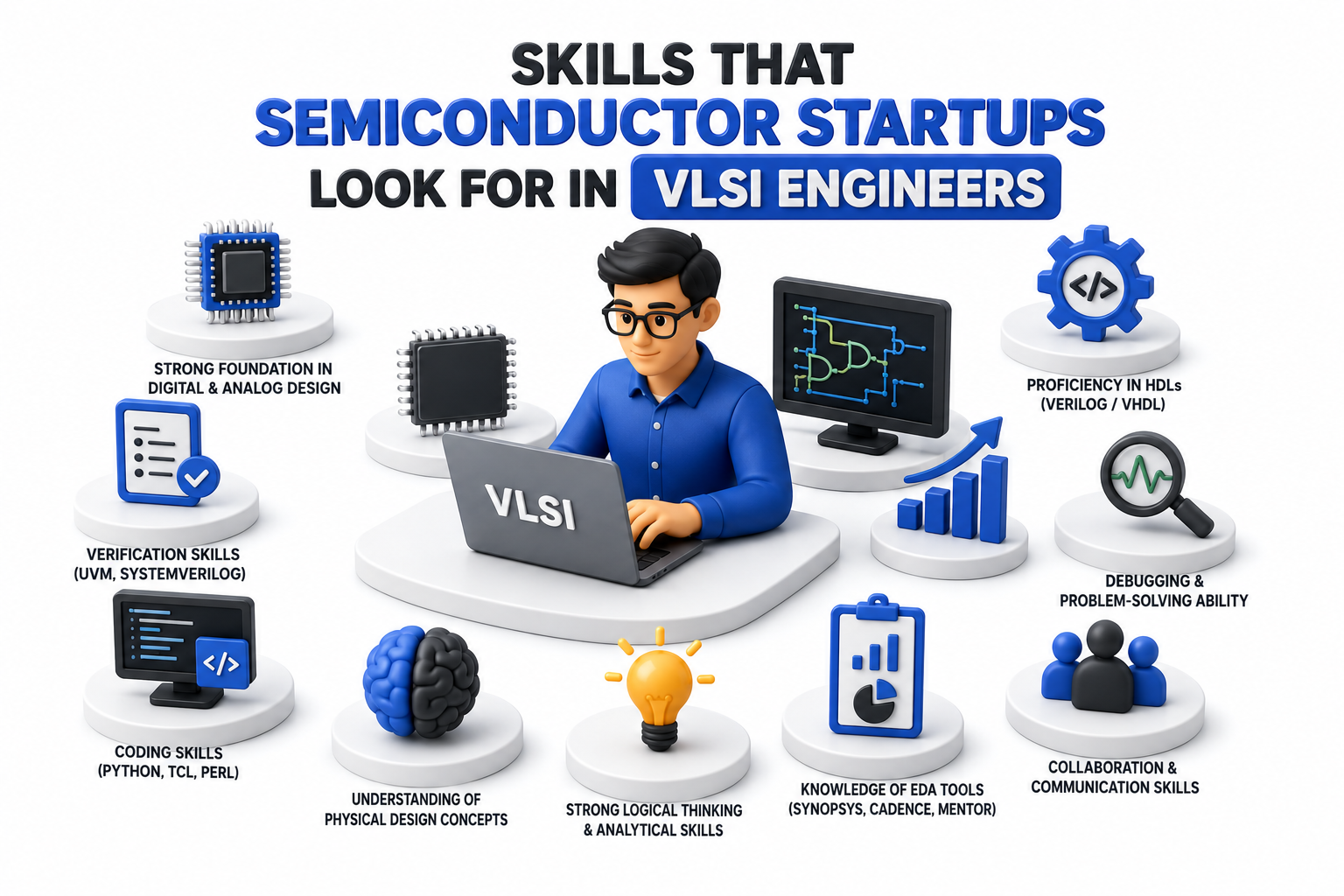
While academic knowledge provides a strong foundation, semiconductor startups prioritize candidates who can contribute from day one. Since startups often operate with smaller engineering teams and faster development cycles, they value practical skills, problem-solving abilities, and a willingness to learn new technologies quickly.
Recruiters also look for engineers who understand the complete chip design lifecycle rather than being limited to a single domain. Having hands-on project experience, familiarity with industry-standard EDA tools, and knowledge of scripting languages can significantly improve your chances of getting hired.
Some of the most in-demand skills in 2026 include:
RTL Design using Verilog and SystemVerilog
Functional Verification using UVM
Static Timing Analysis (STA)
Physical Design and Place & Route
Low-Power Design Techniques
Design for Testability (DFT)
FPGA Prototyping
Linux Environment and Shell Scripting
Python, TCL, or Perl scripting
Debugging and waveform analysis
Strong digital electronics fundamentals
Communication and collaborative problem-solving
Employers also appreciate engineers who can explain design decisions, identify bottlenecks, and optimize chip performance. Building these skills through practical training and industry-oriented projects can make your profile stand out in a competitive job market.
Why Practical Training Gives Candidates a Competitive Advantage
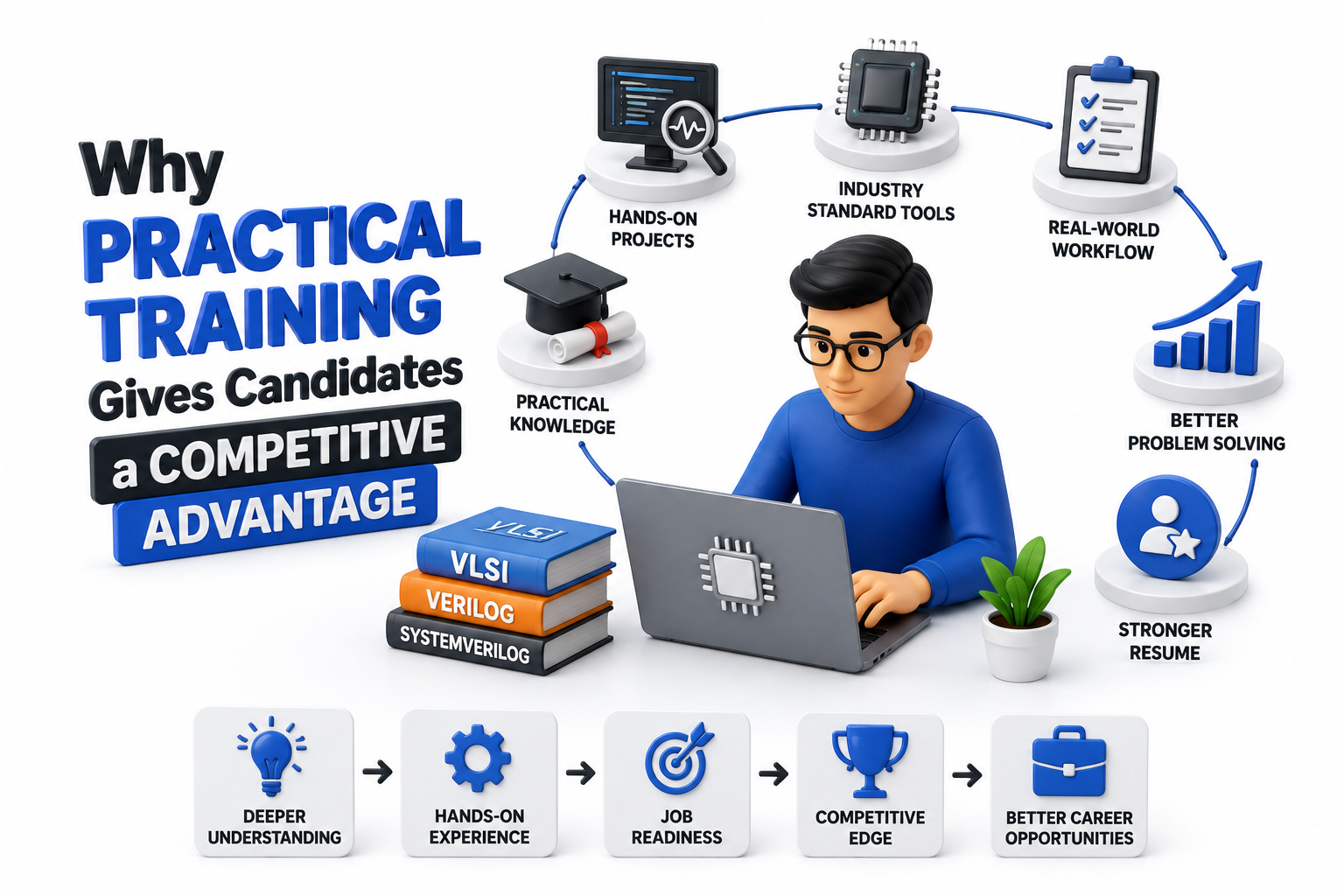
The demand for VLSI engineers is growing, but companies still face a shortage of professionals with hands-on experience. Many graduates understand theoretical concepts but struggle to apply them in real-world design environments. This is where practical training becomes essential.
Industry-focused training programs expose learners to real semiconductor workflows, helping them understand how chips are designed, verified, tested, and optimized before fabrication. Working on practical projects also develops debugging skills, documentation practices, and confidence during technical interviews.
A comprehensive VLSI training program should include:
Real-time design and verification projects
Exposure to industry-standard EDA tools
RTL coding assignments
Verification testbench development
Timing analysis exercises
Physical Design workflows
Scripting for automation
Interview preparation and mock technical sessions
Institutes like JastTech focus on bridging the gap between academic learning and industry expectations by offering practical VLSI training, project-based learning, and guidance from experienced professionals. Such hands-on exposure helps students build a strong portfolio and prepares them for roles in both semiconductor startups and established chip design companies.
How to Prepare for a Successful VLSI Career in 2026
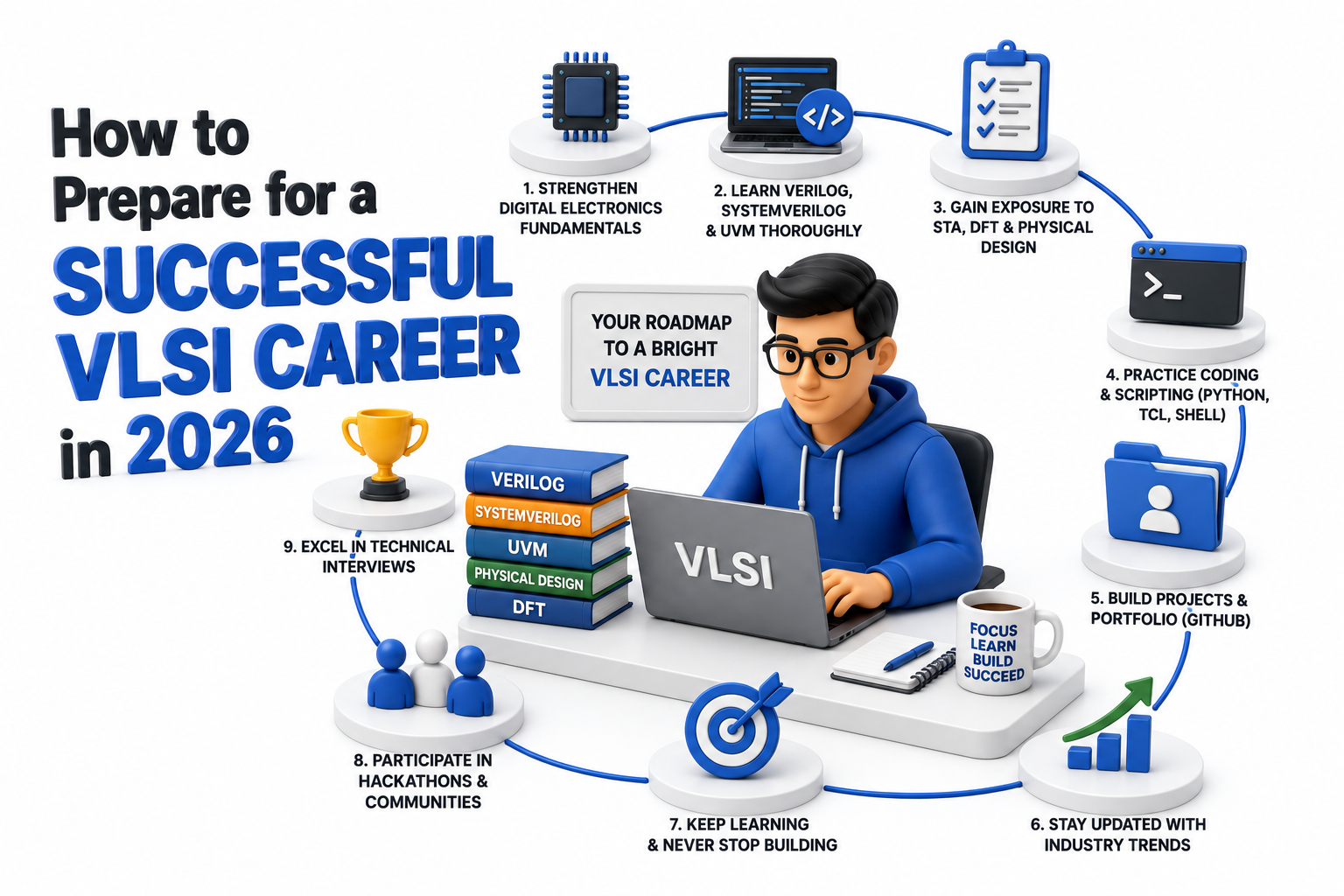
As semiconductor startups continue to innovate, the competition for skilled engineers will also increase. The best way to stay ahead is by continuously improving your technical knowledge, building practical experience, and keeping up with emerging industry trends.
Instead of relying only on certifications, focus on creating projects that demonstrate your ability to solve engineering problems. Recruiters are often more impressed by a well-documented RTL design, verification environment, or FPGA implementation than by a list of completed courses.
To prepare for a rewarding VLSI career:
Strengthen digital electronics fundamentals.
Learn Verilog, SystemVerilog, and UVM thoroughly.
Gain practical exposure to STA, DFT, and Physical Design.
Practice coding and scripting using Python, TCL, or Shell.
Build GitHub or portfolio projects showcasing your work.
Participate in hackathons, design challenges, or open-source hardware initiatives.
Stay updated on AI chips, RISC-V, automotive electronics, and semiconductor industry trends.
Prepare for technical interviews with scenario-based questions and debugging exercises.
Engineers who combine technical expertise with practical problem-solving abilities will be well-positioned to secure opportunities in the rapidly expanding semiconductor startup ecosystem.
Conclusion
The semiconductor industry in 2026 is experiencing a remarkable transformation, and startups are playing a crucial role in driving innovation. With increasing demand for AI processors, automotive electronics, IoT devices, and advanced computing solutions, the need for skilled VLSI engineers has never been greater. These companies are looking beyond academic qualifications and actively hiring professionals who can contribute to real-world chip design, verification, and implementation from the very beginning.
For aspiring VLSI engineers, this is an excellent time to invest in practical skills, industry-relevant projects, and continuous learning. Building expertise in RTL design, verification, Physical Design, STA, scripting, and modern semiconductor technologies can significantly improve your career prospects. Training programs offered by JastTech can help bridge the gap between classroom knowledge and industry requirements, equipping learners with the practical experience needed to thrive in today's competitive semiconductor landscape. As semiconductor startups continue to reshape the future of electronics, engineers who stay adaptable and embrace emerging technologies will be at the forefront of this exciting industry.