

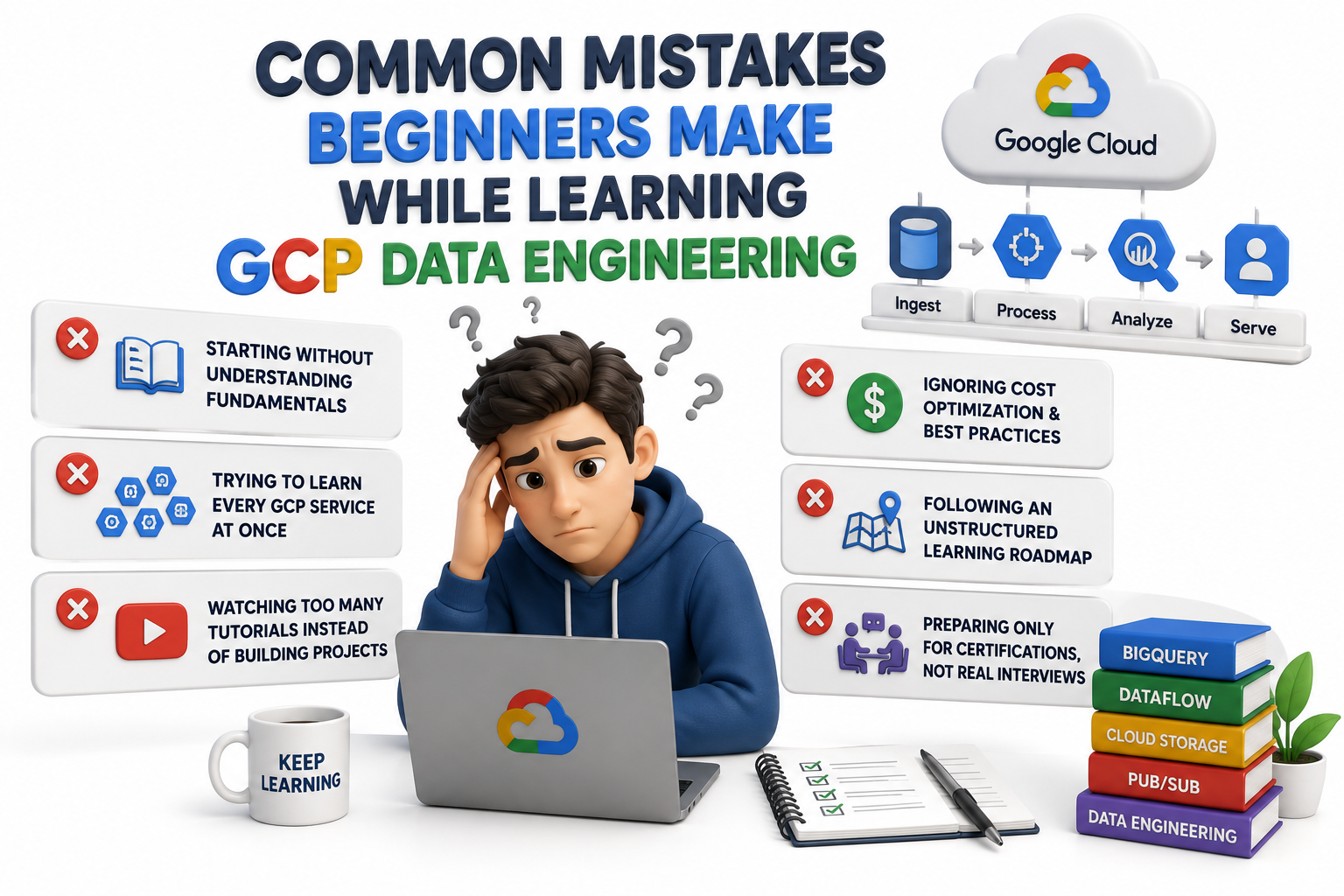
Common Mistakes Beginners Make While Learning GCP Data Engineering
Navigate through this article using the table of contents below
Table of Contents
No headings found in this article.
Cloud computing has transformed the way businesses manage, process, and analyze data. As organizations continue moving their data infrastructure to Google Cloud Platform (GCP), the demand for skilled data engineers keeps growing. However, many beginners struggle because they follow the wrong learning approach rather than lacking technical ability.
The difference between successful learners and those who quit is rarely intelligence—it is having the right roadmap. Understanding the most common mistakes early can save months of frustration, improve practical skills, and prepare you for real-world cloud data engineering projects with confidence.
Starting Without Understanding Data Engineering Fundamentals
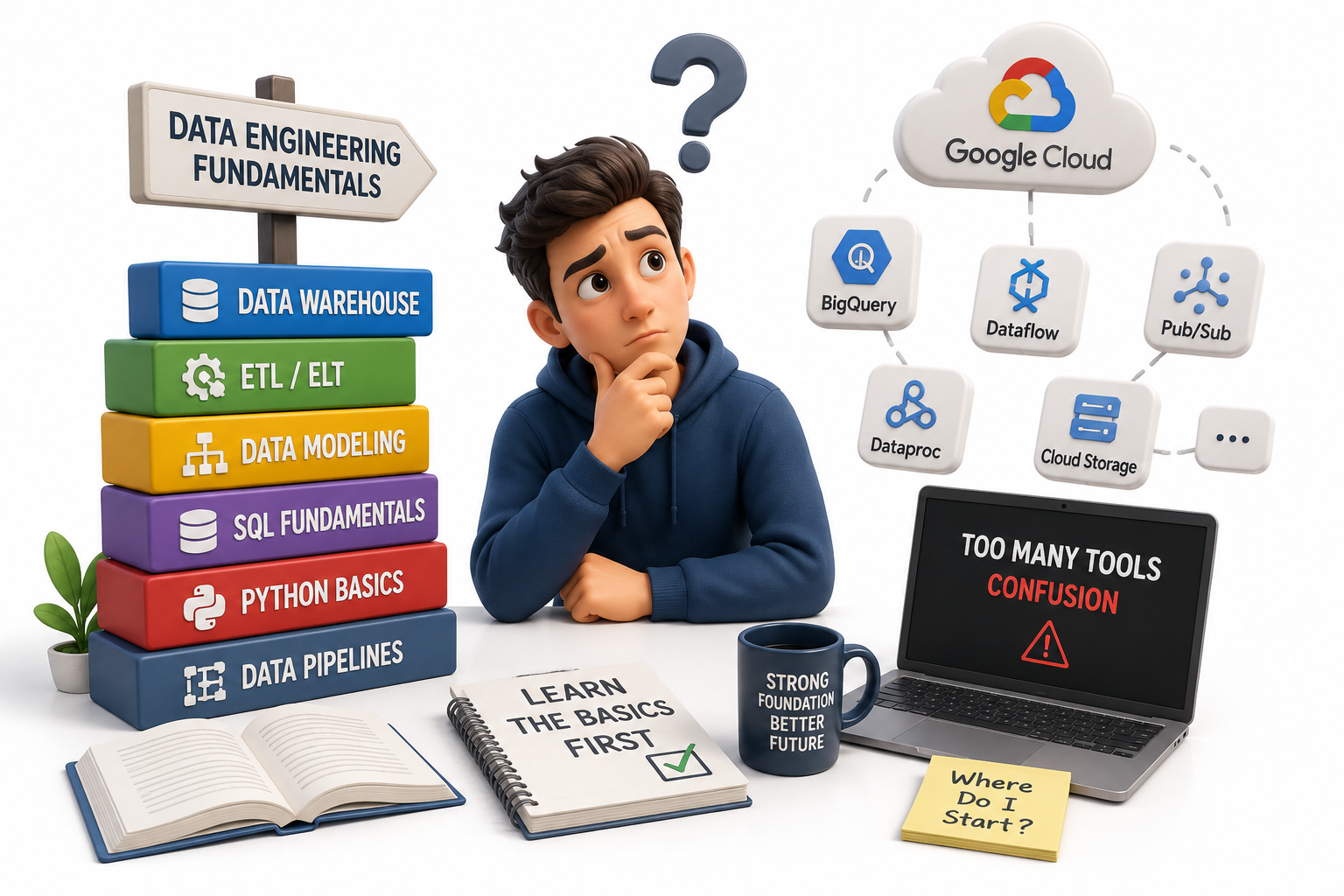
One of the biggest mistakes beginners make is jumping directly into Google Cloud services without first understanding what data engineering actually involves. Learning BigQuery or Dataflow is much easier when you already understand how data moves through a modern data pipeline.
Many learners spend hours memorizing cloud services but fail to understand why those services exist. Cloud platforms only simplify infrastructure—they do not replace core data engineering concepts.
Before focusing on GCP services, build knowledge in:
Data warehouses and data lakes
ETL and ELT architectures
Batch and streaming pipelines
SQL fundamentals
Data modeling concepts
Basic Python programming
A strong foundation allows you to understand the purpose behind every Google Cloud service instead of simply memorizing commands.
Trying to Learn Every GCP Service at Once
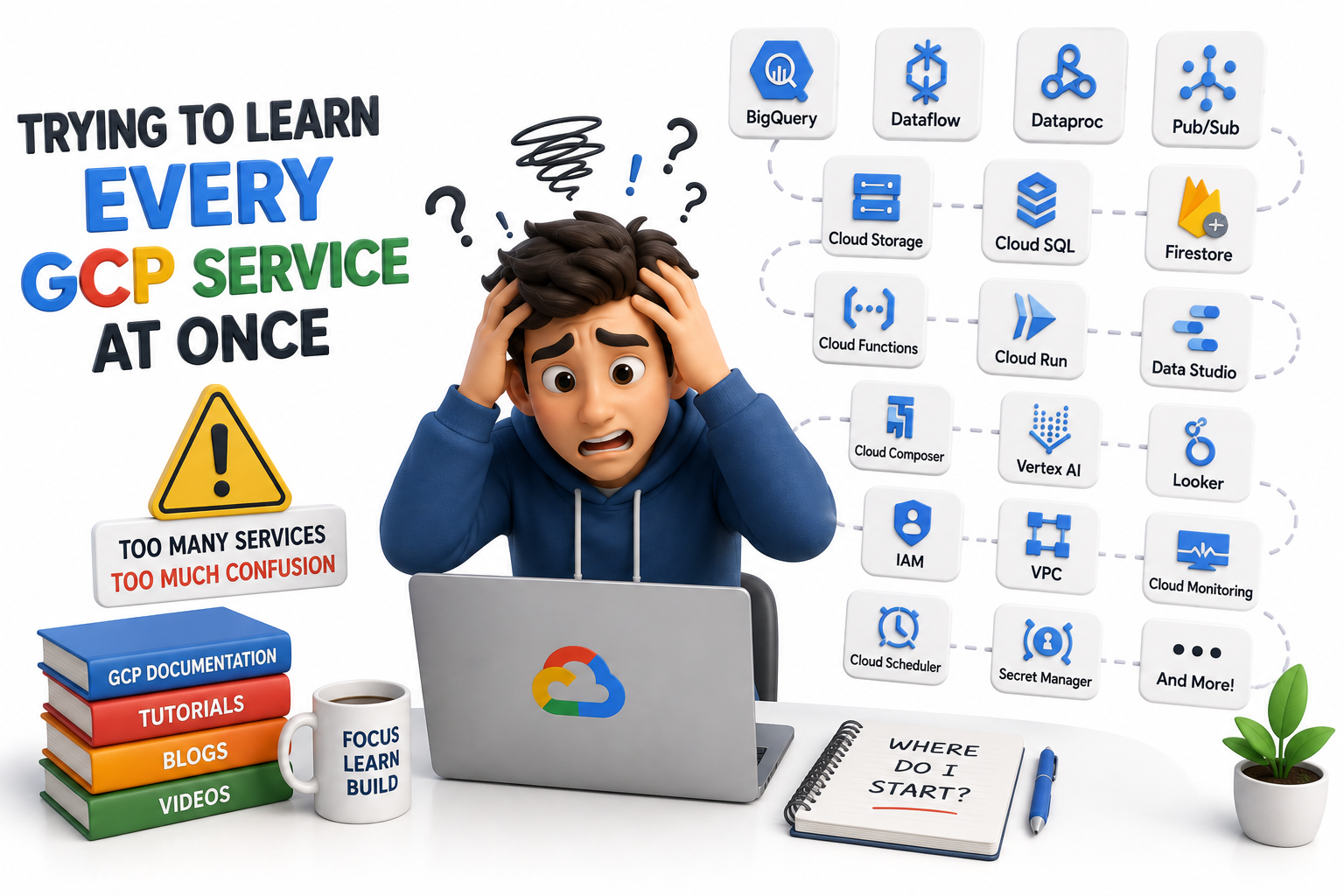
Google Cloud offers dozens of powerful products, but beginners often believe they must master every service before applying for jobs. This creates unnecessary confusion and slows learning.
Instead of learning everything, focus on the services used most frequently in production environments. Building expertise in core services is far more valuable than having superficial knowledge of many tools.
A practical learning sequence includes:
Cloud Storage for data storage
BigQuery for analytics
Pub/Sub for messaging
Dataflow for data processing
Dataproc for Spark workloads
Cloud Composer for workflow orchestration
IAM for security and access management
At JASTTech, learners are encouraged to follow structured learning paths instead of randomly switching between services. This approach improves understanding while reducing information overload.
Spending Too Much Time Watching Tutorials Instead of Building Projects
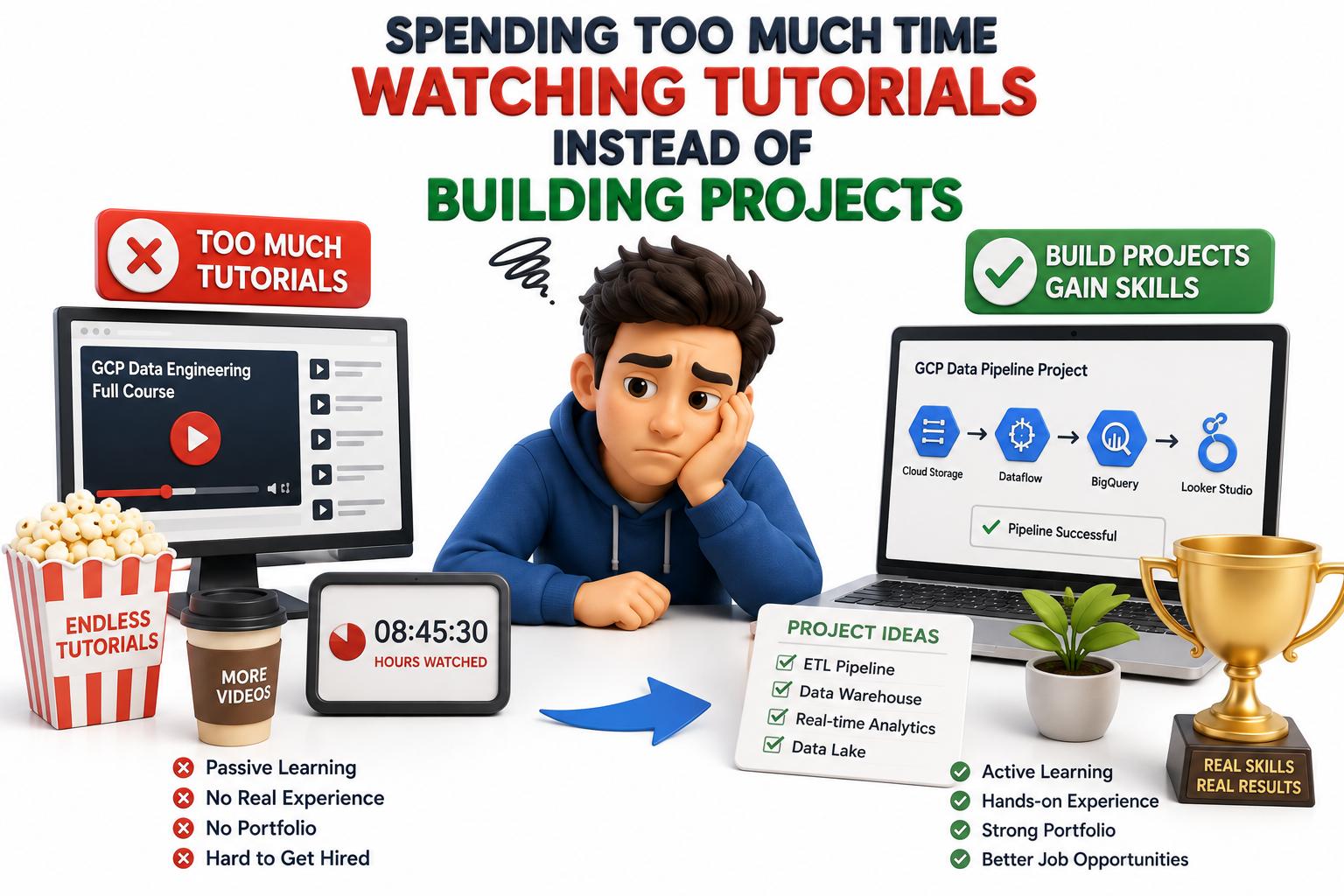
Video tutorials are excellent for learning concepts, but they cannot replace hands-on experience. Many beginners complete dozens of online courses yet struggle to build even a simple cloud data pipeline independently.
Real confidence comes from solving problems rather than watching someone else solve them.
Begin with practical projects such as:
Building an ETL pipeline using Cloud Storage and BigQuery
Creating a real-time analytics dashboard using Pub/Sub
Processing CSV datasets with Dataflow
Designing a customer analytics warehouse
Automating scheduled workflows using Cloud Composer
These projects also strengthen your portfolio when applying for jobs or enrolling in a gcp data engineer course, where practical implementation is often a key part of professional training.
Remember that employers hire engineers who can build solutions—not learners who only complete video playlists.
Ignoring Cost Optimization and Cloud Best Practices
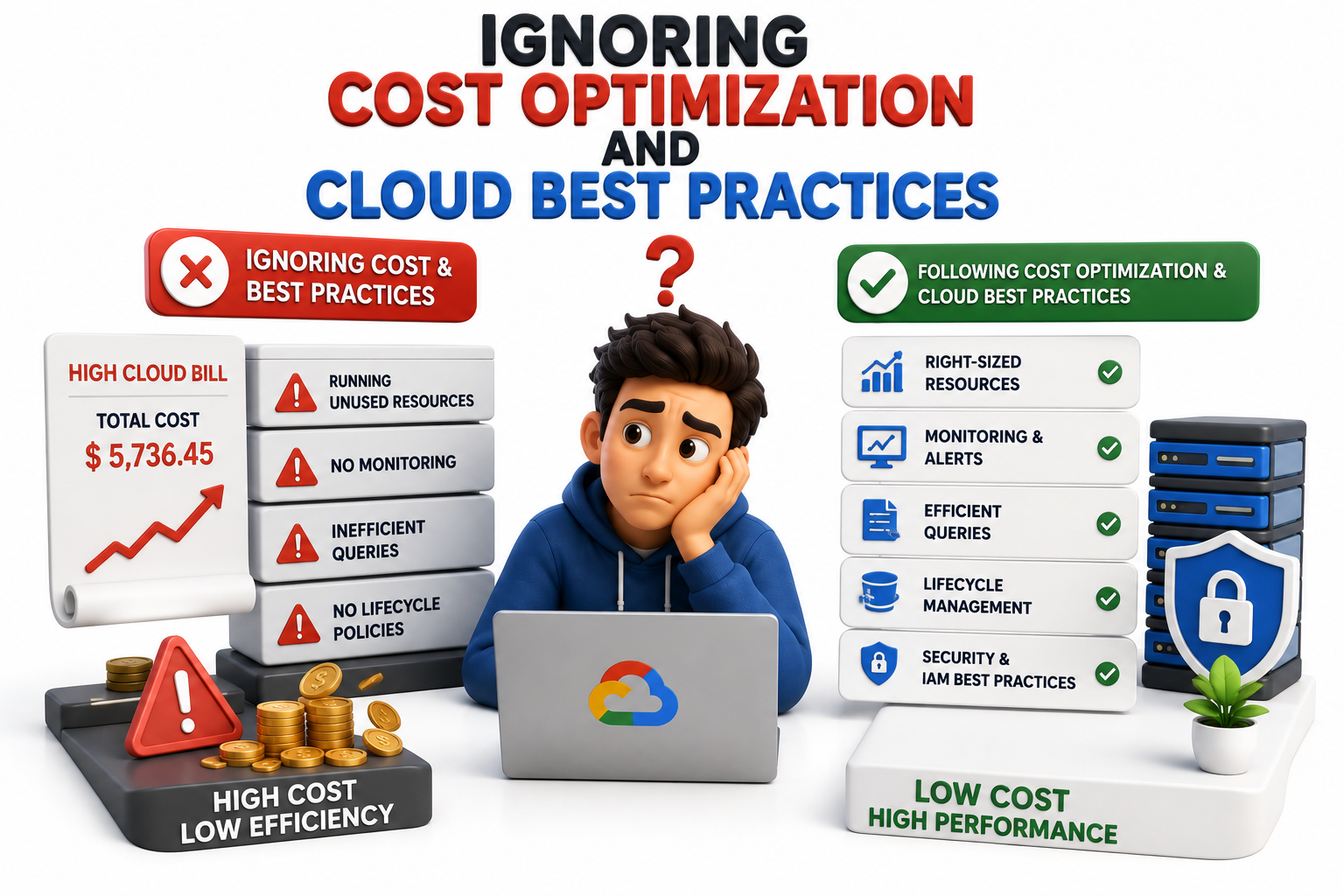
Unlike local environments, cloud platforms charge based on resource usage. Beginners often launch expensive resources, forget to delete them, or run inefficient queries that increase costs unnecessarily.
Understanding cloud economics is just as important as understanding cloud technology.
Develop good habits from the beginning:
Delete unused virtual machines
Use BigQuery partitioning
Monitor billing dashboards
Apply lifecycle policies for storage
Optimize SQL queries
Select appropriate machine types
Another commonly overlooked area is security.
Always learn:
IAM roles and permissions
Service accounts
Data encryption
Secure credential management
Least-privilege access principles
Engineers who understand both performance and cost optimization become significantly more valuable to employers because they build efficient and scalable cloud solutions.
Following an Unstructured Learning Roadmap
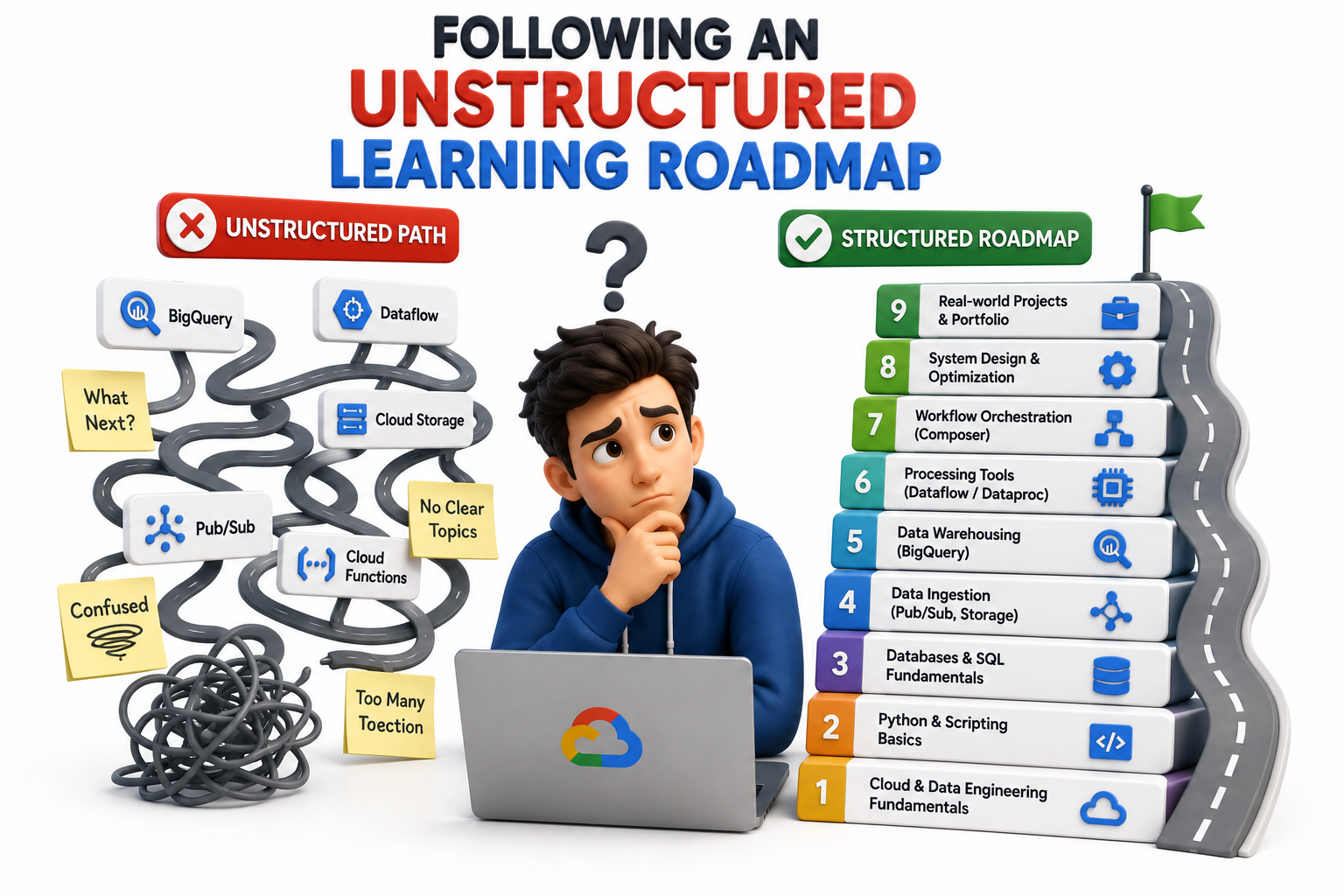
Many beginners search for random YouTube videos, blogs, and documentation without any logical sequence. While each resource may be useful individually, the overall learning journey becomes fragmented.
A structured roadmap helps connect concepts progressively, making advanced topics easier to understand.
A recommended progression looks like this:
Learn SQL thoroughly
Build Python programming skills
Understand databases
Study data warehousing concepts
Learn cloud fundamentals
Explore core GCP services
Build end-to-end projects
Practice system design
Prepare for certifications
Apply knowledge through real datasets
This structured approach is also the answer for learners asking how to become a gcp data engineer. Success comes from gradually mastering each layer instead of skipping directly to advanced cloud services.
Consistency matters far more than speed. Even one focused hour every day produces better long-term results than irregular study sessions.
Preparing Only for Certifications Instead of Real Interviews
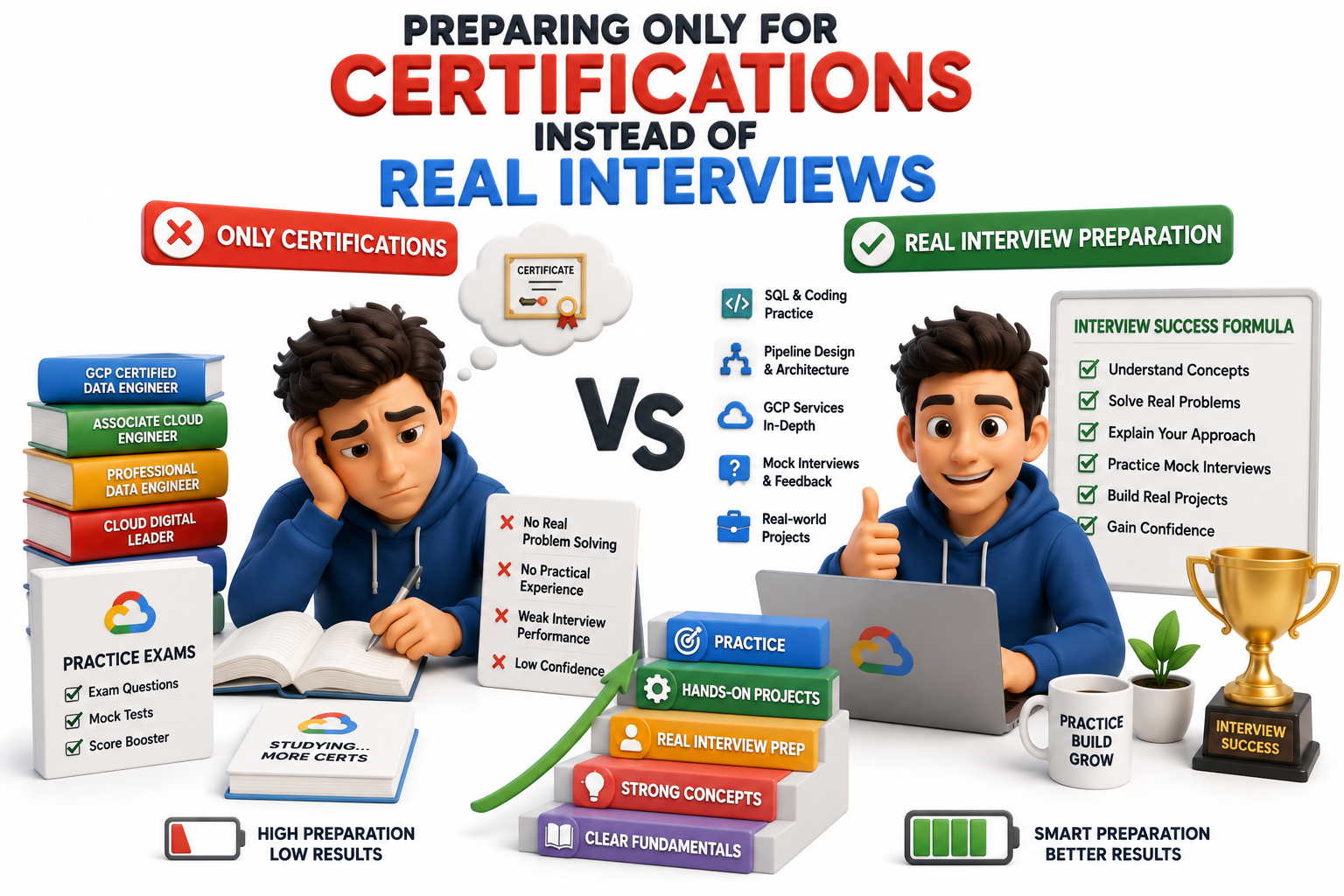
Google Cloud certifications are valuable, but many beginners mistakenly believe certification alone guarantees employment.
Recruiters and technical interviewers evaluate practical thinking, debugging ability, architecture knowledge, and problem-solving skills—not just exam scores.
A balanced preparation strategy should include:
SQL problem solving
Python coding practice
Designing scalable pipelines
BigQuery optimization
Streaming architecture concepts
Real project discussions
Mock technical interviews
Cloud architecture explanations
Preparing for a gcp data engineer interview question should involve understanding why specific services are selected, the trade-offs involved, and how you would solve business problems using Google Cloud rather than simply recalling documentation.
Employers appreciate candidates who can explain architectural decisions clearly because that reflects real workplace experience more than theoretical knowledge.
Conclusion
Learning GCP Data Engineering is not about memorizing every cloud service or collecting certifications. It is about understanding data engineering principles, building practical experience, solving real business problems, and continuously improving technical skills. Avoiding common beginner mistakes can significantly shorten your learning curve while making your knowledge more relevant to industry requirements.
The most successful cloud data engineers focus on consistency, hands-on projects, structured learning, and practical problem-solving. With the right roadmap and guidance from JASTTech, aspiring professionals can develop industry-ready expertise, build an impressive portfolio, and confidently pursue rewarding careers in Google Cloud Data Engineering. As cloud technologies continue evolving, engineers who combine strong fundamentals with real implementation skills will remain in high demand across industries.