

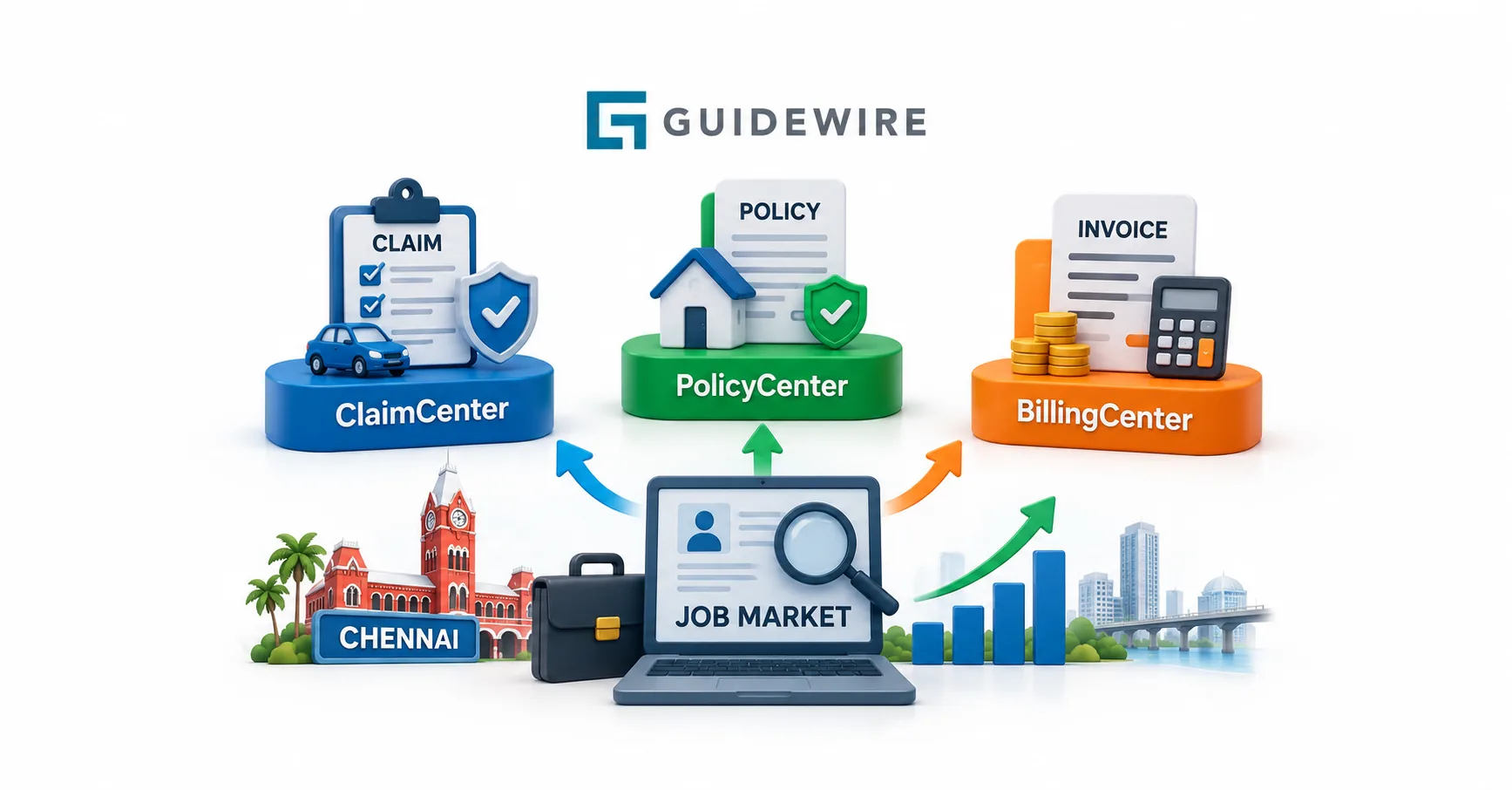
Guidewire ClaimCenter, PolicyCenter or BillingCenter in Chennai: Which Module Has the Best Job Market?
Navigate through this article using the table of contents below
Table of Contents
No headings found in this article.
Three Guidewire consultants sat in the same Chennai cafeteria last year — one working on claims, one on policies, one on billing. Only one of them had three recruiters calling by Friday.
That's the real question behind every Guidewire ClaimCenter Chennai search: which module actually gets you hired faster? Chennai has quietly become one of India's busiest Guidewire hubs, and picking the right specialization inside this ecosystem can shape your next five years more than any certificate on your resume.
Why Chennai Became a Guidewire Hotspot in the First Place
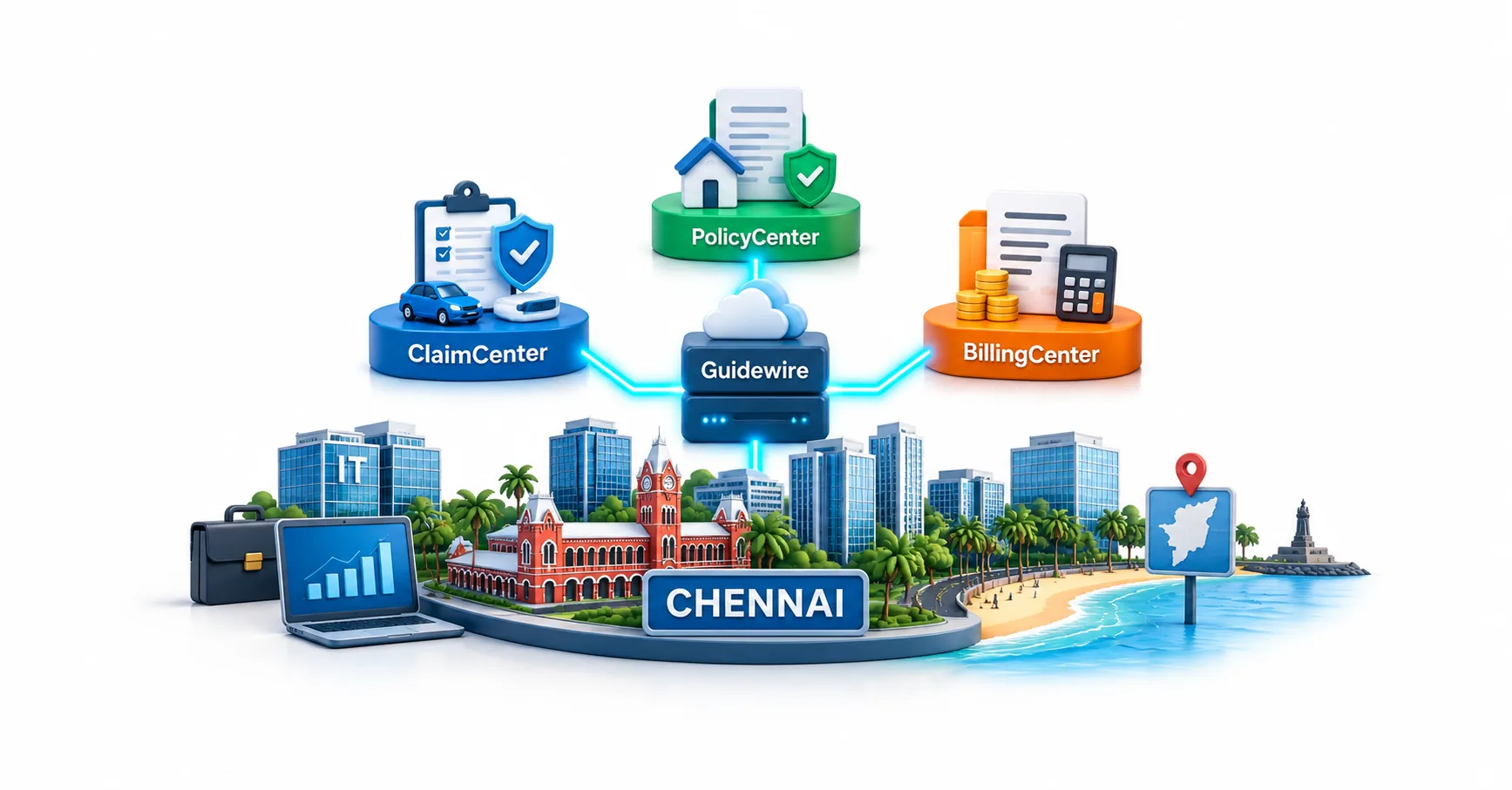
Chennai didn't become a Guidewire center by accident. The city already had a mature insurance and BFSI services base, thanks to global capability centers and IT service majors setting up shop here decades ago. When insurers started migrating legacy systems to Guidewire's InsuranceSuite, Chennai's existing talent pool made it a natural landing spot.
Add to that the lower operational costs compared to Bangalore or Pune, plus a steady pipeline of engineering graduates from local colleges, and you get a city that insurers and implementation partners both value. The Guidewire modules and job opportunities in Chennai are increasingly concentrated around business hubs such as Ambattur, OMR, and Sholinganallur, where GCCs and consulting firms have established delivery centers
This concentration matters practically. It means networking events, meetups, and referral hiring happen more organically here than in scattered markets. If you're already in Chennai or considering a move, you're stepping into an ecosystem where Guidewire skills circulate fast through word of mouth, not just job portals. That density itself becomes a career advantage.
ClaimCenter: Where Complexity Meets Constant Demand
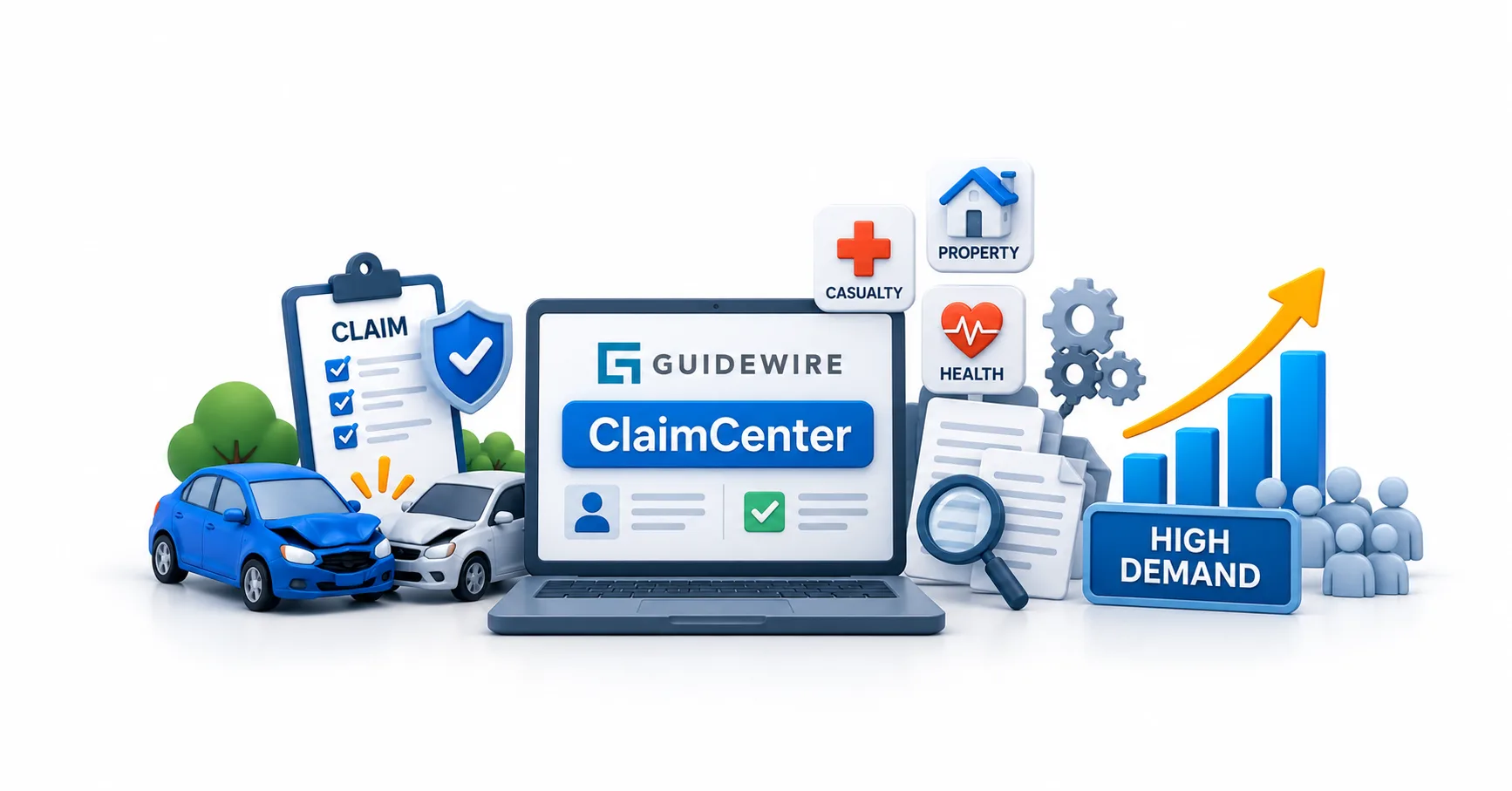
ClaimCenter handles the most operationally complex part of an insurer's business — the actual claims lifecycle, from first notice of loss to settlement. That complexity is exactly why it tends to generate consistent hiring demand.
Insurers can survive a clunky policy admin system for a while, but a broken claims process directly hits customer satisfaction and regulatory compliance. This urgency keeps ClaimCenter projects funded even when broader IT budgets tighten.
For professionals, this translates into deeper, longer-running engagements. ClaimCenter consultants often work closely with business rules, integration with third-party fraud detection tools, and workflow configuration — skills that don't become obsolete quickly. If you enjoy solving process-heavy puzzles rather than just configuring screens, this module rewards that mindset.
There's also a practical side to this demand. Insurers rarely rip out and replace ClaimCenter once it's live; instead, they keep extending it — adding integrations, automating manual steps, and layering in analytics. That ongoing evolution means ClaimCenter professionals aren't hired once for a go-live and then let go. They stick around through multiple enhancement cycles, building institutional knowledge that employers value.
Chennai-based GCCs handling claims transformation for global insurers frequently need professionals who understand both the technical configuration and the real-world claims process. That dual understanding is hard to find, which keeps experienced ClaimCenter talent in a strong negotiating position, especially at the 3–6 year experience mark.
PolicyCenter: The Foundation Every Insurer Eventually Touches
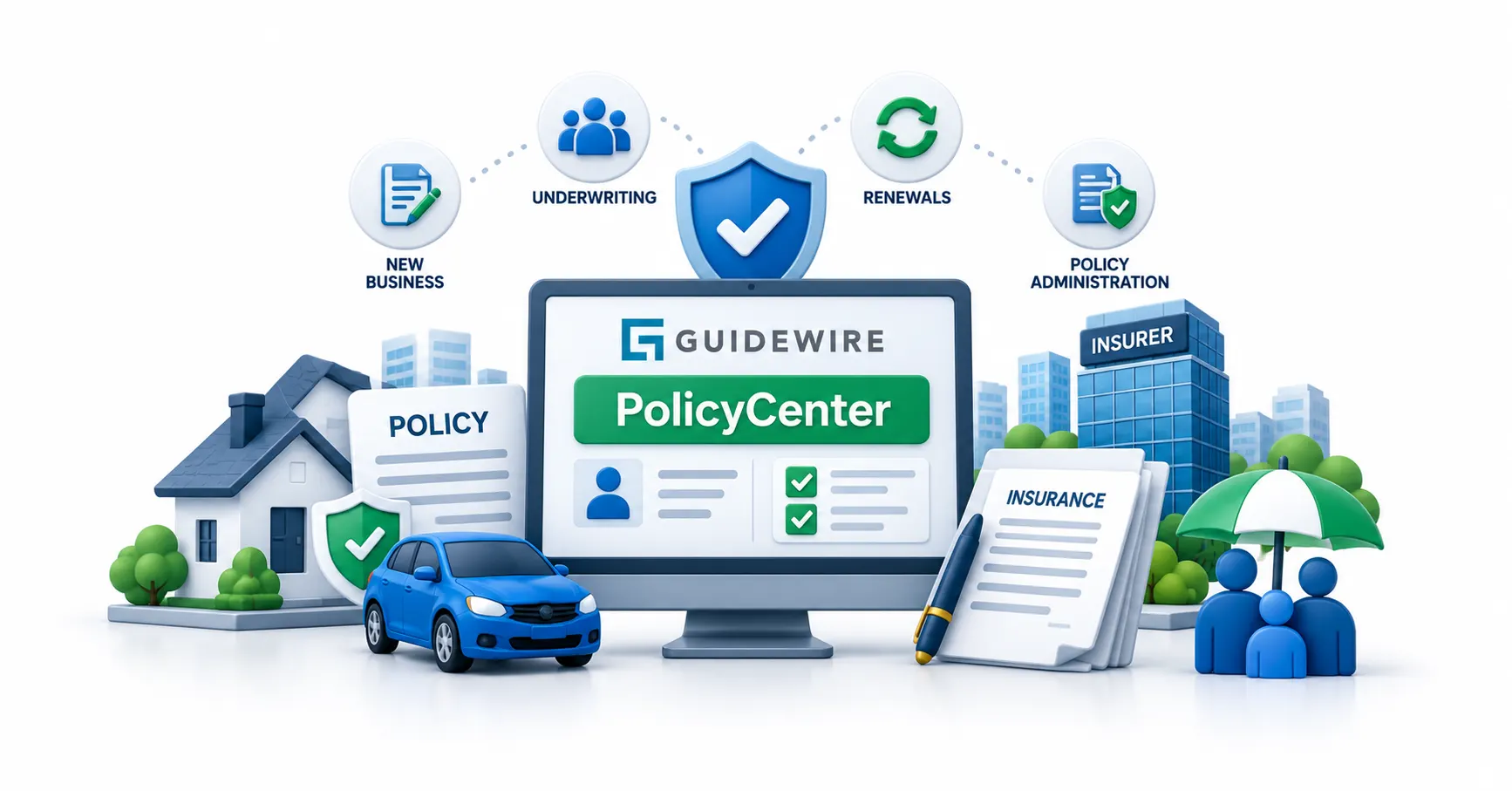
If ClaimCenter is where the fire happens, PolicyCenter is the blueprint of the building itself. It governs how policies get created, rated, underwritten, and renewed — the core commercial engine of any insurance company.
Because PolicyCenter sits at the heart of new product launches, it tends to see hiring spikes whenever an insurer expands into a new line of business or geography. This makes PolicyCenter roles somewhat cyclical compared to ClaimCenter's steadier demand, but the peaks can be significant.
Rating and underwriting logic in PolicyCenter is notoriously intricate, and that complexity is a double-edged sword for job seekers. It takes longer to become genuinely proficient, but once you are, you're harder to replace. Many Chennai-based implementation partners specifically look for PolicyCenter developers who've handled product model configuration end-to-end, not just surface-level customization.
If you enjoy business-side thinking — understanding how insurance products actually get priced and sold — this module offers a closer connection to the commercial side of insurance than the other two, which can be a genuine advantage for anyone eyeing a business analyst or solution architect path later.
BillingCenter: The Quiet Module With an Underrated Advantage
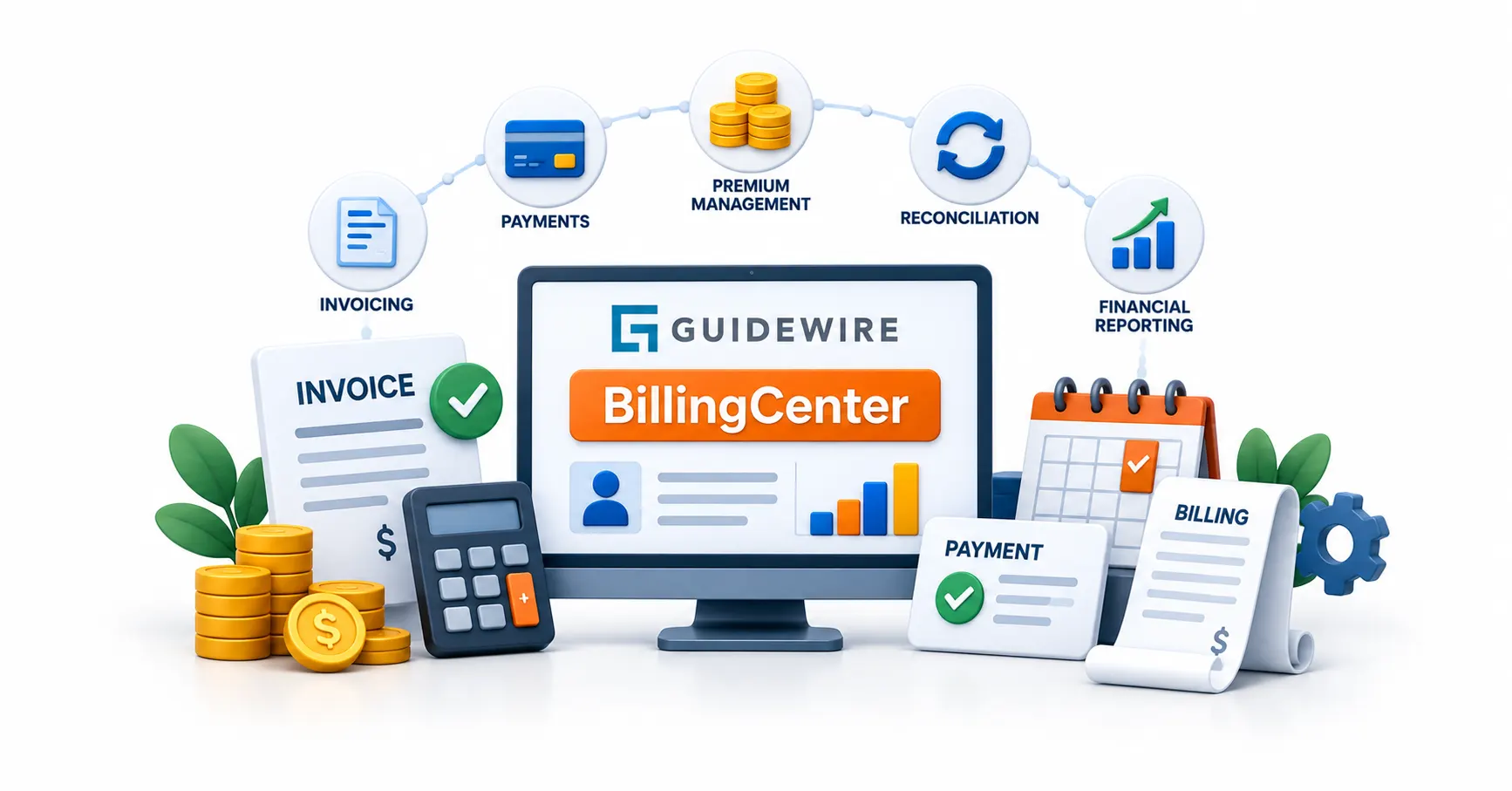
BillingCenter often gets less attention than PolicyCenter or ClaimCenter when people discuss Guidewire careers, but that can actually work in its favor. The number of professionals specializing deeply in billing is relatively smaller, so experienced BillingCenter consultants may face less direct competition for specialized roles.
BillingCenter handles some of the most business-critical processes in an insurance organization, including invoicing, payment plans, delinquency management, and commission-related workflows. These areas may not attract as much attention as claims or underwriting, but they directly affect how an insurer collects and manages money. When billing operations face problems, the impact on revenue can be immediate, making skilled professionals in this area particularly valuable.
Chennai is also an interesting market for BillingCenter professionals because of the presence of insurance technology teams and GCCs involved in large-scale financial and back-office operations. BillingCenter projects can involve integrations with payment gateways, accounting platforms, reporting systems, and other enterprise applications. This creates opportunities for professionals who understand both the Guidewire platform and the financial processes surrounding it.
For professionals exploring Guidewire certification and training in India, BillingCenter can therefore be worth considering alongside the more commonly discussed modules. Certification alone, however, should not be treated as a shortcut to employment. Practical knowledge of billing workflows, integrations, Gosu, APIs, and real project scenarios is what can make a candidate considerably more useful to an employer.
The main limitation is that BillingCenter generally has fewer openings than PolicyCenter or ClaimCenter. That doesn't make it a poor career choice; it simply means the market is more specialized. Someone who develops strong BillingCenter expertise may benefit from being part of a smaller talent pool rather than competing with a much larger number of general Guidewire candidates.
Another advantage is that many of the underlying skills are transferable. Payment processing, financial integrations, reconciliation, delinquency workflows, and transaction management are not exclusive to insurance. Similar concepts appear in banking, fintech, and subscription-based technology platforms. That gives BillingCenter professionals an additional layer of career flexibility as they gain experience.
For someone who prefers specialization over following the most crowded Guidewire career path, BillingCenter can be a practical long-term option—provided the focus is on genuine project skills rather than simply collecting a certification.
Comparing Salaries, Openings, and Growth Trajectories
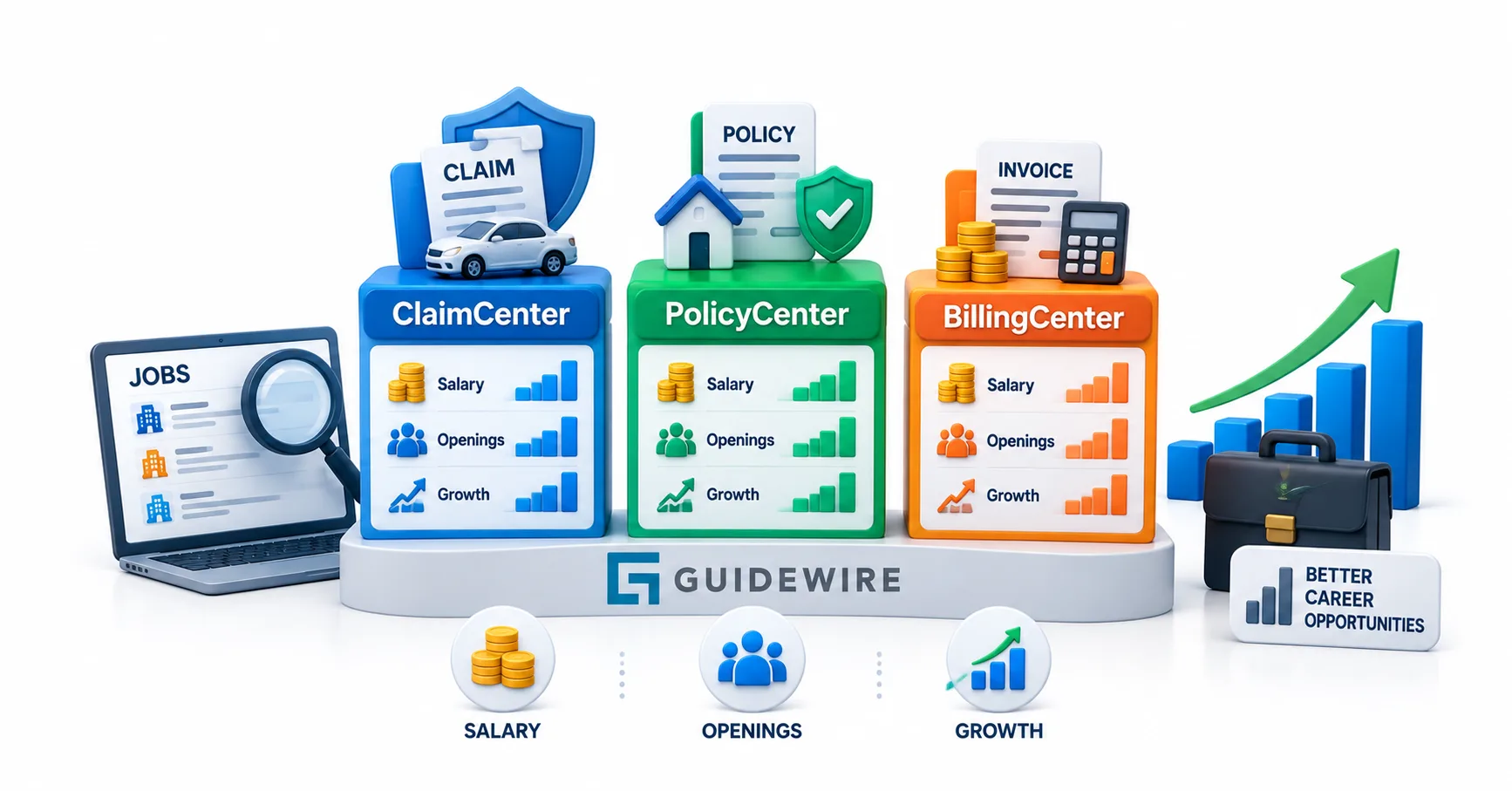
No single module wins across every metric, which is exactly why this comparison matters. ClaimCenter typically shows the highest volume of open positions in Chennai at any given time, simply because claims transformation projects run continuously across the insurance industry.
PolicyCenter roles often carry strong compensation, particularly for professionals who've handled full product configuration cycles, but openings can fluctuate based on which insurers are actively launching new products.
BillingCenter, while having fewer total listings, frequently shows less applicant competition per role — a factor that matters just as much as raw opening counts when you're actually job hunting.
Career growth also differs. ClaimCenter experience transfers well into broader insurtech and claims automation roles. PolicyCenter experience often opens doors toward solution architecture and pre-sales roles, since it demands deeper business knowledge. BillingCenter experience, meanwhile, pairs unusually well with fintech and payments-adjacent roles outside pure insurance, giving specialists an exit ramp most people overlook.
If you're weighing PolicyCenter against ClaimCenter specifically, this detailed breakdown of Guidewire PolicyCenter vs ClaimCenter walks through the functional differences in more depth, which is worth reading before committing to either path.
How to Choose the Right Module for Your Career Path
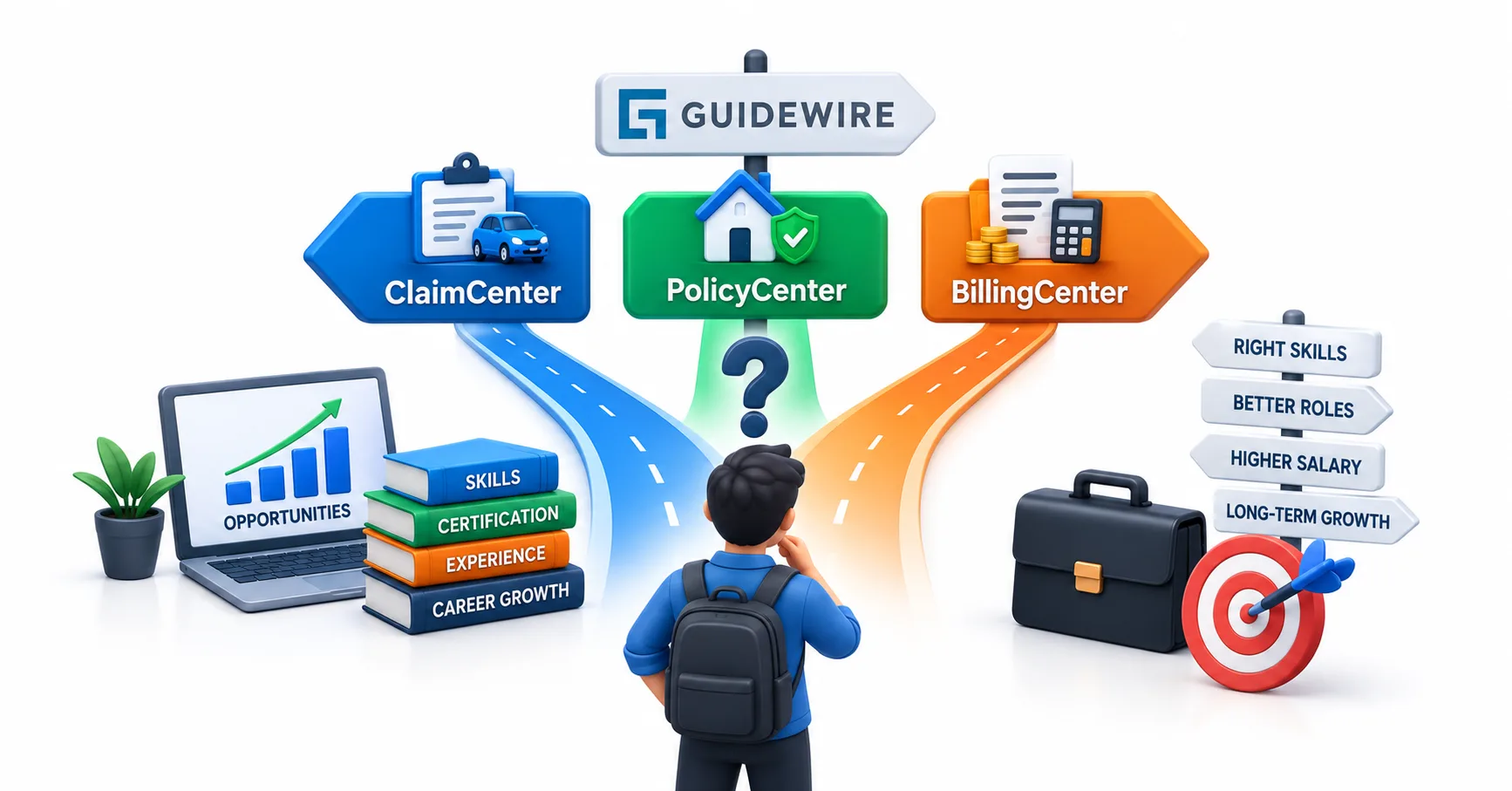
Choosing between these three modules shouldn't be about which one sounds more impressive on a résumé. The better question is which type of work matches the way you naturally think, solve problems, and approach technology.
If you enjoy process logic, exception handling, troubleshooting, and cross-system integrations, ClaimCenter may feel like the most natural fit. Its strong presence in insurance implementations also means there is typically a steady demand for professionals with solid ClaimCenter experience.
If you're more interested in business rules, product configuration, pricing logic, and how insurance products are structured, PolicyCenter can offer a broader path into configuration, consulting, and eventually architecture-oriented roles.
BillingCenter is worth considering if you prefer specialization and want to work in a less crowded area of the Guidewire ecosystem. There may be fewer openings compared with PolicyCenter or ClaimCenter, but professionals who develop strong expertise in billing workflows, financial integrations, and payment processes can become valuable specialists.
Ultimately, developing the right Guidewire skills for growing your career matters more than simply choosing the most popular module. A practical approach for many professionals in Chennai is to begin with the module they get exposure to in their first project and build genuine expertise over the next couple of years. Once that foundation is strong, adding a second module can significantly expand the type of projects you can contribute to.
For example, someone with experience across ClaimCenter and BillingCenter, particularly around their integration points, can bring a broader perspective to end-to-end insurance implementations. Instead of remaining limited to a single functional area, they can understand how claims and billing processes interact across the wider insurance platform. That kind of cross-module knowledge can become a meaningful advantage as your Guidewire career progresses.
Conclusion
There's no universally "best" module — ClaimCenter offers volume, PolicyCenter offers depth and business exposure, and BillingCenter offers scarcity-driven advantage. For anyone evaluating Guidewire ClaimCenter Chennai opportunities against PolicyCenter or BillingCenter roles, the smarter question isn't which module is hottest right now, but which one matches how you actually want to work.