


Guidewire Freelance & Contract Opportunities in Hyderabad: Is Consulting Worth It?
Navigate through this article using the table of contents below
Table of Contents
No headings found in this article.
I know a senior Guidewire developer who left her regular job, found her first freelance project in about six weeks, and was earning almost twice her previous income within four months. But I also know someone who tried freelancing with similar experience and went nearly three months without getting a serious response. That difference is why Guidewire freelance Hyderabad is getting so much attention these days. There are genuine opportunities, especially for developers with solid project experience, but getting those opportunities is not as simple as creating a profile and waiting for clients. Your technical skills, network, communication, and the kind of Guidewire projects you have worked on can make a big difference.
For someone planning to enter this space, a Guidewire course in Hyderabad can be a good way to build the right foundation, especially if it includes practical work on PolicyCenter, ClaimCenter, BillingCenter, Gosu, configuration, and integrations. But completing a course alone will not guarantee freelance work. You still need to show what you can actually do, build a strong LinkedIn presence, connect with the right people, and learn how to approach clients and discuss project requirements. Freelancing can work well in Guidewire, but it is better to build your skills and find a few potential leads first instead of leaving a stable job and assuming projects will come immediately.
Why Hyderabad Has Quietly Become a Guidewire Consulting Hotspot

Hyderabad's insurance-technology ecosystem didn't happen overnight. Over the past decade, the city has built a dense cluster of insurers, TPAs, and IT service providers, many of whom run Guidewire implementations for US and European clients.
That concentration matters for freelancers. When multiple companies in one city need the same niche skill, contract demand becomes steadier instead of a one-off project here and there. HITEC City and Gachibowli alone host teams supporting PolicyCenter, ClaimCenter, and BillingCenter rollouts for global carriers.
Local networking events, Guidewire community meetups, and alumni referrals from established Guidewire training in Hyderabad programs also feed this pipeline. Consultants who've been through structured training tend to already know people working inside these companies, which shortens the distance between "looking for work" and "signing a contract."
There's also a cost angle. Clients based abroad often prefer Hyderabad-based contractors because delivery quality remains high while engagement costs stay competitive compared to onshore consultants. That combination — skilled talent plus favorable economics — is precisely what keeps contract volume flowing into the city rather than drying up after a project or two.
Read more :- Is Guidewire a Good Career Choice in India? Salary, Jobs, Skills & Future Scope
What Does a Guidewire Freelance Contract Actually Pay?

This is the question everyone wants answered first, and fair enough — money is the whole reason consulting gets attractive. Guidewire contract rates in Hyderabad vary widely based on module expertise, seniority, and whether the engagement is remote or requires occasional onsite visits.
Configuration specialists working on PolicyCenter or ClaimCenter typically command higher day rates than those handling only integration or reporting tasks, simply because configuration work touches core business rules and carries more responsibility. Someone certified across multiple Guidewire products, with three or more implementation cycles behind them, sits in a stronger negotiating position than a generalist.
Here's a practical example: a mid-level PolicyCenter consultant with four years of experience might negotiate a monthly contract rate noticeably above what a comparable full-time salary would offer, precisely because the client isn't paying for benefits, notice periods, or long-term commitment.
That said, rates fluctuate with demand cycles. During a major insurer's digital transformation push, contract rates spike. Between projects, they soften. Anyone comparing offers should also weigh in-hand payment terms, since 30-, 60-, and 90-day invoice cycles are common in this space and directly affect real cash flow.
Freelancing vs. Full-Time: The Difference Nobody Explains Properly
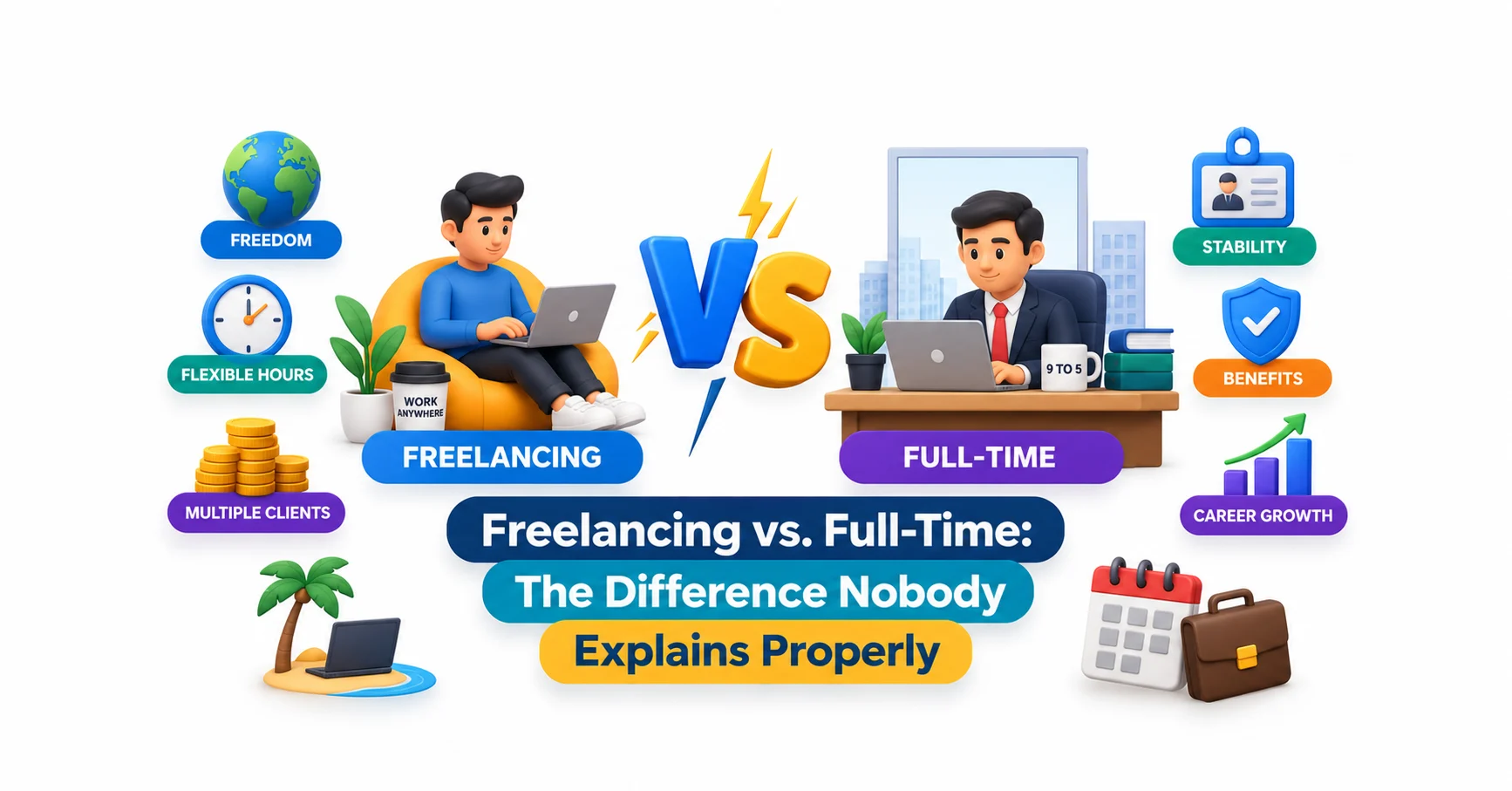
| Career Factor | Guidewire Freelancing | Guidewire Full-Time Job |
|---|---|---|
| Income Potential | Income can increase with experience, project complexity, and multiple clients, but monthly earnings may vary. | Usually offers a fixed monthly salary with structured increments, bonuses, and company benefits. |
| Job Stability | Work depends on finding and retaining clients. There may be gaps between projects. | Provides a more predictable income and employment structure as long as you remain with the organization. |
| Career Growth | Freelancers can work across different Guidewire projects, clients, and domains, which may broaden practical experience. | Growth is generally tied to promotions, responsibilities, internal projects, and the company's career structure. |
| Work Flexibility | Offers more control over projects, working hours, and location, depending on client requirements. | Working hours, location, and project assignments are usually determined by the employer. |
| Best Fit For | Experienced Guidewire professionals who can manage clients, deliver projects independently, and build a steady pipeline. | Professionals who prefer predictable income, structured learning, team collaboration, and long-term employment. |
Most comparisons stop at "freelancers earn more, employees get stability." That's true on the surface, but it misses the operational reality.
A full-time Guidewire employee gets structured onboarding, a defined career ladder, and someone else handling client relationships. A freelancer manages all of that personally — sourcing work, negotiating terms, handling taxes, and absorbing any gaps between projects without a paycheck cushion.
Consider two professionals with identical skill sets. One takes a permanent role at an insurance carrier's Hyderabad office and spends five years moving from developer to lead. The other freelances the same five years, hopping between three or four clients, learning ClaimCenter deeply on one project and BillingCenter integrations on another.
By year five, the freelancer often has broader exposure across modules and industries, while the employee has deeper institutional knowledge of one organization's systems. Neither path is objectively better — it depends on whether someone values variety and control over predictability and structure.
What's rarely discussed is the emotional toll of uncertainty. Full-time roles protect against slow months; freelancing doesn't. Anyone weighing this decision should be honest with themselves about how they handle income unpredictability, not just the headline pay difference.
Skills That Actually Land You Guidewire Contracts

Clients hiring contractors aren't just checking a "Guidewire experience" box — they're solving urgent, specific problems, and they hire people who've solved similar ones before.
Configuration expertise in PolicyCenter remains one of the most requested skills, particularly for insurers modernizing legacy underwriting workflows. This demand connects directly to what's covered in why Guidewire PolicyCenter is a growing career opportunity in Hyderabad, where the module's rising adoption across regional insurers is explained in more depth.
Beyond configuration, integration skills using Guidewire's APIs, along with GOSU scripting proficiency, consistently appear in contract job descriptions. Consultants who can also speak the language of insurance — underwriting logic, claims workflows, billing cycles — stand out from purely technical candidates.
Soft skills matter more than people expect. Freelancers who communicate clearly with distributed teams across time zones, document their work without being asked, and manage client expectations proactively get renewed contracts far more often than those who simply write good code.
For anyone still building this foundation, structured Guidewire training remains one of the fastest ways to close skill gaps before entering the contract market, rather than learning expensive lessons on a live client project.
The Hidden Risks Nobody Warns You About

Every freelancing conversation focuses on freedom and income potential. Fewer people talk honestly about what can go wrong.
Payment delays are the most common complaint among Guidewire contractors in Hyderabad. Some clients, particularly those working through multiple subcontracting layers, stretch payment terms well beyond what was originally agreed, leaving freelancers managing cash flow gaps for work already delivered.
Scope creep is another quiet risk. A contract scoped for configuration work can slowly expand to include testing, documentation, and production support, without any adjustment to the agreed rate — unless the contractor pushes back early and puts boundaries in writing.
There's also the isolation factor. Full-time teams build institutional memory and mentorship naturally. Freelancers, especially newer ones, can find themselves solving unfamiliar problems without a support network, which slows delivery and adds stress.
Finally, tax and compliance obligations fall entirely on the individual. Without an employer handling deductions, freelancers need to actively manage GST registration, invoicing, and income tax filings — an administrative burden many underestimate until the first filing deadline arrives.
None of this means freelancing is a bad choice. It means going in informed, with contracts, payment terms, and scope boundaries clearly defined before work begins.
Building a Steady Pipeline of Guidewire Consulting Work
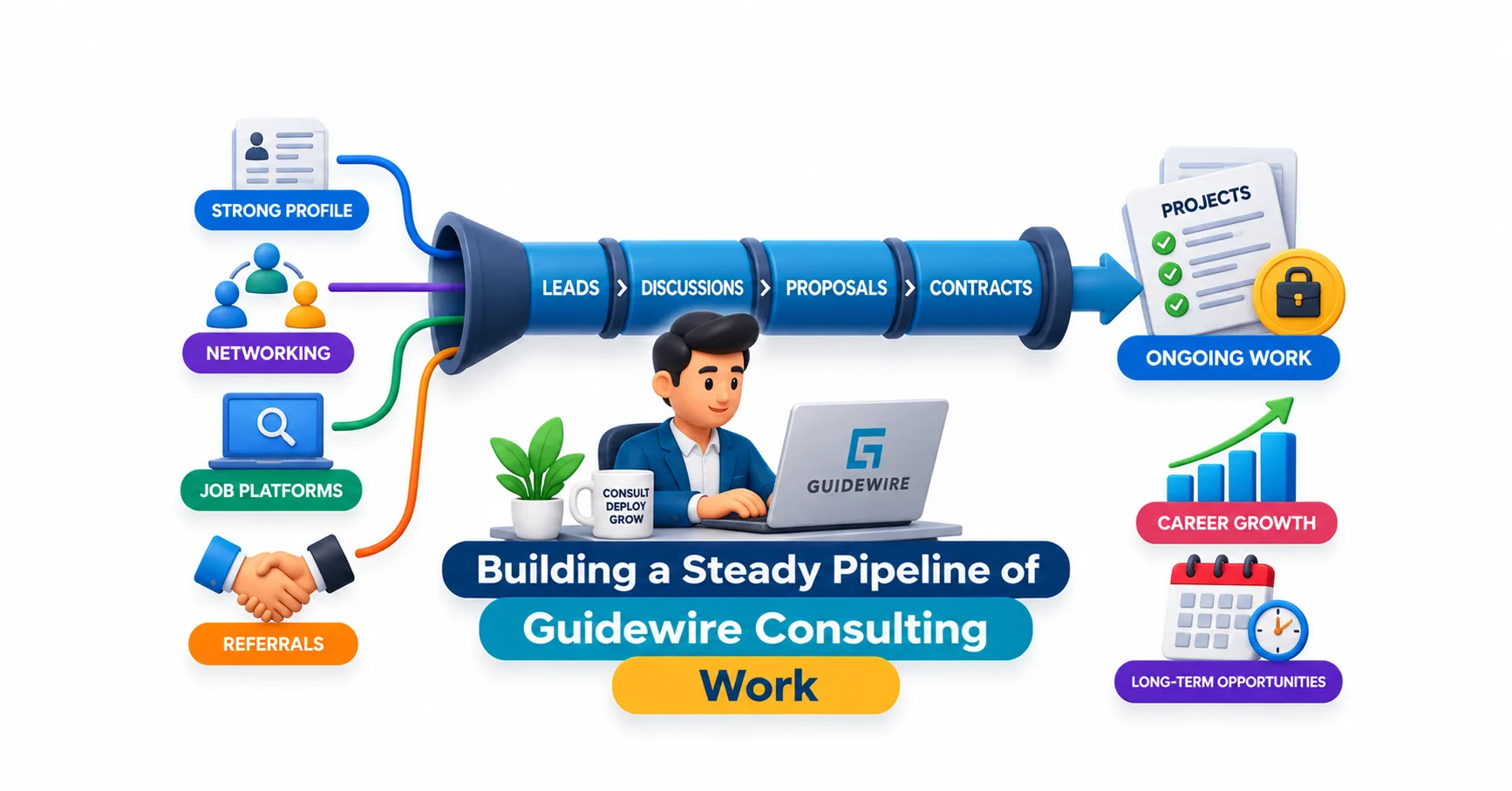
The biggest fear among first-time freelancers isn't the work itself — it's the silence between contracts. Building a reliable pipeline solves that problem, and it starts well before the first project ends.
Referrals remain the strongest source of repeat work in the Guidewire space. Delivering one project well, staying responsive after it closes, and maintaining light contact with past clients often generates the next opportunity without any formal job search.
Specialized IT staffing firms and Guidewire implementation partners based in Hyderabad also maintain active contractor networks. Getting listed with two or three of these simultaneously widens exposure without requiring full-time commitment to any single agency.
Professional visibility matters too. An updated LinkedIn profile listing specific modules, certifications, and completed implementations attracts recruiters actively searching for niche Guidewire skills, rather than generic IT consultants.
A practical approach many established freelancers use: overlap contracts slightly, starting conversations for the next project a month or two before the current one wraps up. This avoids the classic freelancer trap of finishing one contract and only then beginning the search for another, which almost guarantees an income gap.
Diversifying across two or three active clients, even part-time, also cushions against any single client ending an engagement unexpectedly.
Is Guidewire Consulting Worth It in 2026?

The honest answer: it depends entirely on what someone is optimizing for.
For a mid-career professional with strong PolicyCenter or ClaimCenter experience, solid client references, and genuine comfort with income variability, Guidewire freelance and contract work in Hyderabad can outperform a comparable full-time salary while offering broader project exposure.
For someone early in their Guidewire journey, still building core configuration or integration skills, jumping straight into freelancing without a support system can mean underpricing work, absorbing scope creep, or struggling through slow months with limited savings. A more sustainable path for this group often starts with a full-time or structured contract role first, then transitioning into independent consulting once skills, certifications, and industry contacts are firmly established.
Anyone genuinely exploring this shift benefits from strengthening technical fundamentals first — a well-structured Guidewire training in Hyderabad program can be the difference between chasing contracts on hope and walking into client conversations with real, demonstrable expertise, which changes negotiating power immediately.
Consulting rewards preparation far more than enthusiasm. Those who treat it as a business, not just freelance work, tend to be the ones still thriving in it years later.
Conclusion
Guidewire freelance work in Hyderabad genuinely pays off for consultants who enter with strong skills, clear contracts, and realistic expectations about income gaps. It rewards preparation over impulse. For the right profile, it's not just worth it — it's one of the smarter career moves available in insurance tech right now.