

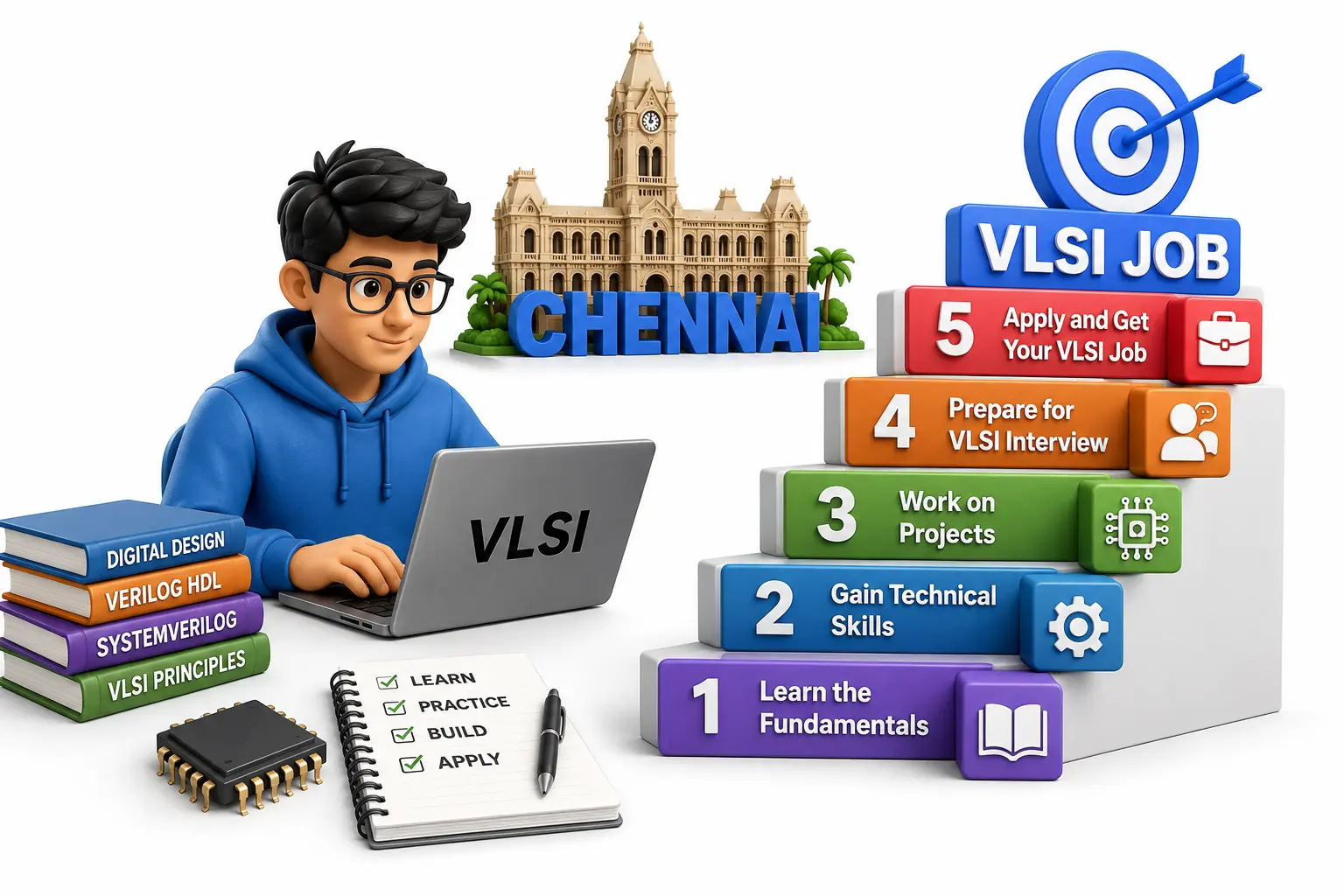
How to Get a VLSI Job in Chennai: A Step-by-Step Guide
Navigate through this article using the table of contents below
Table of Contents
No headings found in this article.
The Indian semiconductor industry is creating thousands of new opportunities, but many freshers still struggle to secure their first VLSI job. The biggest challenge isn't the lack of openings—it's knowing exactly what companies expect before they hire.
If you're serious about building a successful semiconductor career, understanding the right learning path is essential. This guide explains every step, from developing technical skills to preparing for a VLSI interview, while showing Why Chennai Is the Best City to Start Your VLSI Career.
Why Chennai Is the Best City to Start Your VLSI Career

Chennai has become one of India's fastest-growing semiconductor and embedded systems hubs. The city hosts numerous semiconductor design centers, electronics manufacturers, automotive technology companies, and engineering service providers, creating strong demand for skilled VLSI professionals.
Unlike many cities where opportunities are concentrated in only a few companies, Chennai offers a diverse ecosystem covering chip design, embedded systems, automotive electronics, and semiconductor verification. This gives fresh graduates multiple career options instead of depending on a single specialization.
Some major advantages include:
Growing semiconductor design ecosystem
Excellent electronics manufacturing network
Strong automotive semiconductor demand
Better internship opportunities
Continuous hiring by multinational companies
Large engineering talent pool encouraging innovation
This combination makes Chennai one of the most attractive destinations for electronics graduates beginning their VLSI careers.
Learn the Right Technical Skills Before Applying
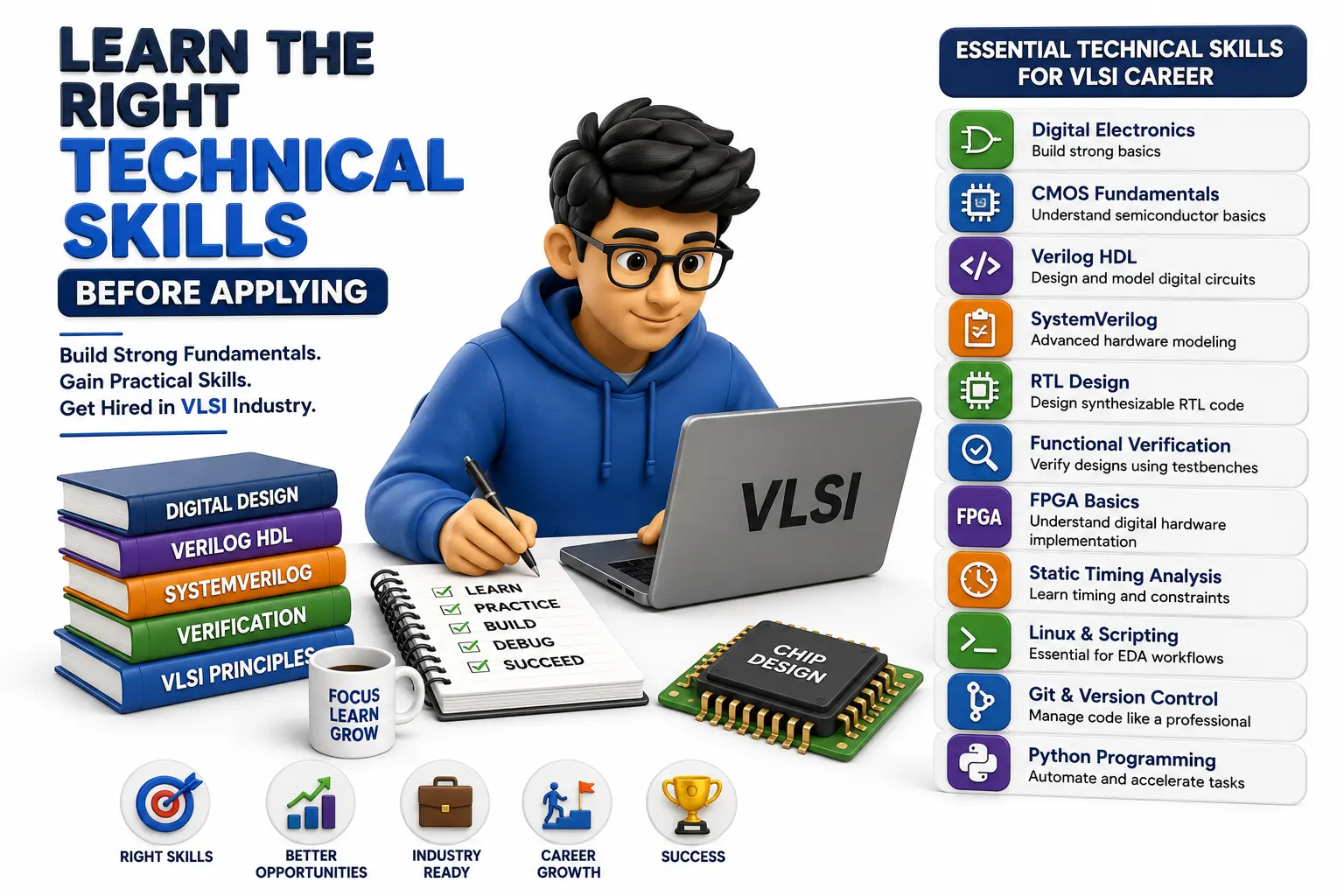
Many students start applying for jobs immediately after graduation without first building the technical foundation recruiters expect. Successful candidates focus on practical industry skills rather than only academic knowledge.
Core technical areas include:
Digital Electronics
CMOS Fundamentals
Verilog HDL
SystemVerilog
RTL Design
Functional Verification
FPGA Basics
Static Timing Analysis
Linux
Shell Scripting
Python
Git Version Control
Understanding industry workflows is equally important. Companies prefer candidates who know how RTL is developed, verified, debugged, synthesized, and prepared for fabrication rather than those who only understand textbook concepts.
Practical exposure through simulations, debugging exercises, and implementation projects significantly improves employability and technical confidence.
Choose the Right VLSI Course in Chennai
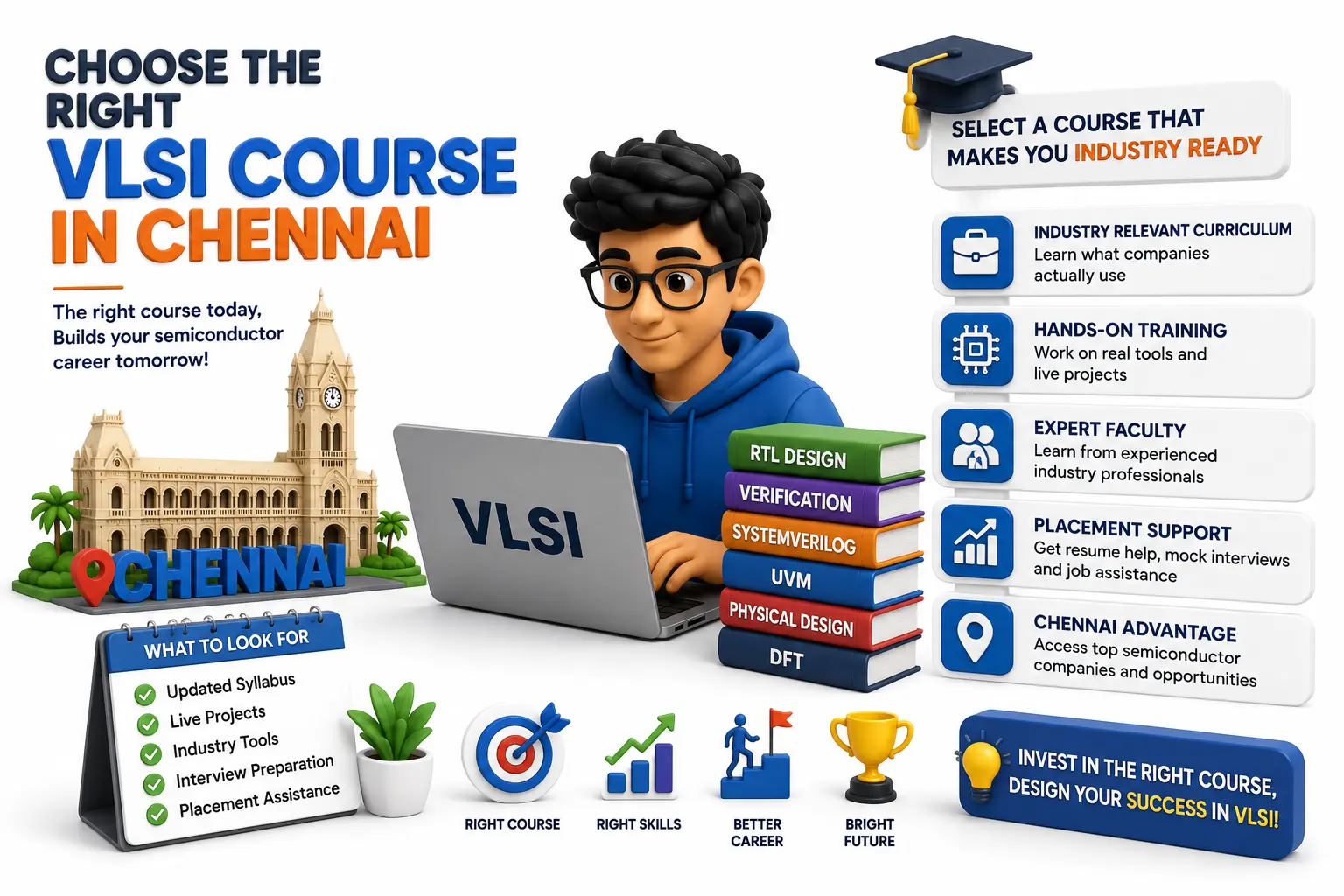
Selecting the right VLSI course in Chennai can dramatically improve your chances of landing interviews. Instead of choosing a course based only on duration or fees, evaluate whether it focuses on real industry requirements.
A quality training program should include:
RTL Design
Functional Verification
SystemVerilog
UVM Fundamentals
Industry-standard EDA tools
Linux environment
Scripting
Live projects
Interview preparation
Resume guidance
Placement assistance
At JastTech, students learn through project-based training designed around actual semiconductor development workflows. Instead of memorizing concepts, learners gain hands-on experience with design implementation, debugging, verification, and industry practices that employers value.
A structured learning environment shortens the transition from college education to professional semiconductor engineering.
Build Practical Projects That Strengthen Your Resume
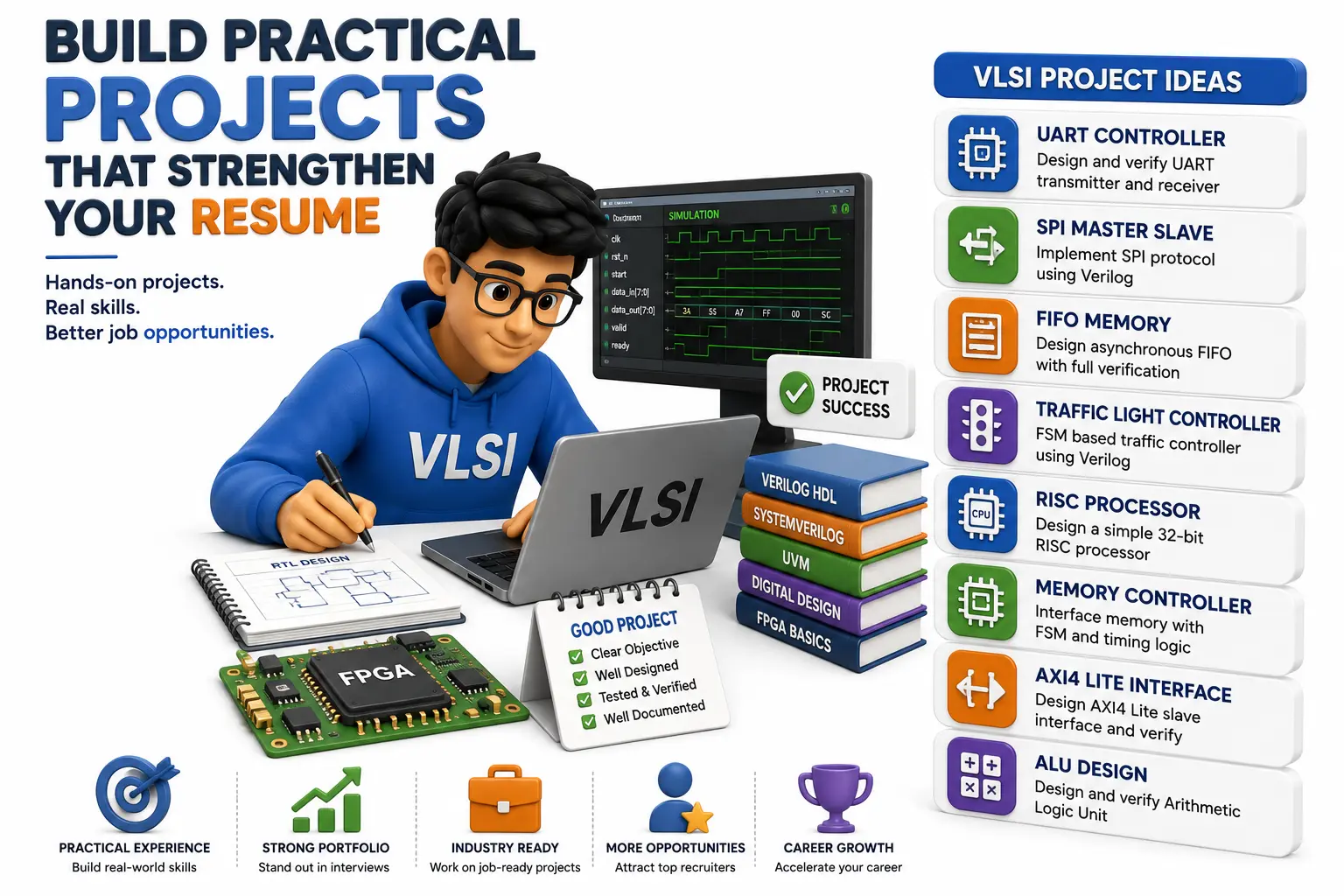
Recruiters rarely select candidates based only on certifications. Projects demonstrate your ability to solve engineering problems and apply theoretical knowledge.
Strong VLSI projects may include:
UART Controller
FIFO Memory
SPI Protocol
I2C Controller
ALU Design
Traffic Light Controller
RISC Processor
Memory Controller
AXI Interface
FSM-Based Digital Systems
Each project should clearly explain:
Problem statement
Design methodology
RTL implementation
Simulation results
Verification strategy
Challenges faced
Lessons learned
Maintaining project documentation on GitHub or a professional portfolio website helps recruiters evaluate your technical capabilities before interviews.
Prepare Smartly for Every VLSI Interview

A successful VLSI interview tests both theoretical understanding and practical thinking. Candidates who merely memorize interview questions often struggle when presented with design scenarios or debugging problems.
Recruiters commonly assess:
Digital logic concepts
Flip-flops and finite state machines
Verilog coding
Timing analysis
Setup and hold concepts
Clock domains
FSM implementation
RTL debugging
Verification methodology
Basic scripting knowledge
Interview preparation should include:
Daily coding practice
Writing Verilog modules without references
Solving timing problems
Explaining previous projects confidently
Mock technical interviews
HR interview preparation
Resume-based questioning
Confidence develops naturally when candidates understand why design decisions are made instead of memorizing definitions.
Apply Strategically and Continue Improving After Every Interview

Landing a VLSI job is often a process rather than a single event. Many successful engineers receive offers after several interviews because they continuously improve based on recruiter feedback.
An effective job search strategy includes:
Applying consistently every week
Customizing resumes for different roles
Networking with professionals
Following semiconductor company hiring updates
Participating in technical communities
Updating project portfolios regularly
Learning new verification and design methodologies
Don't stop learning after receiving interview calls. Semiconductor technology evolves rapidly, and companies value engineers who continuously upgrade their skills.
Regular practice, persistence, and technical curiosity eventually separate successful candidates from the competition.
Conclusion
Getting your first semiconductor job is not about collecting multiple certifications—it's about becoming industry-ready. Employers want engineers who understand digital design, can build practical RTL projects, solve technical problems, and communicate their ideas confidently during a VLSI interview. By focusing on the right technical skills, creating meaningful projects, and following a structured preparation strategy, fresh graduates can significantly improve their chances of securing rewarding opportunities.
Equally important is choosing the right learning environment. A quality VLSI course in Chennai provides hands-on training, exposure to industry-standard tools, mentorship, and interview preparation that bridges the gap between academic knowledge and professional expectations. At JastTech, students gain practical experience through project-based learning designed to match current semiconductor industry requirements. Combined with Chennai's rapidly expanding semiconductor ecosystem, this creates the ideal foundation for launching a successful career. Whether your goal is RTL Design, Functional Verification, or another VLSI specialization, understanding Why Chennai Is the Best City to Start Your VLSI Career can be the first step toward long-term success.