

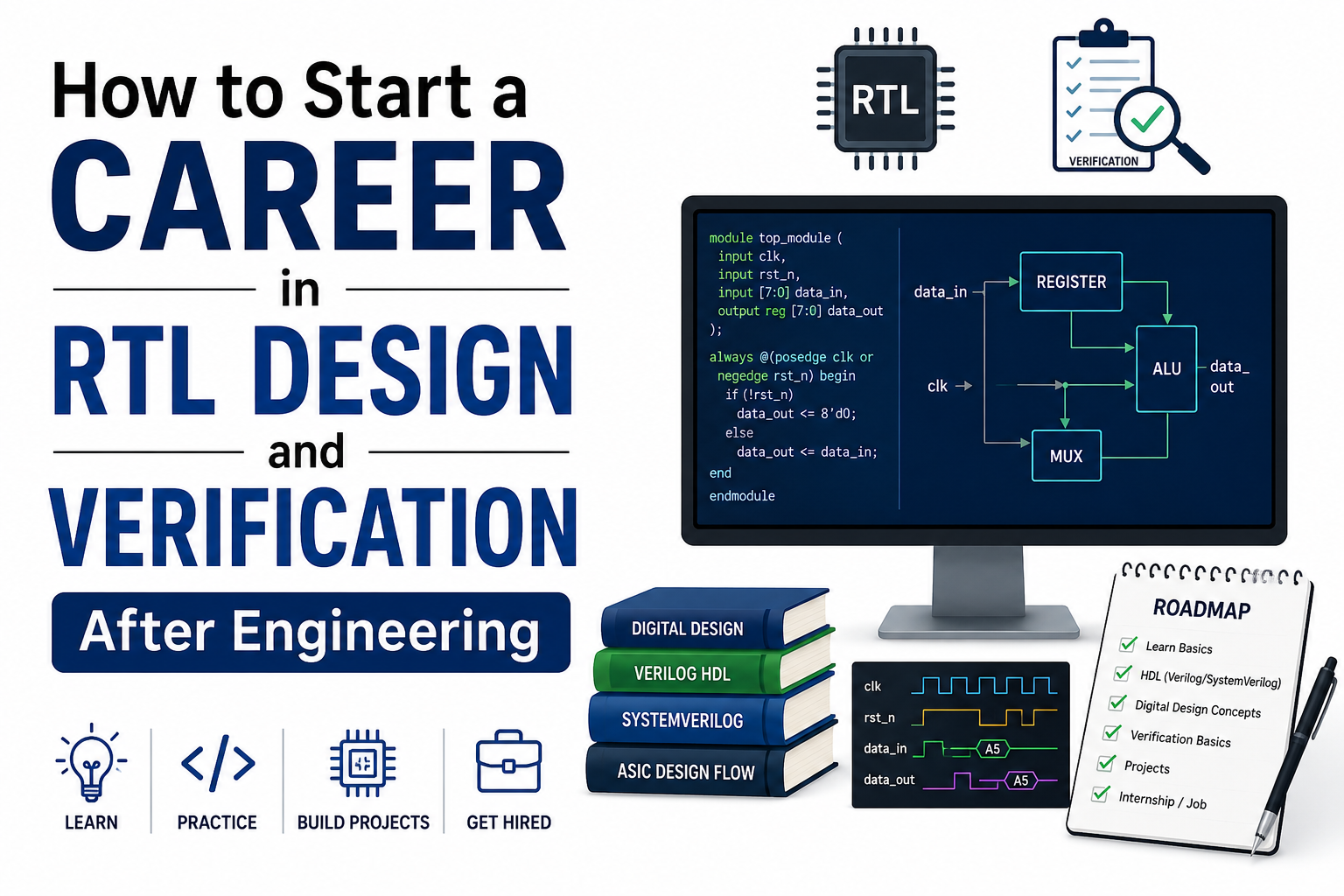
How to Start a Career in RTL Design and Verification After Engineering
Navigate through this article using the table of contents below
Table of Contents
No headings found in this article.
Every chip that powers your smartphone, laptop, or car begins as an idea captured in lines of code long before it becomes silicon. That idea takes shape through RTL design and verification, one of the most in-demand yet least understood career paths in the semiconductor world today. If you've ever wondered how engineers turn logic into working hardware, this is exactly where the journey starts.
For many fresh engineering graduates, the jump from textbook concepts to a real semiconductor career can feel overwhelming, almost like standing at the edge of a field with no clear map. The good news is that with the right approach, the right skills, and the right guidance, breaking into RTL design and verification is far more achievable than it looks from the outside. This blog walks you through exactly how to begin, step by step
1. Understand What RTL Design and Verification Really Involves
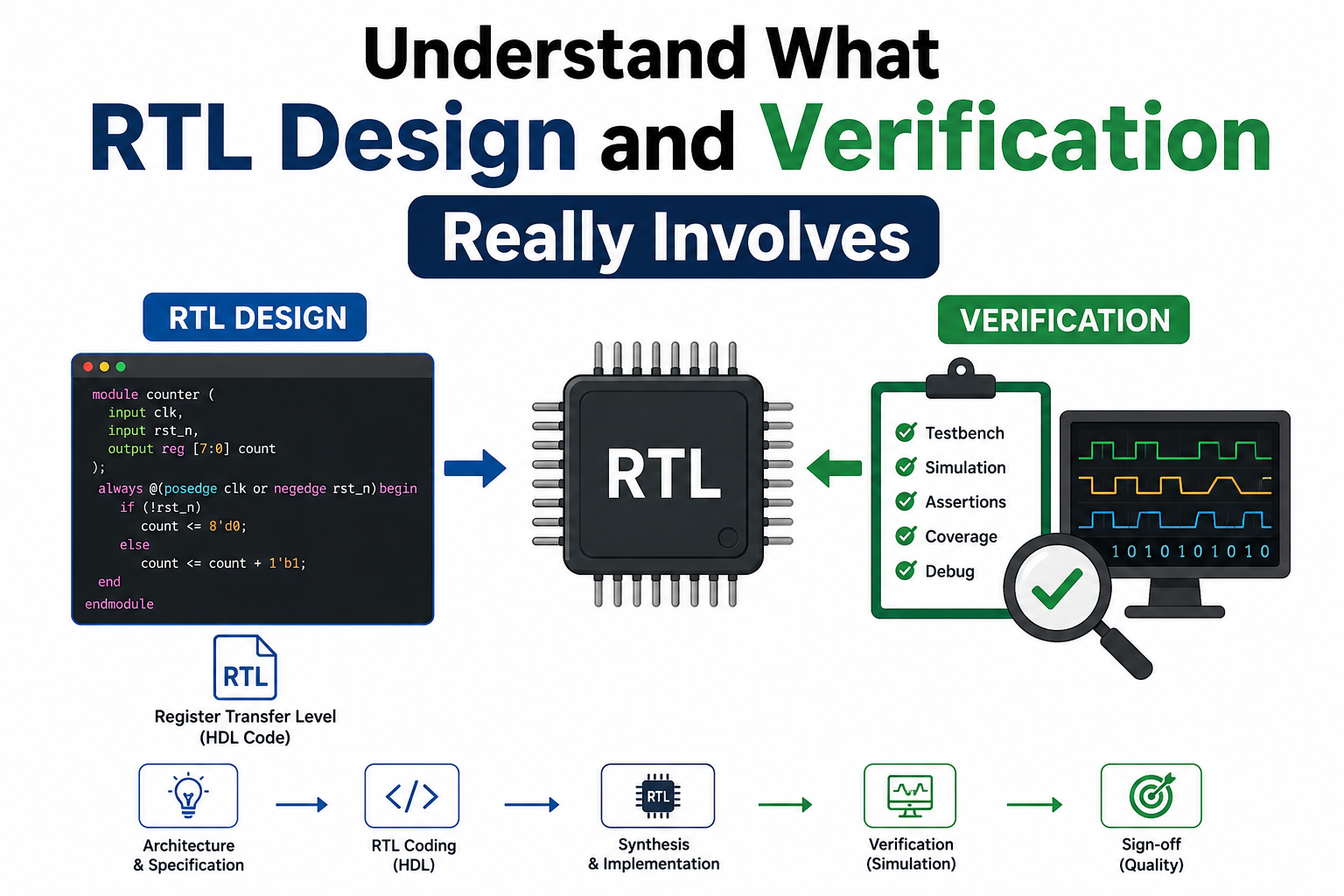
Before jumping into tools or courses, it helps to get a clear picture of what this field actually does. RTL, or Register Transfer Level, is the stage where hardware behavior is described using a language like Verilog or SystemVerilog. Think of it as writing the blueprint for how data moves and how logic reacts inside a chip, long before it becomes a physical circuit.Verification, on the other hand, is the process of checking that this blueprint actually behaves the way it's supposed to. It's not a side task, it's often a bigger and more critical part of a chip's development than the design itself, since a single missed bug can cost a company millions once a chip is manufactured. Design engineers build the logic, verification engineers try to break it in every possible way before it goes to production. Getting this distinction clear early helps you decide which direction excites you more, because both paths need different mindsets. Design work rewards precision and creativity in building logic, while verification rewards curiosity and the patience to think like someone trying to find every possible flaw.
2. Build Strong Fundamentals Before Learning Advanced Tools
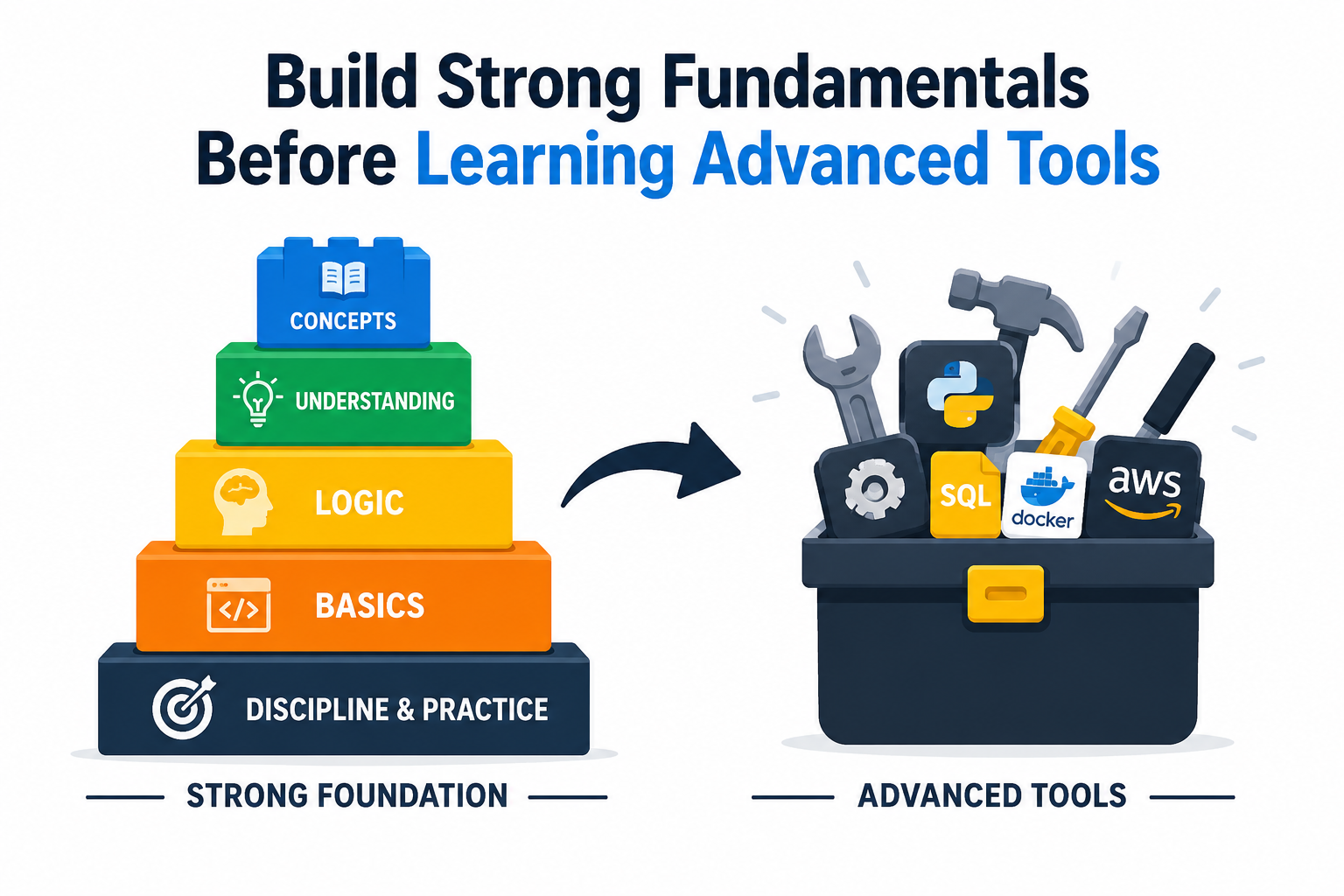
It's tempting to jump straight into simulation tools and flashy software, but strong fundamentals are what actually separate a good engineer from an average one. Digital logic design, computer architecture, and a solid grasp of Verilog or SystemVerilog form the base of everything you'll do later.Alongside this, understanding concepts like finite state machines, timing, clock domains, and basic data structures makes tool-based learning far easier later on. Many people skip this stage and struggle later because they memorized commands without understanding why those commands exist. A strong foundation means you can walk into any RTL design and verification course and actually absorb what's being taught instead of just copying syntax. Reading well-documented open-source RTL code also helps, since it exposes you to real coding styles and design patterns that textbooks rarely cover.
3. Gain Practical Experience Through Projects and Hands-On Practice

Theory alone rarely gets anyone hired in this field. Hands-on projects are what actually demonstrate your ability to think like a real design or verification engineer. Start small, perhaps by designing a simple ALU or a UART controller, then move toward writing testbenches to verify your own designs. As your confidence grows, try building more complex modules like FIFOs, memory controllers, or simple processors, and pair them with proper verification environments using concepts like functional coverage and assertions. This is where tools such as simulators, waveform viewers, and basic UVM concepts start making real sense, because you're applying them to something you built yourself rather than following a tutorial blindly.Recruiters can immediately tell the difference between someone who has only studied concepts and someone who has struggled through debugging a stubborn testbench. That struggle is where real learning happens, and it's what makes your profile stand out.
4. Choose the Right Learning Path and Industry-Focused Training

Not every learning path is created equal, and this decision matters more than people realize. Self-study can only take you so far without proper mentorship, structured practice, and exposure to real industry workflows. This is where enrolling in a good vlsi course or joining a reputed vlsi institute in India can genuinely accelerate your growth. A well-structured program usually blends theory with practical lab sessions, live projects, and mentorship from people who have actually worked in the semiconductor industry. When evaluating options, look closely at the curriculum depth, the quality of hands-on labs, placement support, and whether the training actually reflects current industry tools and practices rather than outdated syllabi. Choosing the right training environment early on can shave months, sometimes years, off the time it takes to become job-ready, simply because you're learning the right things in the right order instead of figuring it out through trial and error.
5. Prepare for Interviews and Continue Learning with Industry Trends

Once your fundamentals and projects are in place, interview preparation becomes the final stretch. Companies typically test a mix of digital logic fundamentals, coding ability in Verilog or SystemVerilog, and problem-solving through scenario-based questions. Practicing mock interviews and revisiting your own projects out loud, explaining design choices and trade-offs, builds the kind of confidence that's hard to fake in a real interview .Beyond landing the first job, this field never really stops evolving. New verification methodologies, updated tool versions, and evolving chip architectures mean continuous learning isn't optional, it's part of the job. Following industry blogs, joining semiconductor community forums, and staying updated with emerging trends keeps your skills relevant long after your first offer letter.
Final Thoughts
Starting a career in RTL design and verification is not about learning every tool at once. Starting a career in RTL design and verification isn't about knowing everything on day one, it's about building a strong base, staying curious, and choosing the right resources to guide your growth. With consistent effort, hands-on practice, and the right training path, this field offers one of the most rewarding and future-proof careers in engineering today. The chip industry needs sharp minds who understand both the logic and the discipline behind it, and with the right start, that mind could be yours.