

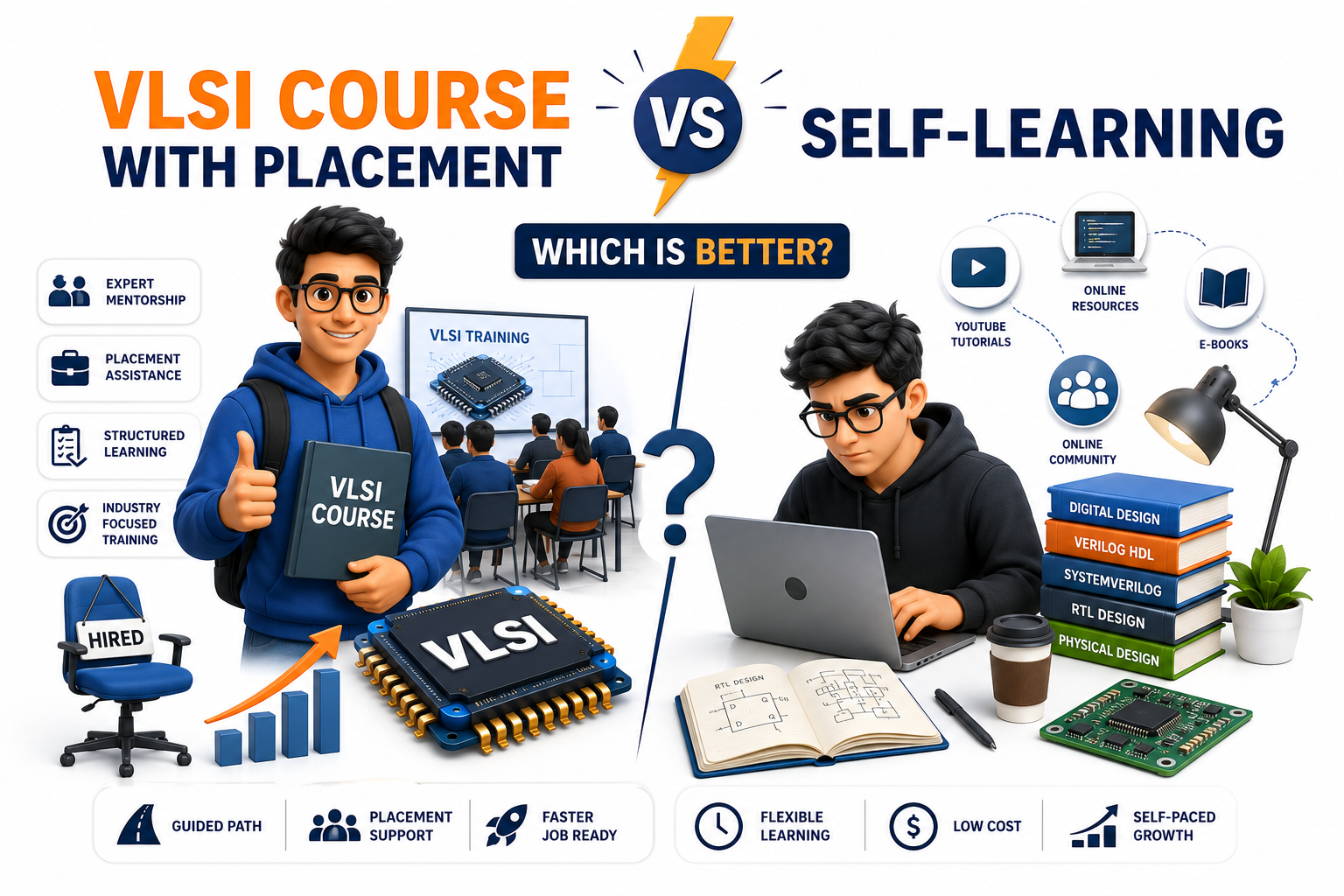
VLSI Course with Placement vs Self-Learning: Which Is Better?
Navigate through this article using the table of contents below
Table of Contents
No headings found in this article.
Two aspiring chip designers start the exact same week. One joins a VLSI course with placement support, complete with a fixed curriculum, mentorship, and mock interviews. The other picks up free tutorials, scattered forum threads, and cracked tool licenses. Six months later, one is prepping for real interviews with a solid portfolio, while the other is still trying to figure out where to even begin.
This exact gap is why the debate around VLSI training in India refuses to die down. Semiconductor hiring is climbing fast across the country, yet not everyone learning chip design actually ends up job-ready. So which route genuinely gets you hired sooner: a guided, structured course, or teaching yourself entirely from scratch? Let's break this down honestly, without any sugar-coating.
1. What a Structured VLSI Course Actually Gives You
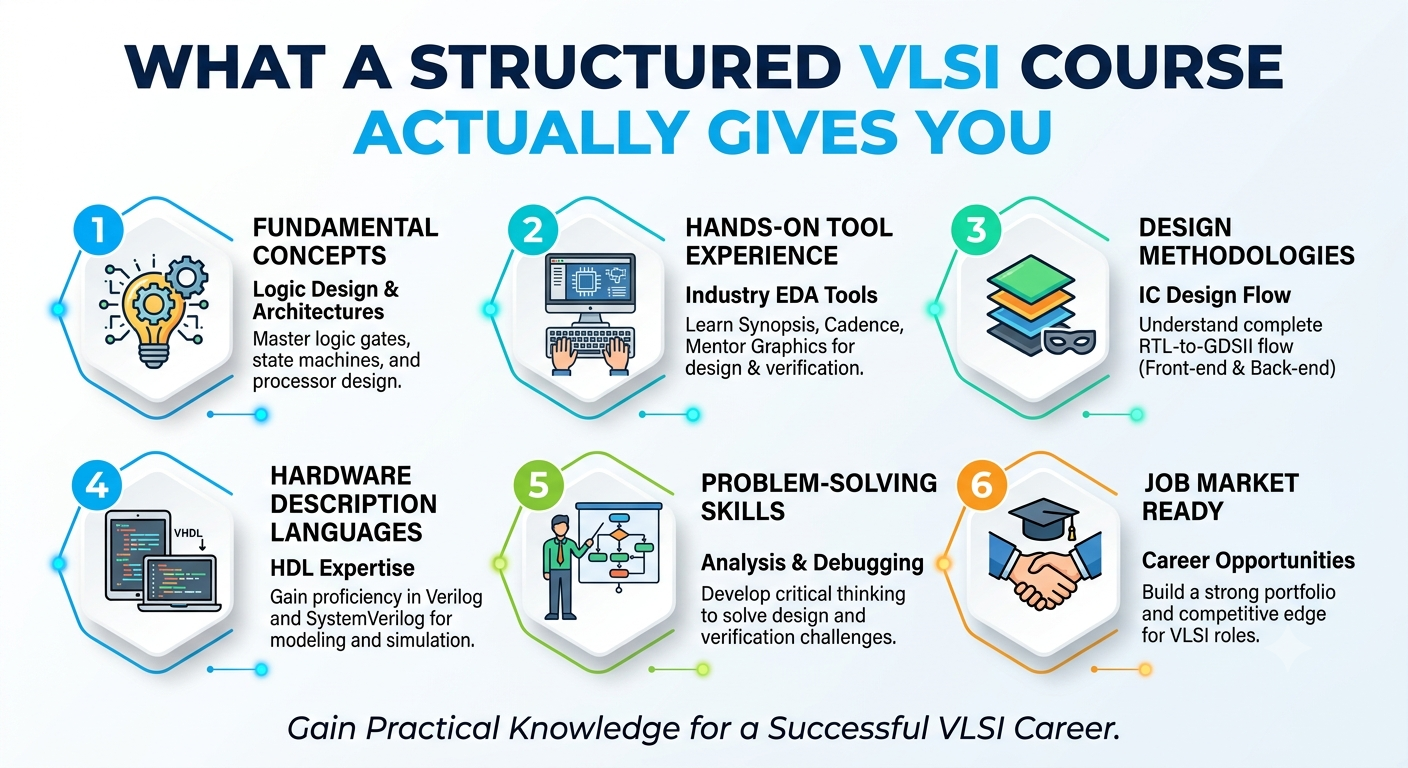
A good VLSI course with placement support is built around a sequence, not a scattered pile of videos. You move from digital logic basics to RTL design, verification, synthesis, and physical design in an order that actually builds on itself. This matters more than it sounds, because chip design is one of those fields where skipping a foundation shows up painfully later, usually right when you're debugging a timing violation you don't understand.
Beyond the curriculum, the real value sits in feedback. When your Verilog code has a bug, or your testbench isn't catching the right corner cases, someone experienced points it out immediately. Self-taught learners often carry the same mistake for weeks because there's no one checking their work. That feedback loop, more than the syllabus itself, is what separates a person who "knows the theory" from one who can actually design and verify a working block.
Read more About :- Top 10 VLSI Course in India
2. The Self-Learning Path: Freedom, But No Safety Net
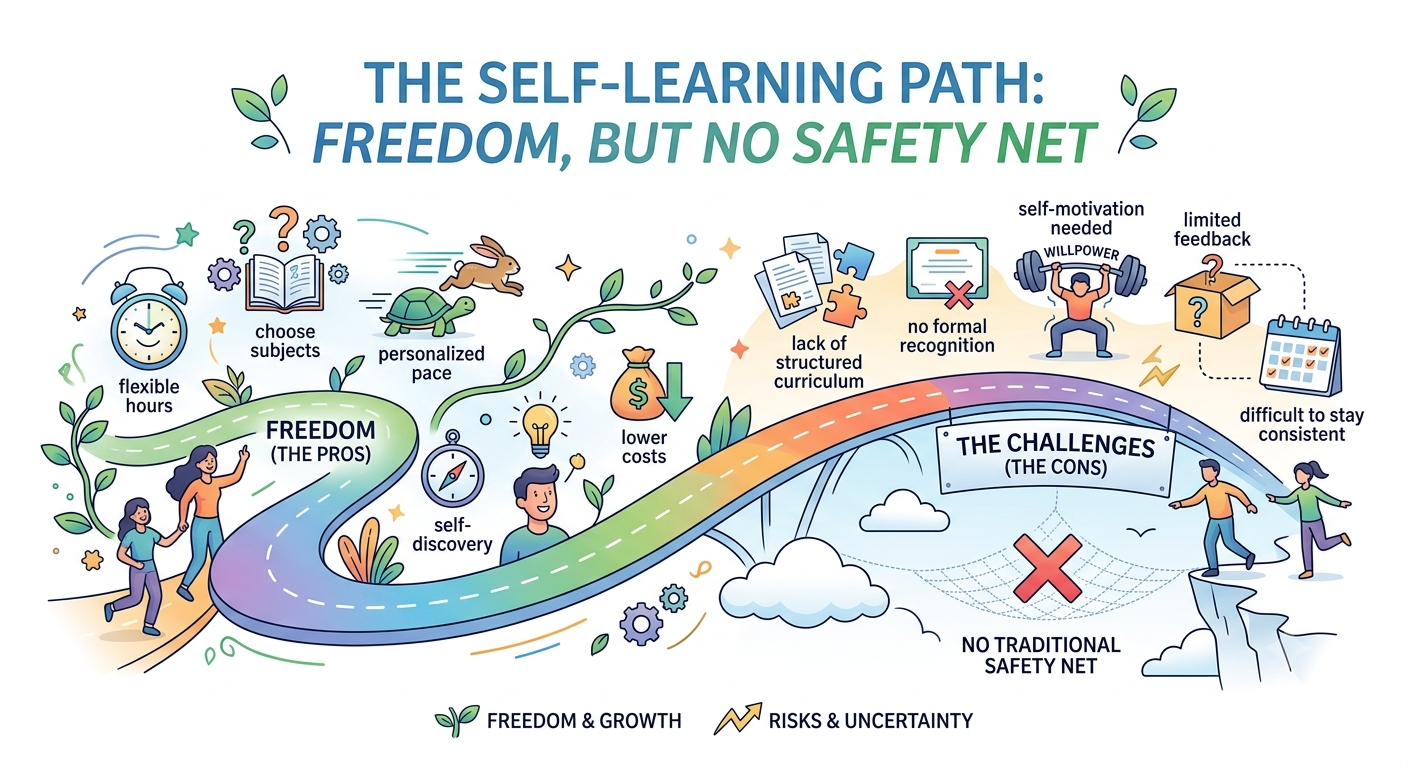
Self-learning has one undeniable advantage: control. You choose the pace, the tools, and the topics that interest you most. If you're already disciplined and enjoy digging through datasheets and open-source EDA tools on your own, this path can work, and plenty of engineers in the semiconductor industry did start exactly this way.
But the honest downside is the lack of structure and validation. There's no one to confirm if your understanding of setup and hold time is actually correct, or if you've just memorized a definition without grasping why it matters in real silicon. Many self-learners also get stuck at the tooling stage, spending months just setting up a simulation environment that a structured course would hand them on day one. Motivation dips are common too, since there's no cohort or deadline pushing progress forward.
3. Depth of Skills: Guided Practice vs Random Exploration
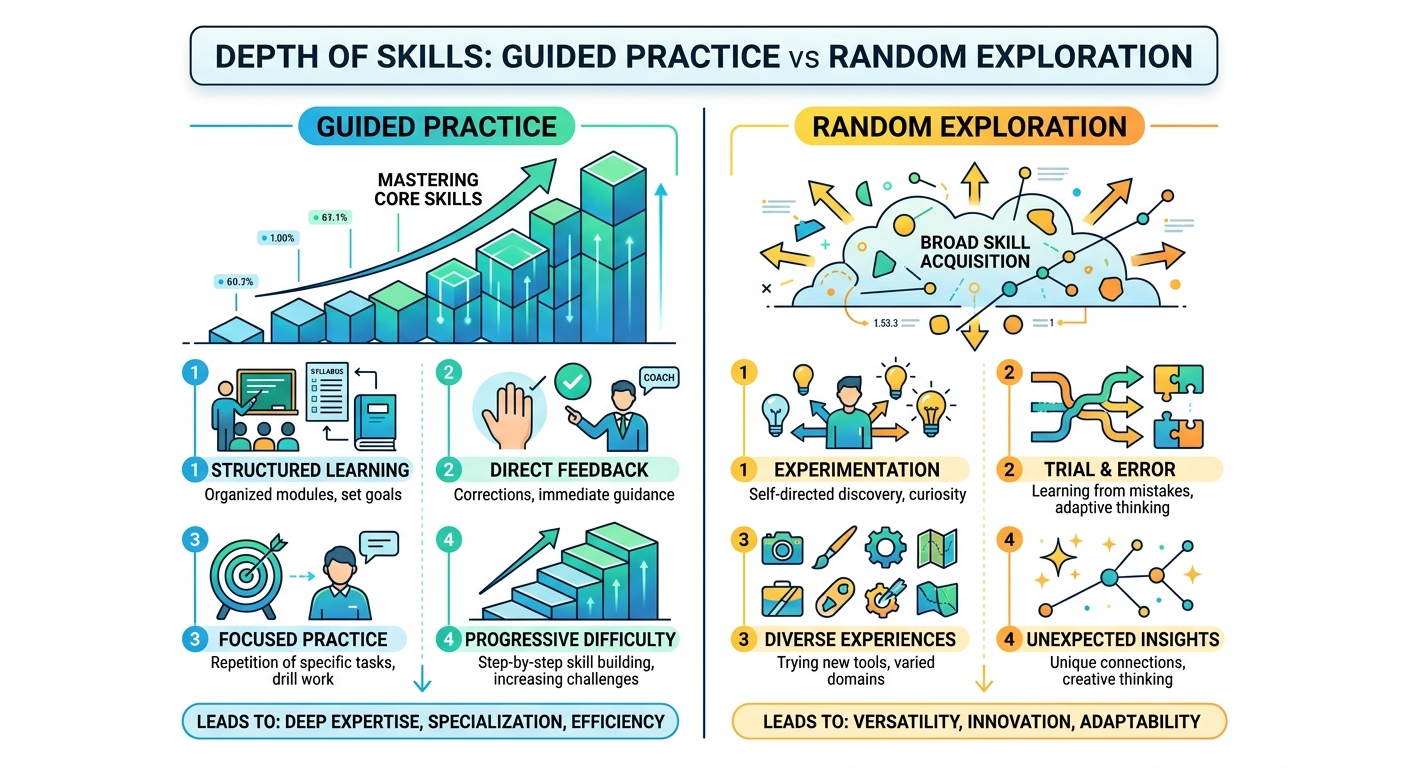
VLSI courses are usually designed around what companies are actually hiring for right now, not what was relevant five years ago. That means hands-on exposure to industry-standard tools, structured lab exercises, and projects that mirror real design flows used at semiconductor companies. You're not just reading about pipeline hazards; you're implementing a design and watching it fail, then fixing it.
Self-learners often end up with patchy, uneven knowledge. It's easy to go deep into one topic that feels interesting, like FPGA prototyping, while barely touching something equally critical, like static timing analysis or DFT. Without a curriculum acting as a checklist, gaps in fundamentals are almost inevitable, and they tend to surface at the worst possible time: during a technical interview.
4. Industry Exposure, Mentorship, and Networking
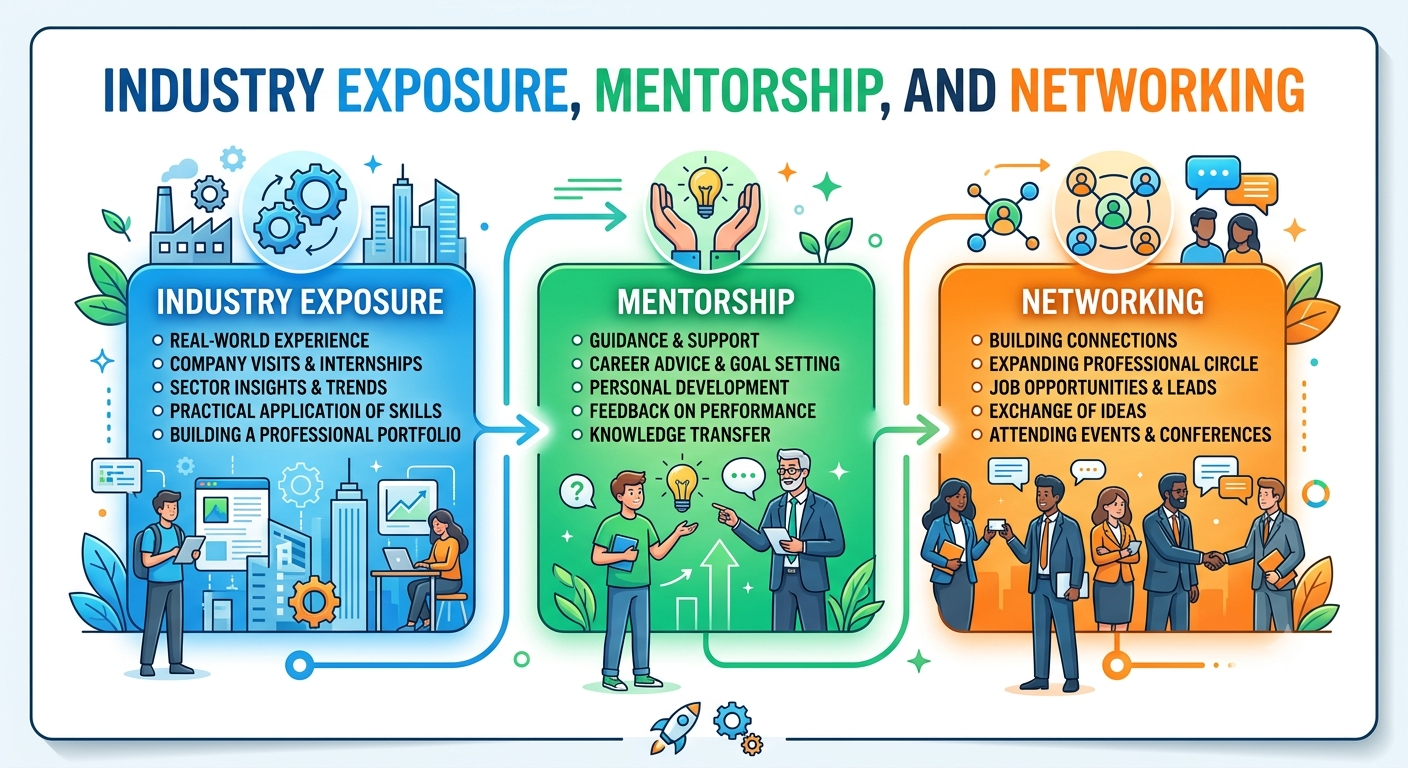
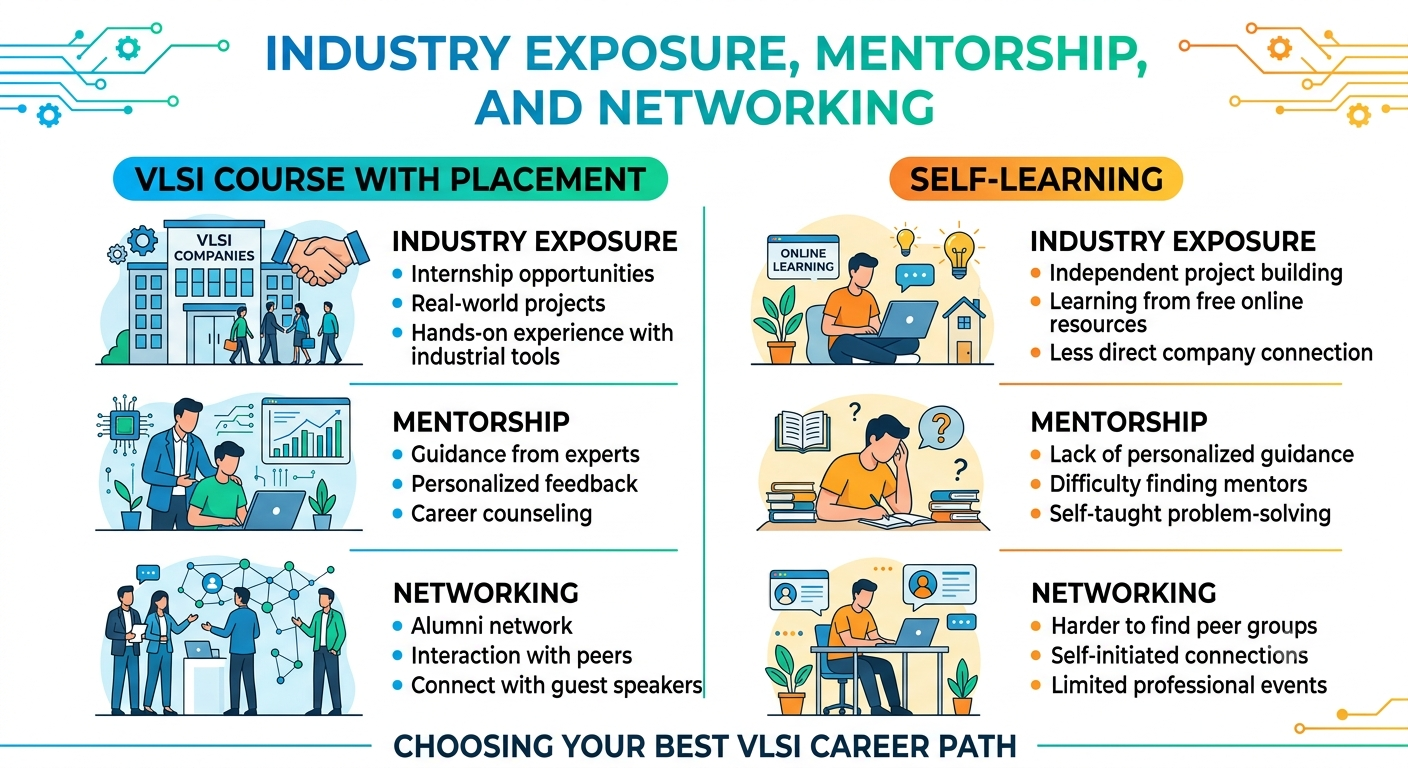
This is where a well-designed VLSI course tends to pull far ahead. Institutes offering vlsi courses with placement assistance usually bring in mentors who've actually worked in design or verification roles, not just academic instructors. That real-world perspective changes how concepts are taught, because it comes with context: why certain design choices are made, what interviewers actually probe for, and which skills get overlooked in textbooks but matter daily on the job.
Networking is the other underrated piece. Batch-mates, alumni groups, and instructor connections often open doors a solo learner simply doesn't have access to. A referral or a heads-up about an opening can matter more than an extra certification. Programs like the training offered by Jasttech are built around this exact bridge between classroom learning and industry entry, pairing technical training with direct placement support instead of leaving that connection to chance.
5. Cost, Time, and the Real Return on Investment
Cost is usually the first objection to a structured course, and it's a fair one. Self-learning is nearly free if you already have the discipline to follow through. But "free" only counts as an advantage if it gets you hired within a similar timeframe. If self-learning stretches from six months to two years due to trial and error and unclear direction, the real cost in lost income usually ends up higher than a paid course would have been.
The better way to compare the two isn't rupees spent, but time-to-employment. A structured course typically has a defined timeline with placement support working alongside your training. Self-learning has no such endpoint; you're job-ready whenever you decide you are, and that judgment is exactly what's hardest to make about your own skills. Having an external, honest benchmark of readiness is often worth more than the money a course costs.
So, Which One Should You Choose?
There isn't a universal answer, but there is an honest one. If you're highly self-motivated and don't need a fixed timeline or placement support, self-learning can work, especially for foundational concepts. But if you want a faster, more reliable path into the semiconductor industry, a structured program offering solid vlsi training in india, with real mentorship and placement assistance, will almost always get you there faster and with fewer wrong turns.
VLSI design is too specialized a field to leave your job-readiness up to guesswork. Whichever path you pick, make sure it ends with something self-learning rarely guarantees on its own: a job.