

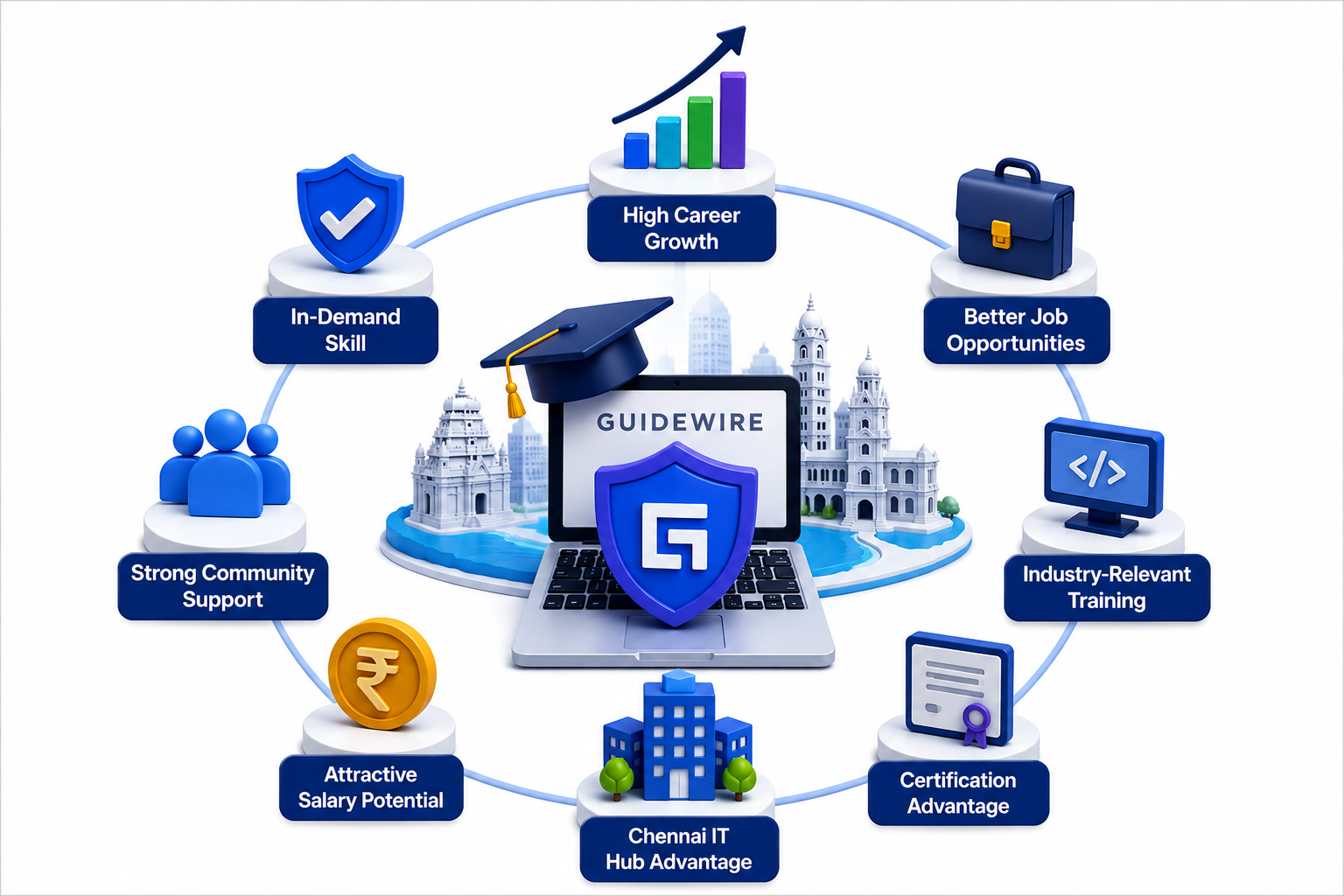
Why Choose Guidewire Training in Chennai to Build Your Insurance IT Career?
Navigate through this article using the table of contents below
Table of Contents
No headings found in this article.
A software developer in Chennai switched from generic Java projects to Guidewire configuration work and doubled his interview callbacks within three months. That single skill shift changed his trajectory entirely.
Insurance companies worldwide run on Guidewire, yet very few IT professionals actually understand the platform deeply. A focused Guidewire course in Chennai can close that gap faster than most people expect, and the reasons why go beyond just "learning new software."
What Makes Guidewire Skills So Valuable in Insurance IT Right Now
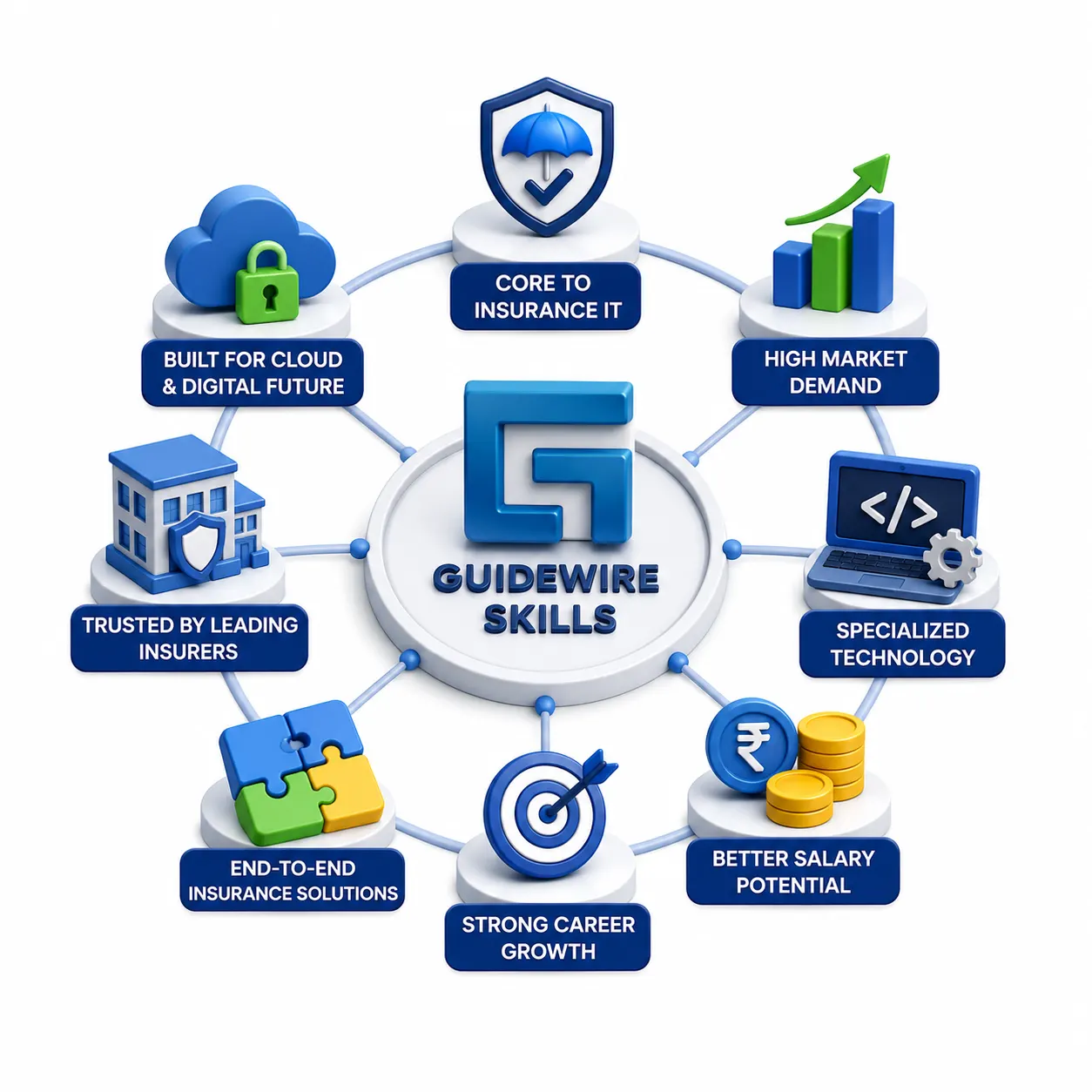
Most enterprise insurers rely on a small set of core platforms to run policy, billing, and claims operations, and Guidewire sits at the center of that list for a huge share of them. When a platform becomes this embedded in an industry, the professionals who understand it become genuinely hard to replace.
Here's what makes this different from typical IT skill demand: insurance companies don't rip out core systems often. Once a carrier implements Guidewire, that implementation typically runs for years, sometimes over a decade, with ongoing configuration, upgrades, and integration work.
That translates into steady, long-term project pipelines rather than short-lived trends. Guidewire developers, business analysts, and QA testers are needed continuously, not just during initial rollout phases.
There's also a supply-side factor worth noting. Because Guidewire uses its own proprietary language, Gosu, and its own configuration tools, generic Java or .NET experience only gets a candidate partway there. Employers actively search for candidates who've already worked through PolicyCenter, BillingCenter, or ClaimCenter fundamentals, which is exactly why structured training carries real weight on a resume.
Why Location Matters: The Chennai Advantage for Guidewire Learners

Chennai isn't just another IT hub with training centers scattered around it. The city has built a genuine concentration of insurance and BFSI-focused technology work over the past decade, with several global insurance carriers and consulting firms running delivery centers here.
That matters more than it might seem. Learning a niche platform like Guidewire works best when there's a local ecosystem of practitioners, project managers, and hiring teams who actually use it day to day. Chennai offers exactly that kind of environment.
There's a practical angle too. Candidates trained locally often get access to referrals, alumni networks, and informal industry contacts that someone learning the same skill remotely simply won't have. A classmate today might be the person forwarding your resume to a hiring manager next year.
Cost of living and training fees in Chennai also remain more reasonable compared to metros like Bangalore or Mumbai, which means learners can invest in deeper, more thorough training without the same financial strain. For many professionals transitioning from unrelated IT backgrounds, that affordability is what makes a serious skill pivot possible in the first place.
Inside a Guidewire Course in Chennai: What You'll Actually Learn
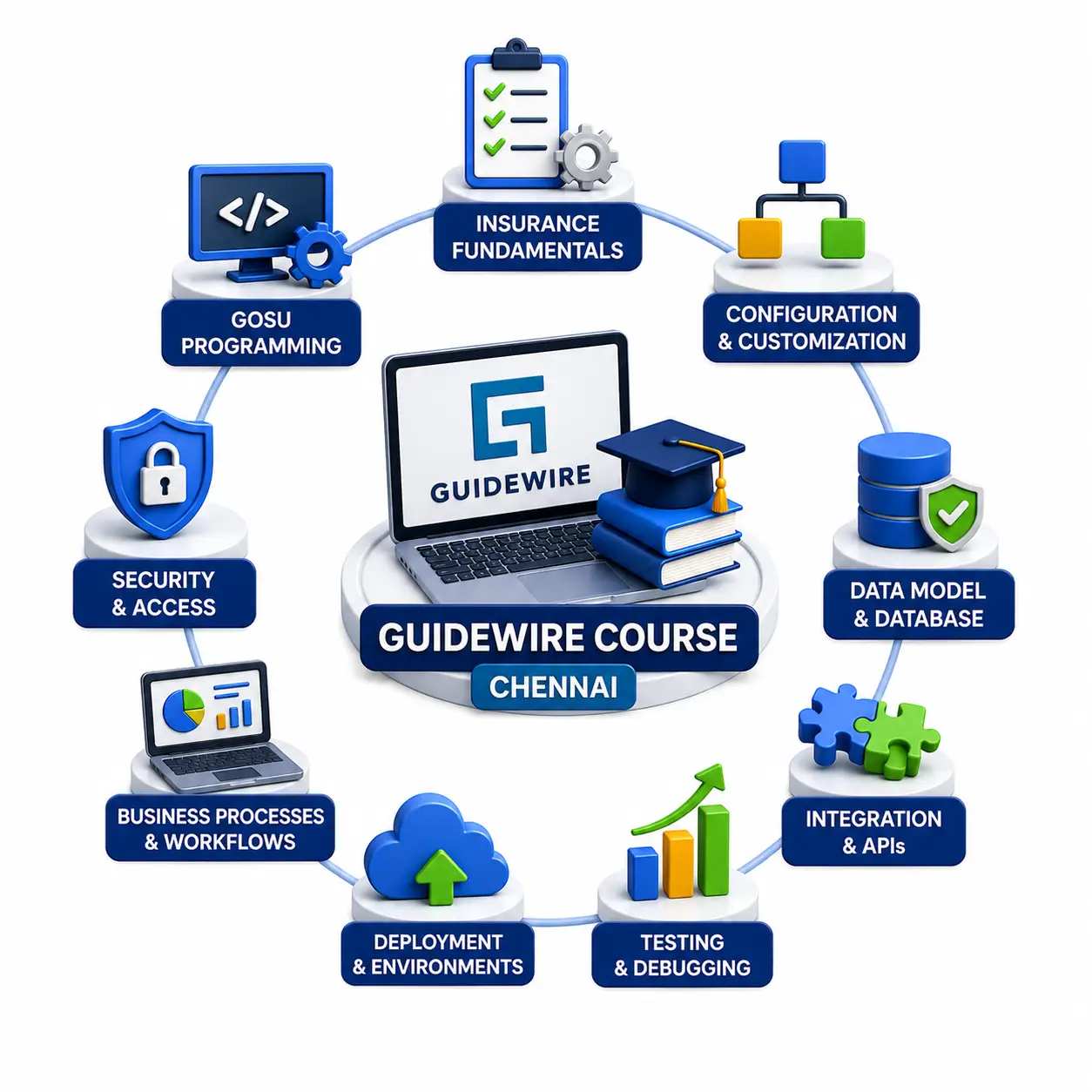
A well-structured Guidewire course rarely starts with advanced configuration. It builds from the ground up, starting with insurance domain basics, because understanding why a policy transaction works a certain way makes the technical side click faster later.
From there, training typically moves into the platform architecture: how PolicyCenter, BillingCenter, and ClaimCenter relate to each other, how data flows between them, and where Gosu programming fits into the picture. Learners usually spend significant time on product model configuration, since that's where a huge share of real project work happens.
Rating, underwriting rules, and workflow configuration come next, followed by integration concepts like plugins and messaging. Good programs don't stop at theory. They include hands-on lab work where learners actually build and break things inside a working environment, because that's the only way configuration concepts truly stick.
The strongest courses also weave in real project scenarios rather than isolated exercises. Instead of memorizing what a Rule Set does in the abstract, learners troubleshoot a broken rating calculation or trace why an underwriting issue didn't trigger correctly. That kind of applied learning is what separates someone who can pass a certification exam from someone who can actually contribute to a live project on day one.
How JastTech Guidewire Institute in Chennai Structures Its Training
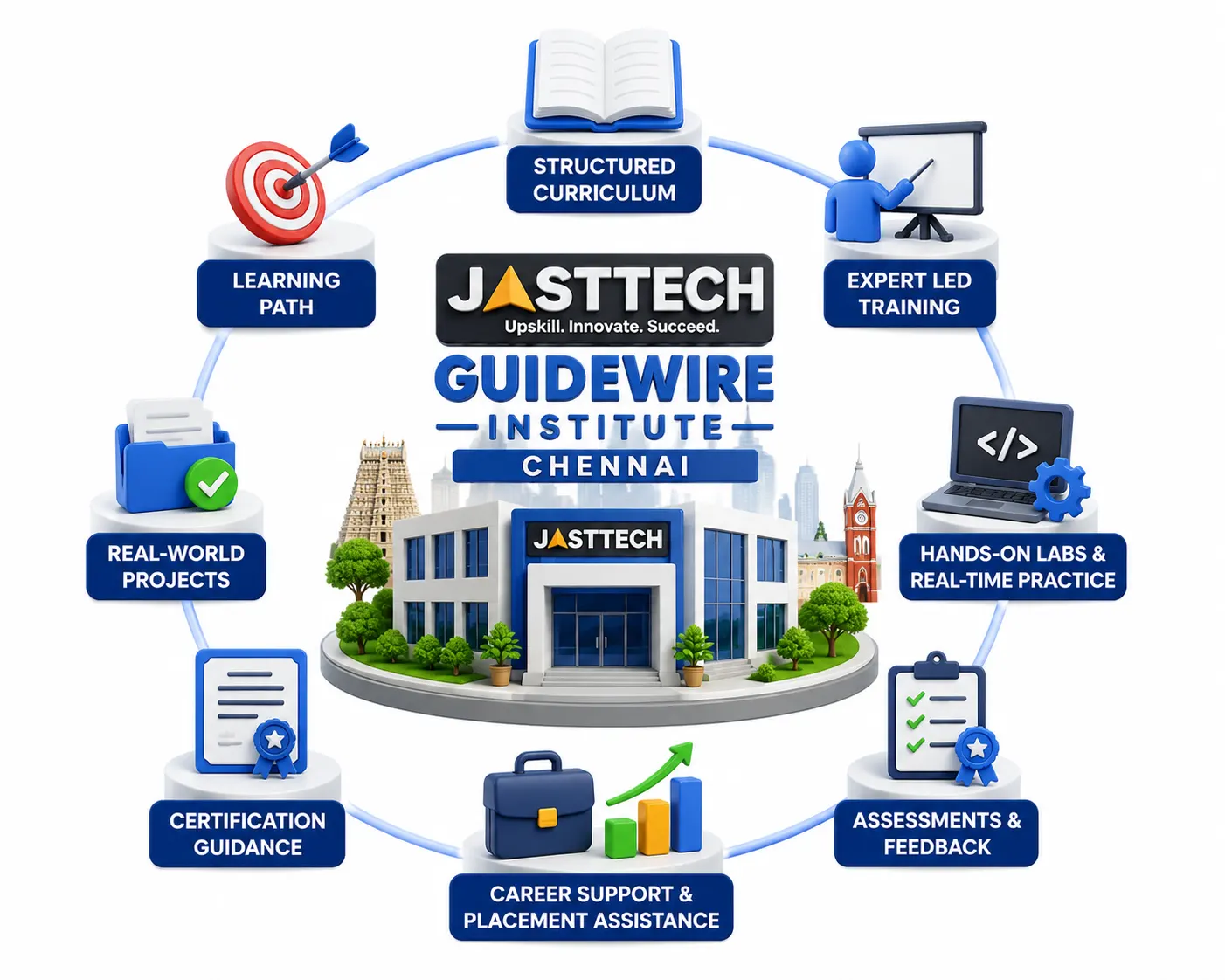
Not every training provider approaches Guidewire the same way, and that difference shows up quickly once a learner starts job hunting. The JastTech Guidewire Institute in Chennai builds its program around practical, project-style learning rather than a purely lecture-based format.
The Guidewire training in Chennai offered through JastTech covers PolicyCenter, BillingCenter, and ClaimCenter modules, with a strong focus on configuration work, Gosu scripting, and integration patterns that mirror what actual implementation teams handle. Learners work through scenarios that resemble real client requirements rather than textbook examples disconnected from industry practice.
What stands out is the emphasis on guided practice. Instead of watching demonstrations passively, learners get structured time to configure product models, write rules, and debug issues themselves, with instructors available to explain the reasoning behind each decision. That approach mirrors how actual Guidewire teams operate, where junior developers learn by doing under senior guidance.
Batch sizes and mentorship-style support also make it easier for learners coming from non-insurance backgrounds to catch up without feeling lost. For someone switching careers entirely, that kind of structured support often matters just as much as the technical curriculum itself.
From Classroom to Interview Room: Preparing for a Guidewire Interview
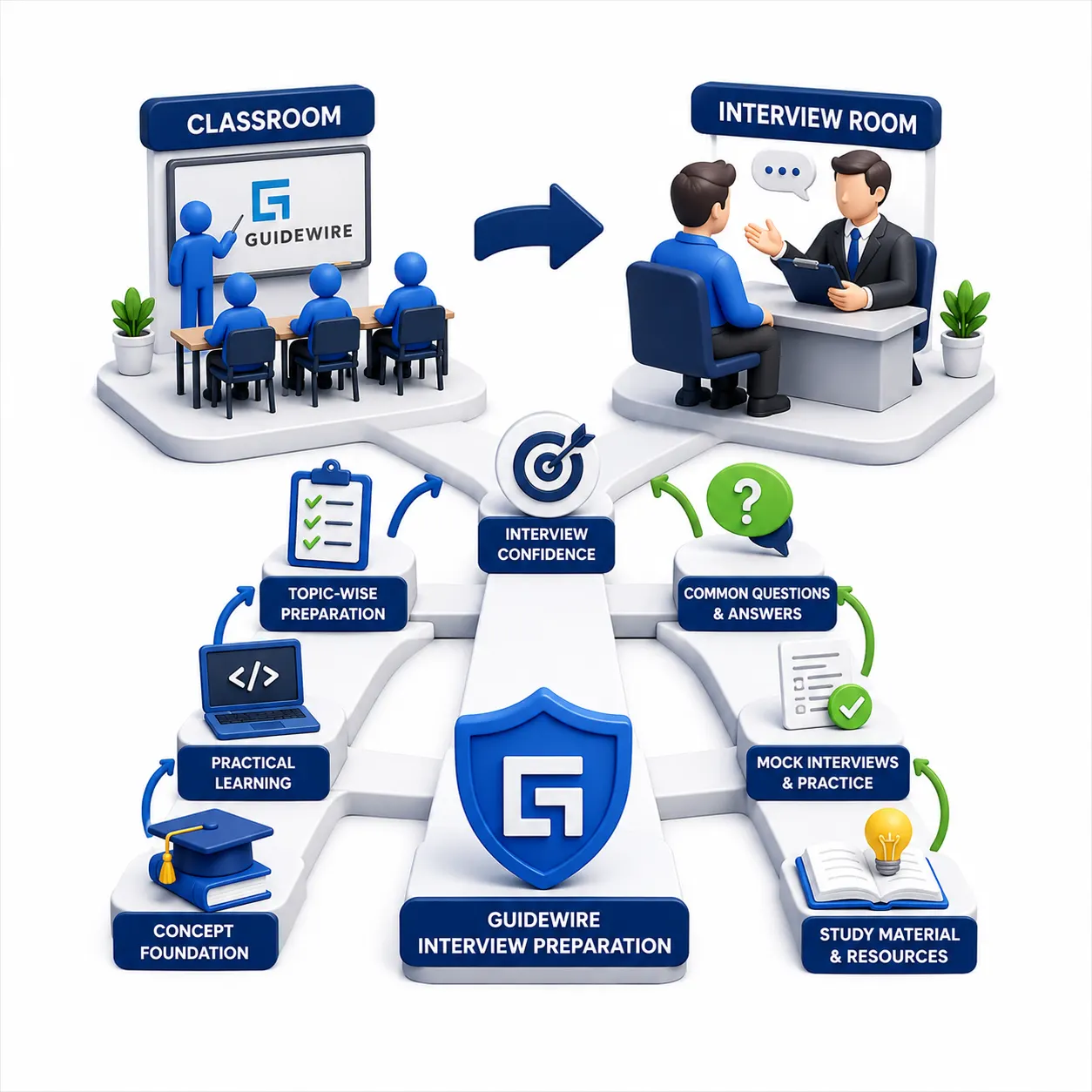
Technical training alone rarely gets someone through a Guidewire interview. Interview panels, especially at mid-to-senior levels, tend to ask scenario-based questions that test judgment, not just definitions memorized from a course outline.
That's why interview preparation deserves as much attention as the core curriculum. Candidates need to practice explaining their reasoning out loud: why they'd structure a product model a certain way, how they'd debug a failed batch job, or what tradeoffs they'd weigh during a cloud migration.
Reviewing curated question banks helps enormously here. Resources like this breakdown of top 50 Guidewire ClaimCenter interview questions and answers give candidates a realistic sense of how questions are phrased across experience levels, from basic terminology checks to complex scenario-based problems.
Mock interviews, ideally conducted by instructors or peers who've actually sat through real Guidewire panels, close the gap between "knowing the material" and "performing well under pressure." Nervous, underprepared candidates often stumble not because they lack knowledge, but because they've never practiced articulating that knowledge clearly and confidently in a live setting.
Career Paths That Open Up After Guidewire Training

Guidewire skills don't lead to just one job title. Trained professionals typically move into roles like Guidewire developer, configuration analyst, QA/testing specialist, business analyst, or implementation consultant, depending on their background and interests.
Someone coming from a pure development background often gravitates toward Gosu programming and product configuration work. A candidate with stronger business or domain knowledge might find business analyst or functional consultant roles a better fit, translating insurance requirements into system configuration.
There's also room to specialize further over time. Some professionals focus heavily on integration work, building expertise in plugins and messaging between Guidewire and other enterprise systems. Others move toward architecture roles after several years of hands-on project experience.
What makes this career path attractive is the compounding effect. Each project adds domain knowledge alongside technical skill, and that combination becomes harder to replicate the longer someone stays in the ecosystem. A developer with five years of Guidewire experience across multiple implementations holds a very different market position than someone with generic enterprise software experience of the same length.
Conclusion
A structured Guidewire course in Chennai offers more than technical training. It builds domain knowledge, local industry connections, and interview readiness that together shape a lasting insurance IT career. The right foundation now pays off for years to come.