


How to Choose a Guidewire learning Institute in Bangalore for Your Career
Navigate through this article using the table of contents below
Table of Contents
No headings found in this article.
Every insurance company still running on spreadsheets and legacy code eventually hits a wall — and that wall increasingly has one name attached to it: Guidewire.
That's exactly why the search for reliable Guidewire institutes in Bangalore has quietly turned into one of the busiest queries among IT professionals this year. But not every institute delivering "certification" is actually preparing you for a real job. Here's what separates the two.
Why Bangalore Quietly Became India's Guidewire Capital

Nobody planned this. It happened because Bangalore already had the ingredients: a mature insurance-tech ecosystem, a dense cluster of IT services companies, and thousands of engineers looking for a specialization that wouldn't get automated away next year.
Insurance carriers across the US, UK, and Australia run their policy, billing, and claims systems on Guidewire, and most of that implementation and support work gets outsourced to firms with delivery centers in this city. That created sustained, real demand — not the hype-driven kind that fades in two years.
A senior architect at a Bangalore-based insurance IT firm once put it simply: "We don't struggle to find Java developers. We struggle to find people who understand PolicyCenter's data model." That gap is precisely what training providers in the city have built their reputation around, offering structured JastTech Guidewire course in Bangalore that mirrors actual project environments rather than textbook theory.
The result is a city where you can walk into a training center, learn the platform, get certified, and interview for a live project — sometimes within the same quarter. Few other Indian cities offer that tight a loop.
What Actually Happens Inside a Guidewire Training Program
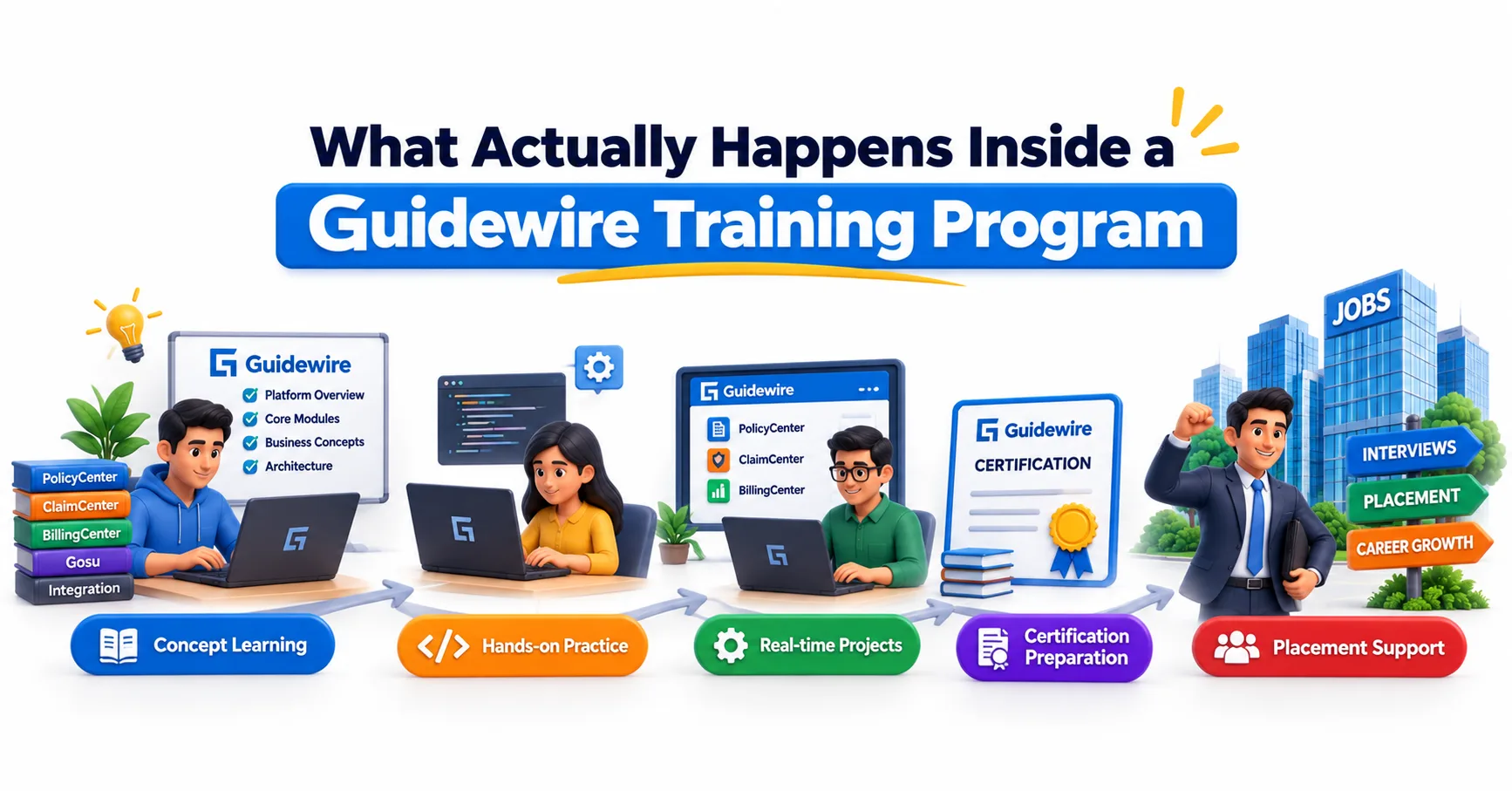
Walk into a genuinely good program and you won't find endless slideshows. You'll find a sandboxed instance of PolicyCenter, BillingCenter, or ClaimCenter that you're expected to break, fix, and rebuild.
Most structured courses split the curriculum into three layers. First comes configuration — understanding product models, rules, and the Guidewire Studio environment. Second is integration, where Gosu scripting, web services, and messaging queues come into play. Third, and often skipped by weaker institutes, is the business context: why an insurer's underwriting rules are structured the way they are.
That third layer matters more than most beginners assume. A developer who can write Gosu code but doesn't understand insurance workflows tends to struggle in client-facing roles later. Good trainers weave real claims-processing scenarios into every module instead of treating the business side as an afterthought.
Programs worth their fee usually run for eight to twelve weeks, combine live instructor sessions with hands-on labs, and include at least one capstone project resembling an actual client implementation. If a course promises fluency in two weekends, that's your cue to look elsewhere.
Read more :- Grow your IT Career with Guidewire
Certification: The Piece of Paper That Actually Matters Here

Not all certifications carry equal weight, and this is where a lot of learners get misled. The certifications issued directly by Guidewire — covering ConfigAdmin, IntegrationDev, and BusinessAnalyst tracks — are the ones recruiters actually recognize.
An institute's own internal "completion certificate" is fine as a training record, but it isn't a substitute for the vendor-recognized credential. Think of it the way you'd think of a driving school certificate versus your actual driver's license — one shows you attended, the other proves you can perform.
The smarter institutes in Bangalore build their entire syllabus around the official certification blueprint, so classroom learning and exam preparation aren't two separate tracks bolted together. That alignment matters because Guidewire's certification exams test applied scenarios, not rote definitions.
One practical tip experienced trainers repeat often: attempt the certification within a few weeks of finishing training, while the configuration logic and Gosu syntax are still fresh. Waiting months to schedule the exam is one of the most common reasons capable learners underperform. Certification, done right, becomes the credibility marker that gets your resume past the first filter.
Guidewire vs Other Platforms: Where Does It Really Stand?
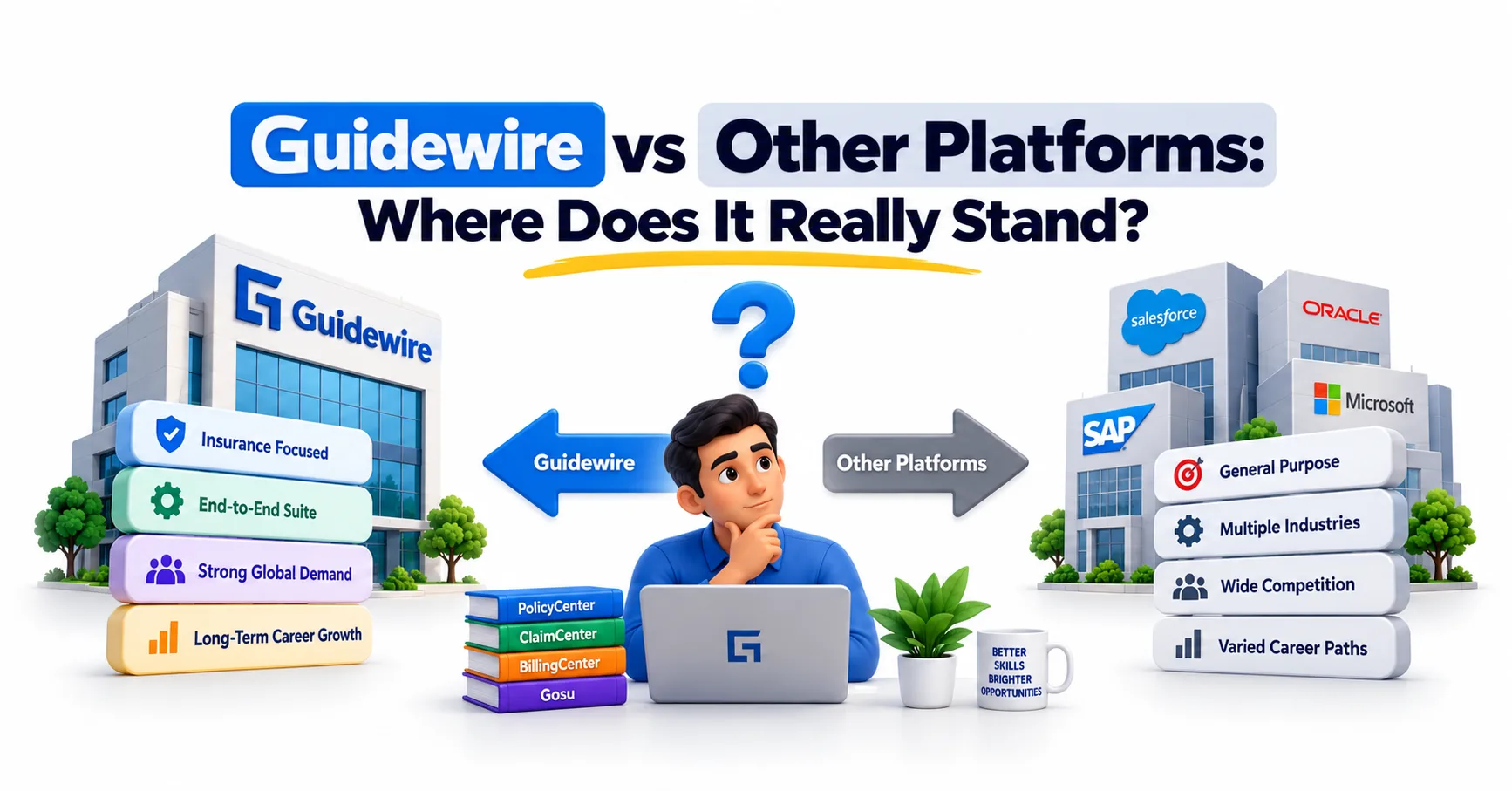
It's a fair question — with so many enterprise platforms competing for the same talent pool, why specialize in Guidewire specifically rather than something broader like Salesforce?
The honest answer is that they solve different problems. Salesforce dominates CRM and customer engagement across nearly every industry, which means broader demand but also far more competition among certified professionals. Guidewire, by contrast, is narrowly focused on property and casualty insurance core systems — smaller talent pool, but also far less competition once you're in.
That trade-off shapes career strategy. A detailed comparison on Guidewire vs Salesforce and which platform offers better career opportunities breaks down salary bands, entry barriers, and long-term growth paths between the two — worth reading before you commit months of learning time to either.
What tends to tip the decision for many freshers is specificity. Insurance carriers rarely have in-house alternatives to Guidewire the way many companies build custom CRM workarounds instead of Salesforce. That dependency creates steadier, less cyclical demand for trained professionals.
Placement Support: Separating Real Help From Marketing Promises
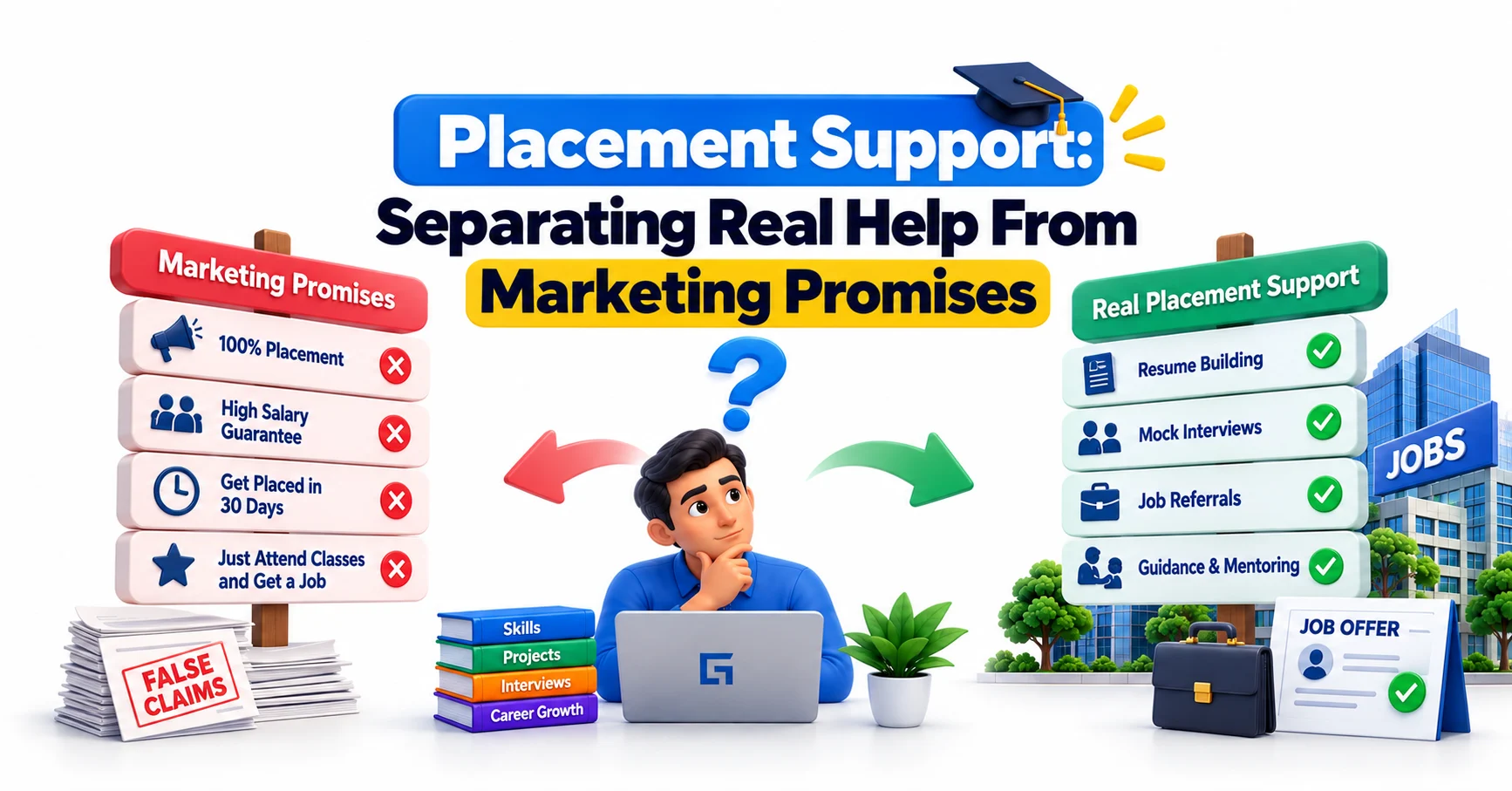
"Placement assistance" is one of the most overused phrases in the training industry, and Bangalore's Guidewire institutes are no exception. The trick is learning to tell genuine support apart from a vague promise printed on a brochure.
Real placement support looks like this: mock interviews conducted by people who've actually worked on Guidewire implementations, resume reviews that reframe your project work in client-relevant language, and direct referrals to IT services firms the institute has an actual working relationship with. It also means access to interview question banks pulled from recent hiring rounds, not generic ones copied from forums.
Weak placement support, on the other hand, usually means a single WhatsApp group where job postings get forwarded with zero follow-up. Ask any institute directly: how many of last year's batch actually got placed, and in what roles? A credible institute answers this without hesitation, often with specific company names and designations.
It's also worth asking whether support continues after your first job. The strongest programs stay in touch, because a Guidewire developer who grows into a senior consultant becomes a referral source for the next batch of students — a cycle that benefits everyone in it.
Building a Career Roadmap Before You Even Enroll
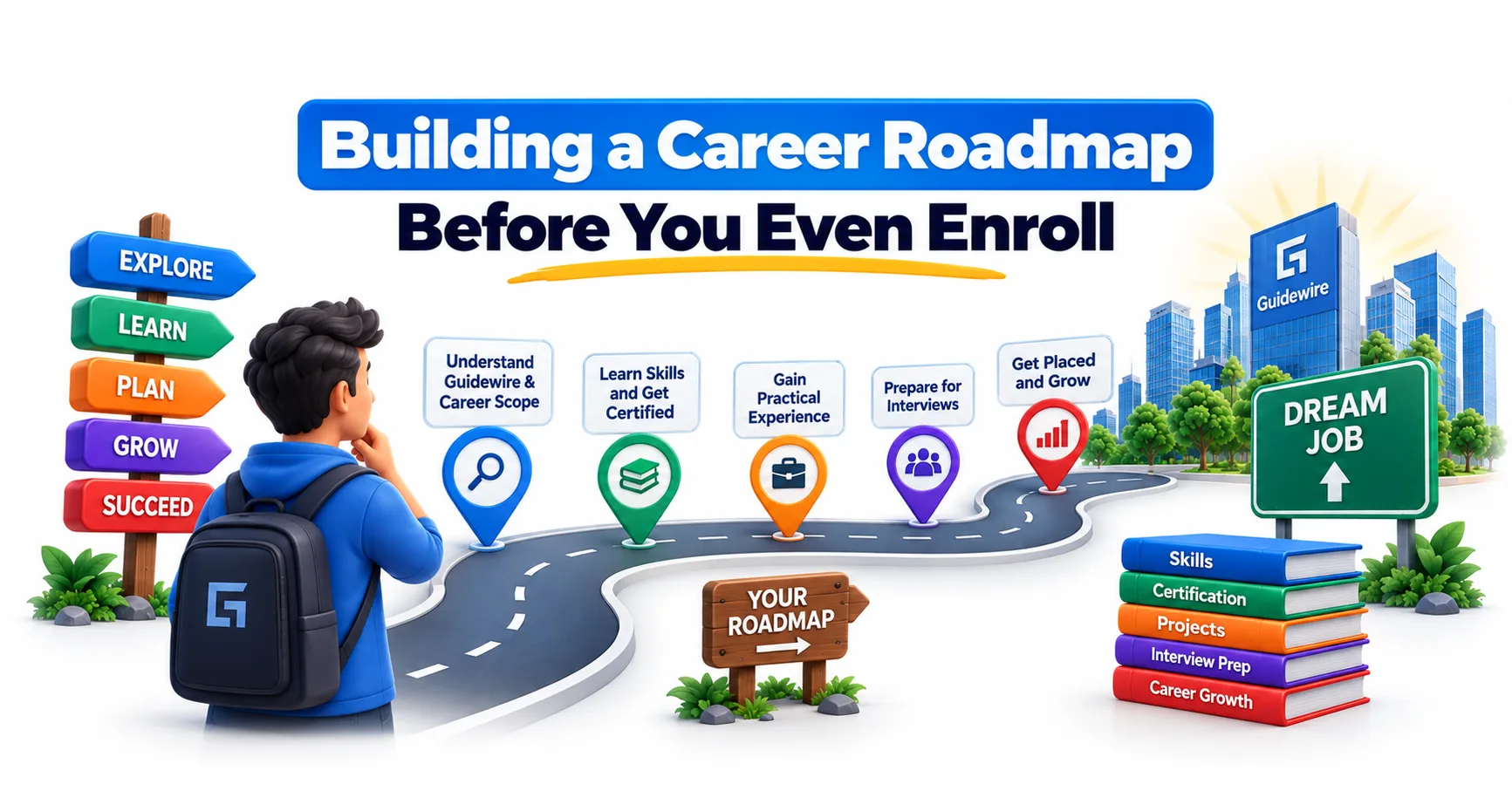
Here's a mistake many beginners make: they enroll first and figure out the roadmap later. It should be the other way around.
Before committing to any course, freshers benefit from mapping out where they want to land — configuration developer, integration specialist, or business analyst — since each path demands a slightly different skill emphasis and timeline. A detailed Guidewire career roadmap for freshers and professionals in Bangalore lays out realistic timeframes, from first certification to mid-level consultant roles, which helps set expectations before you spend a rupee.
Professionals switching from another tech stack face a different calculus. They often already have transferable skills — Java, SQL, or business analysis experience — and need targeted upskilling rather than a full beginner course. Institutes that offer modular tracks, letting experienced developers skip redundant basics, tend to serve this group far better than one-size-fits-all batches.
Whichever stage you're starting from, the roadmap should answer three questions clearly: what you'll learn, how you'll get certified, and what job title you're realistically aiming for within a year. If an institute can't help you answer those upfront, that's a sign to keep looking.
Conclusion
Choosing among Guidewire institutes in Bangalore ultimately comes down to three things: practical training over theory, certification aligned with real exam patterns, and placement support you can verify. Get those right, and the rest of the career tends to take care of itself.