

How to Get a Job at Intel, Qualcomm, AMD, NVIDIA, and MediaTek
Navigate through this article using the table of contents below
Table of Contents
No headings found in this article.
The semiconductor industry is experiencing one of its biggest hiring waves in years, driven by AI accelerators, advanced chip design, automotive electronics, 5G, and high-performance computing. Yet thousands of engineering graduates apply to Intel, Qualcomm, AMD, NVIDIA, and MediaTek every year without understanding what actually gets candidates shortlisted.
The surprising reality is that these companies are not simply looking for high CGPAs or impressive resumes. They hire engineers who can demonstrate practical skills, problem-solving ability, and a strong understanding of real-world semiconductor development. Understanding what recruiters and hiring managers truly value can dramatically increase your chances of getting hired.
Understand What Each Company Actually Hires For
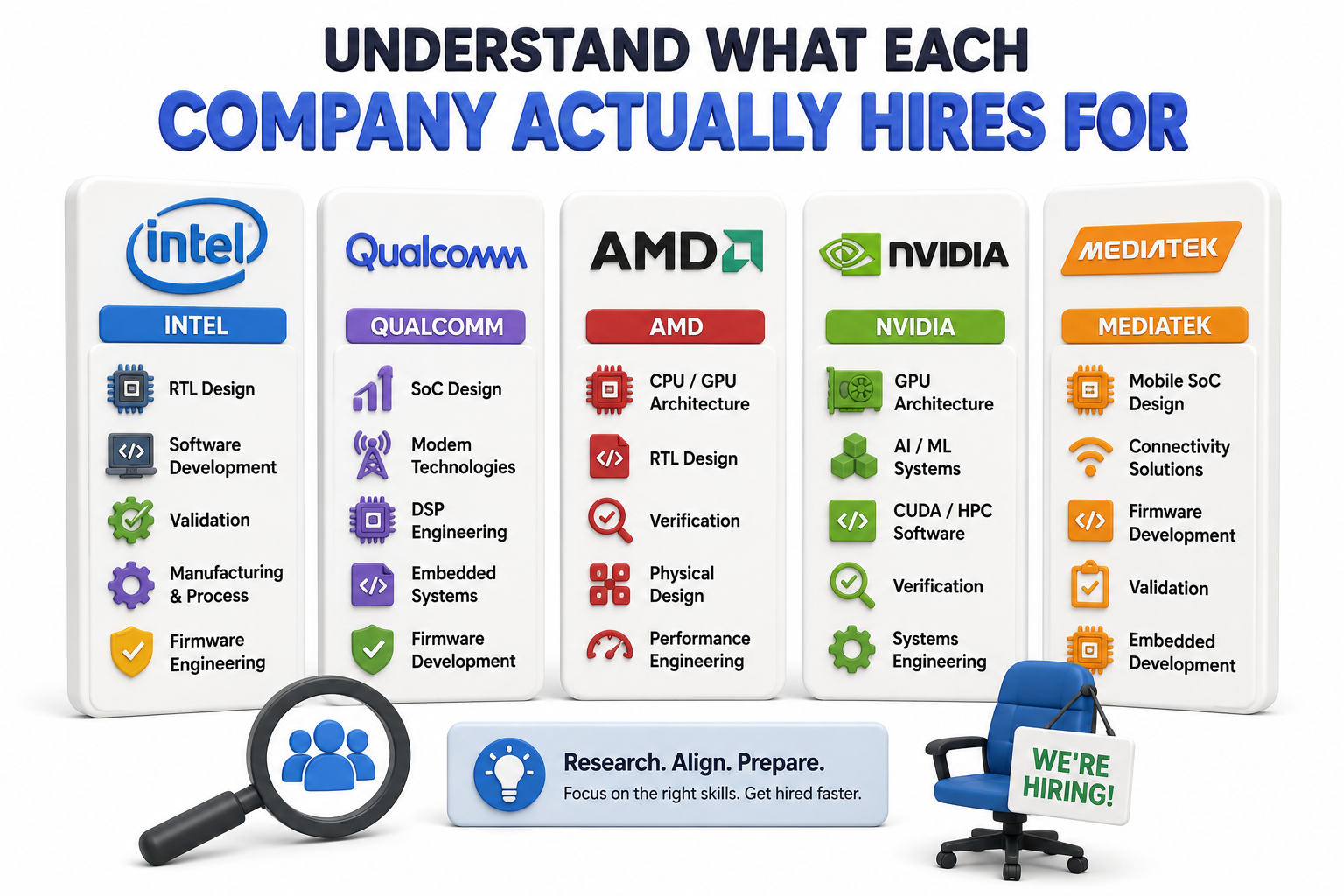
Many candidates make the mistake of preparing for "semiconductor jobs" in general. In reality, Intel, Qualcomm, AMD, NVIDIA, and MediaTek hire for many specialized engineering domains.
Some of the most common roles include:
RTL Design Engineer
Design Verification Engineer
Physical Design Engineer
DFT Engineer
Embedded Software Engineer
Firmware Engineer
Post-Silicon Validation Engineer
AI Hardware Engineer
GPU Architecture Engineer
ASIC Design Engineer
While the companies share similarities, their priorities differ. NVIDIA heavily invests in AI hardware, GPUs, and accelerated computing. AMD focuses on CPUs, GPUs, data centers, and adaptive computing solutions. Qualcomm emphasizes mobile processors, wireless communication, and automotive platforms. MediaTek continues expanding in mobile SoCs, connectivity solutions, and consumer electronics. Intel remains a leader across CPUs, foundry services, AI accelerators, networking, and advanced semiconductor technologies.
Before applying, study job descriptions carefully and identify the skills repeatedly mentioned. This helps you align your preparation with actual hiring requirements rather than generic career advice.
Know More About RTL Design and Verification Course
Build the Technical Skills Recruiters Want to See
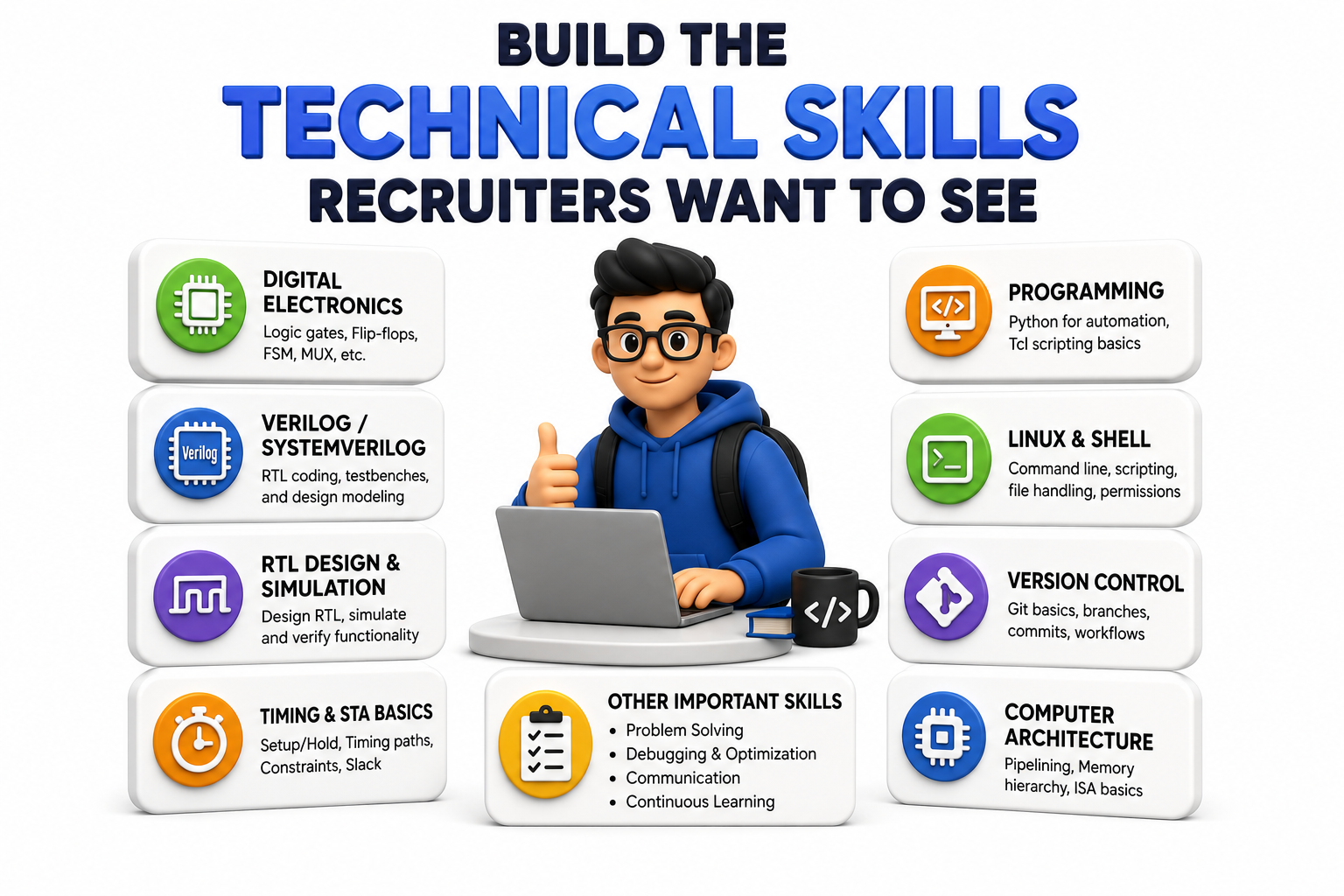
A degree alone rarely differentiates candidates. Hiring managers want evidence that you understand concepts beyond classroom assignments.
For VLSI and semiconductor roles, focus on mastering:
Digital Electronics
Computer Architecture
Verilog and SystemVerilog
RTL Design
Functional Verification
Static Timing Analysis
Physical Design Fundamentals
Semiconductor Manufacturing Basics
ASIC Design Flow
Scripting with Python, Tcl, or Perl
Students targeting embedded and firmware positions should also strengthen:
C and C++
Embedded Systems
Device Drivers
RTOS Concepts
Microcontrollers and SoCs
Debugging Techniques
Technical depth matters because interview questions frequently test practical understanding rather than memorized theory. Engineers who can explain how concepts are applied in actual chip development usually stand out from other applicants.
Many successful candidates gain these skills through structured industry-oriented training programs such as those offered by JasTech, where learners work on practical semiconductor workflows rather than only academic exercises.
Develop Industry-Level Projects That Strengthen Your Resume
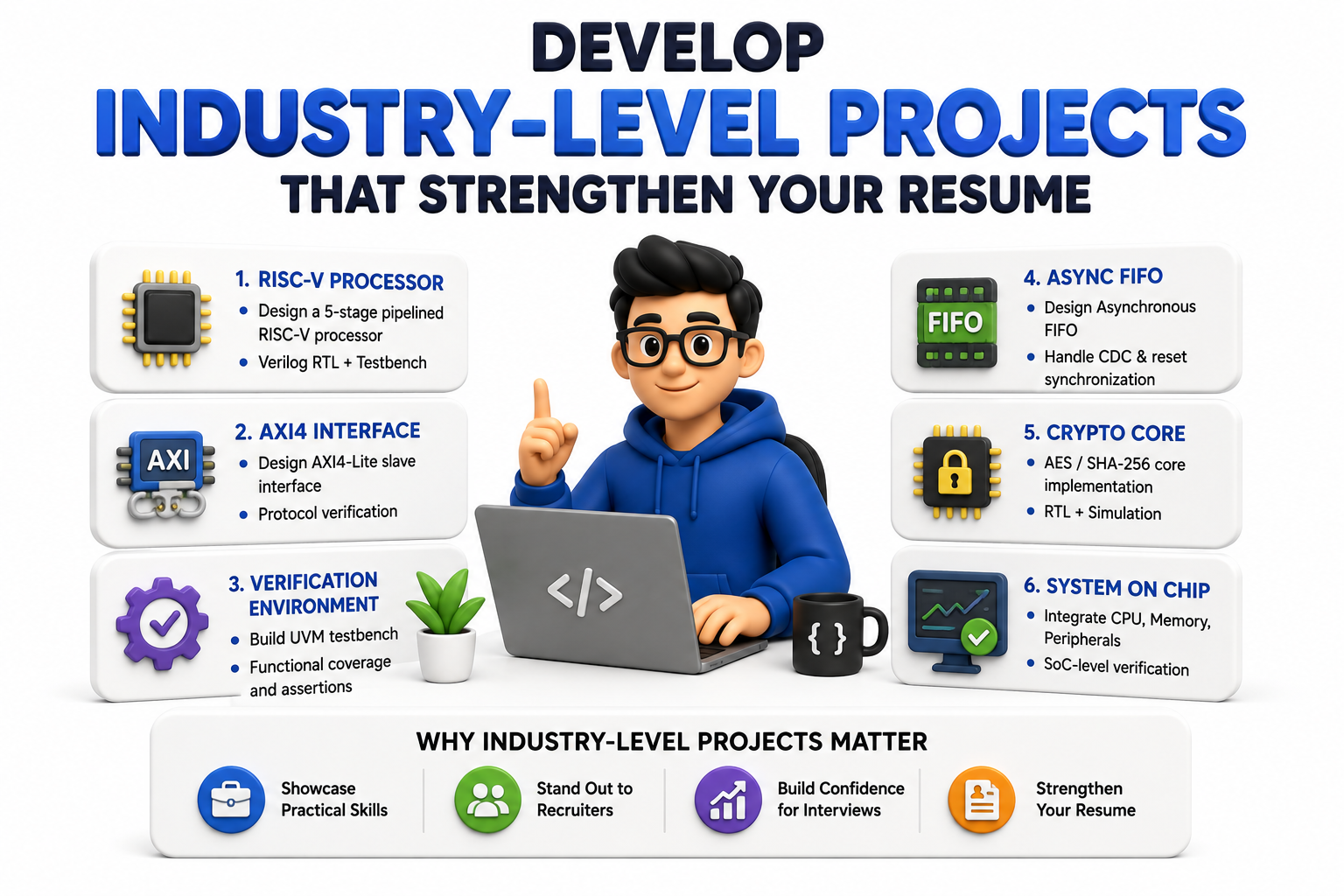
Projects often determine whether a resume gets shortlisted. Recruiters receive thousands of applications, and strong projects provide evidence of technical capability.
Instead of basic academic projects, focus on designs that resemble real industry work.
Examples include:
AXI4 Protocol Implementation
UART Controller Design
SPI Master and Slave Design
RISC Processor Design
Cache Controller Design
DDR Controller Verification
UVM-Based Verification Environment
Asynchronous FIFO with Clock Domain Crossing
Network-on-Chip Components
FPGA-Based Embedded Systems
The quality of the project is often more important than the number of projects. A deeply documented project with simulation results, architecture diagrams, test cases, and GitHub documentation creates a much stronger impression than several incomplete projects.
Whenever possible, explain:
Design objectives
Architecture decisions
Verification methodology
Debugging challenges
Performance improvements
These details become valuable talking points during technical interviews.
Create a Resume That Passes Both Recruiters and ATS Systems
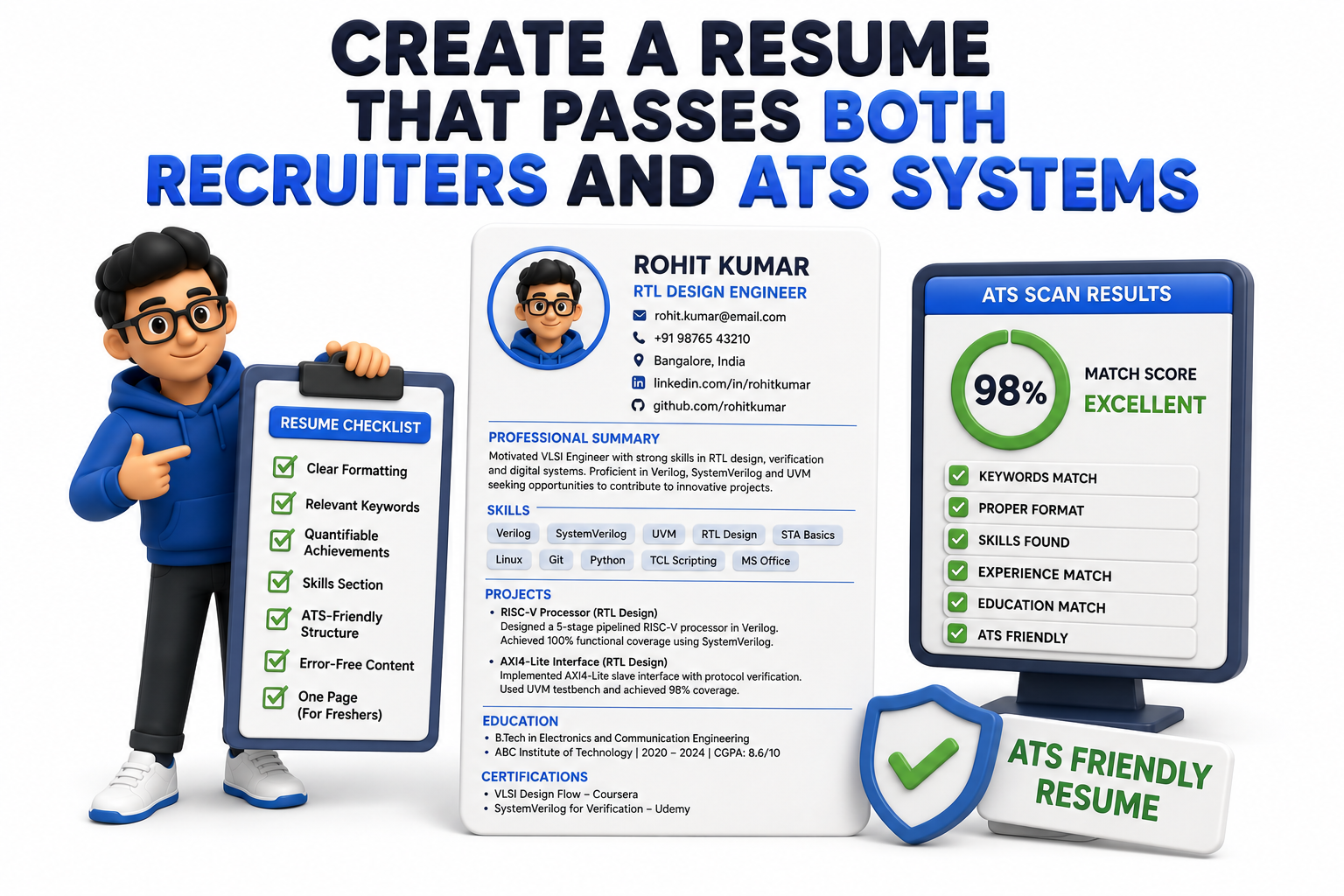
Many qualified engineers are rejected before reaching an interview because their resumes fail applicant tracking systems (ATS) or do not communicate their strengths effectively.
An effective semiconductor resume should emphasize measurable technical skills and practical experience.
Include sections such as:
Professional Summary
Technical Skills
Projects
Internships
Certifications
Education
Publications (if applicable)
Avoid common mistakes such as:
Long paragraphs
Generic objective statements
Excessive graphics
Irrelevant coursework
Unverified skill claims
Recruiters typically spend only a short time reviewing resumes. Clear organization and role-specific keywords can significantly improve visibility.
For example, if applying for verification roles, include terms like:
SystemVerilog
UVM
Assertions
Functional Coverage
Testbench Development
Protocol Verification
For RTL positions, emphasize:
Verilog
FSM Design
Synthesis
Timing Constraints
RTL Optimization
Low-Power Design
A focused resume demonstrates that you understand the role and have prepared specifically for it.
Prepare for Technical Interviews Like an Engineer, Not a Student
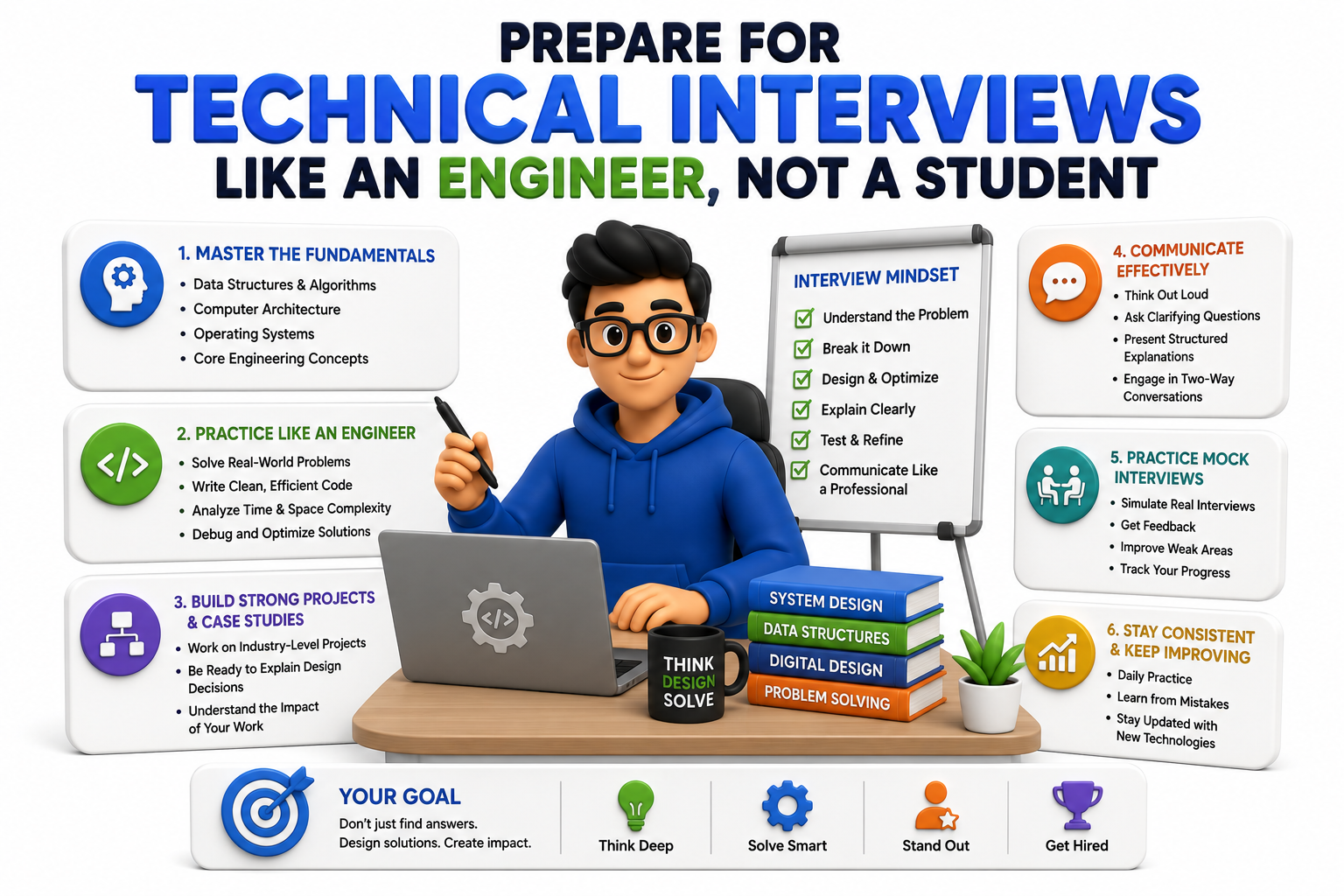
The interview process at Intel, Qualcomm, AMD, NVIDIA, and MediaTek often evaluates analytical thinking more than textbook knowledge.
Interviewers frequently explore how deeply you understand the fundamentals behind your projects and technical skills.
Common technical areas include:
Digital Logic Design
Timing Analysis
Computer Architecture
Verilog/SystemVerilog Coding
Data Structures
Algorithms
Semiconductor Fundamentals
Protocols such as AXI, SPI, I2C, and UART
Verification Methodologies
Embedded Programming
When discussing projects, be prepared to answer questions such as:
Why did you choose this architecture?
What bugs did you encounter?
How did you verify correctness?
What would you improve in the next version?
What performance trade-offs were involved?
Candidates who can clearly explain design decisions generally perform much better than those who only remember theoretical concepts.
Mock interviews, coding practice, design reviews, and technical discussions with peers can significantly improve confidence before actual interviews.
Use Networking, Referrals, and Industry Exposure Strategically
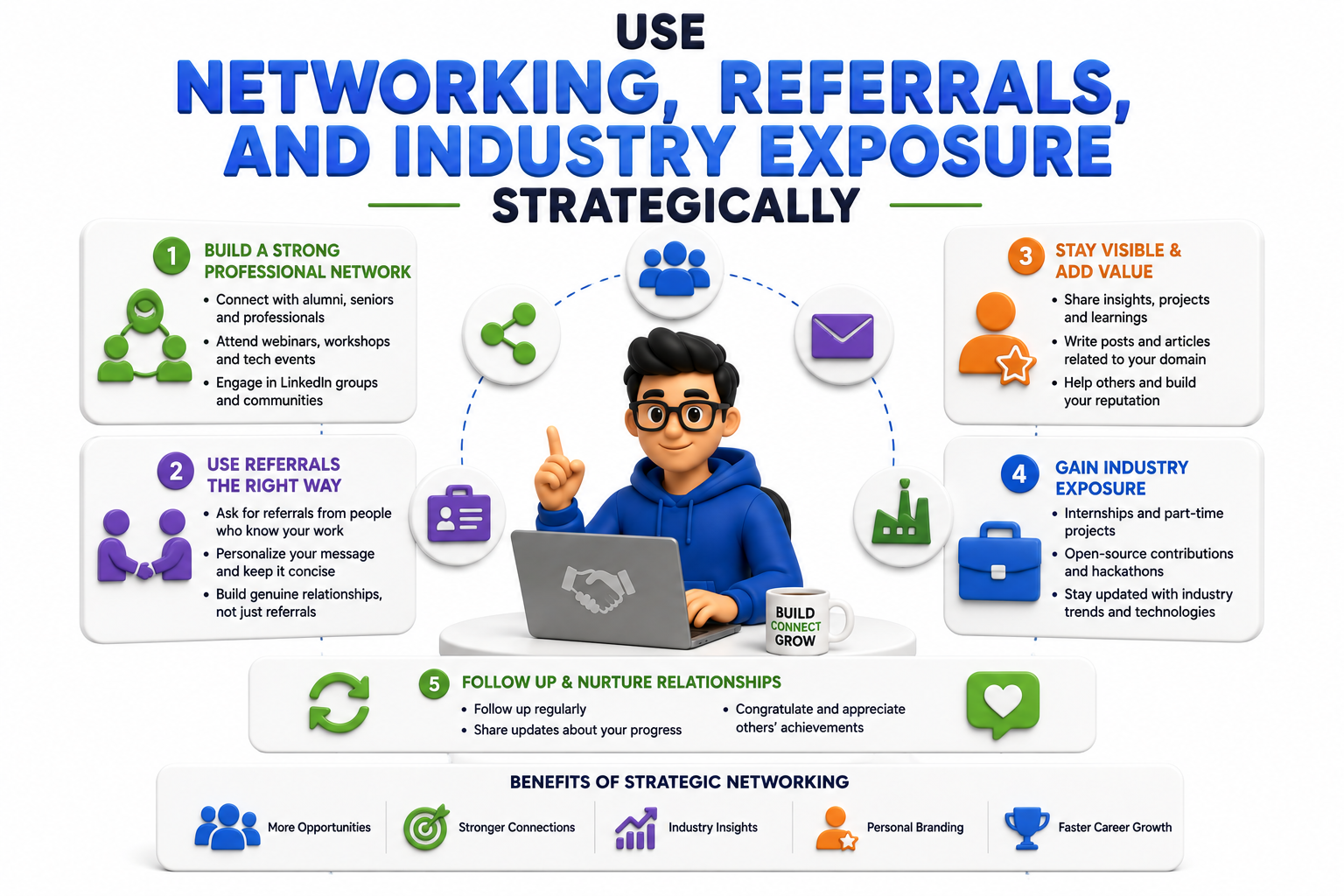
Many engineers underestimate the impact of networking. While referrals do not guarantee selection, they often help resumes receive additional attention.
Effective networking strategies include:
Connecting with engineers on LinkedIn
Participating in semiconductor communities
Attending technical webinars
Joining VLSI conferences and workshops
Contributing to open-source hardware projects
Engaging with engineering forums
Internships also play a major role. Even small semiconductor startups can provide valuable experience that strengthens future applications to larger companies.
Building an online technical presence can further improve visibility. Consider sharing:
Project write-ups
Technical blogs
Verification case studies
FPGA demonstrations
RTL design tutorials
Semiconductor learning experiences
Hiring managers often appreciate candidates who actively contribute to the engineering community and demonstrate continuous learning.
Conclusion
Getting hired at Intel, Qualcomm, AMD, NVIDIA, or MediaTek is not about finding a shortcut. It requires a combination of technical expertise, practical projects, interview preparation, professional networking, and a strong understanding of semiconductor development workflows. Candidates who focus only on academic performance often find themselves competing against applicants who have already built real-world engineering skills.
The most successful engineers approach their preparation strategically. They master the fundamentals, build industry-relevant projects, learn modern tools, optimize their resumes, and consistently improve their technical communication. With the continued growth of AI, advanced computing, automotive electronics, and semiconductor manufacturing, opportunities in the industry are expanding rapidly. By following a structured roadmap and gaining practical experience through platforms such as JasTech, aspiring engineers can significantly increase their chances of securing positions at some of the world's most respected semiconductor companies.