



Master CAESAR II pipe stress analysis: from modeling and load cases to static/dynamic analysis and compliance with industry codes for engineering excellence.
Level
Advanced
Duration
8 weeks
Our Alumni Work At













Jast Tech presents the Caesar II Certification Training, a professional, industry-aligned online program designed for engineers, designers, and piping professionals. This course equips learners with the skills to confidently perform pipe stress analysis using Hexagon’s CAESAR II, the global standard software for evaluating piping system integrity under varied conditions.
Through practical demonstrations, real engineering examples, and progressive lessons, you’ll learn piping fundamentals, 3D modeling techniques, load case generation, support optimization, and results interpretation in CAESAR II. You will also gain hands-on experience with static and dynamic stress analysis, applying international piping codes such as ASME B31.1 and B31.3, and understanding thermal, seismic, wind, pressure and other load effects. The course combines theory with extensive software practice, ensuring you can transform design requirements into compliant stress analysis outputs.
Upon completion, learners receive a certification from Jast Tech, validating your ability to execute professional piping stress workflows with CAESAR II, enhancing your career prospects in oil & gas, power, petrochemical, refinery, and industrial plant sectors.
- Solutions Architect
- Technical Consultant
- Implementation Specialist
- System Administrator
- IT Professional
Caesar II Certification Training Curriculum
Introduction to Pipe Stress & CAESAR II
Foundations of pipe stress analysis and an introduction to CAESAR II interface, tools, and workflow.
Piping System Modeling
Build accurate 3D pipe models using nodes, pipe runs, and properties.
Load Cases & Support Definition
reparation of load cases including sustained, thermal, and various external loads.
Static Stress Analysis
Execute and interpret static stress results per code requirements.
Dynamic Stress Analysis
Understand dynamic effects and perform time history, modal, and response spectrum analyses.
Related Courses
Training Roadmap
Seven intentional milestones — from first session to dream job.
Onboarding
- Meet your industry mentor
- Define your goals
- Skill gap assessment
Core Learning
- Live interactive classes
- AI-curated content
- Recorded sessions
Hands-on Practice
- Weekly assignments
- MCQ evaluations
- Module quizzes
Real Projects
- 3 live industry projects
- Portfolio building
- Case studies
Mentorship
- 1:1 doubt sessions
- Peer collaboration
- Expert feedback
Certification
- Exam preparation
- Practice dumps
- Industry-recognised certificate
Career Launch
- Resume crafting
- Mock interviews
- Job placement support
Key Projects
Available Course Schedules
Select a schedule that works best for you
Starts
10 Oct 2026
Time
09:30 AM – 12:30 PM
Duration
8 weeks
Starts
12 Oct 2026
Time
07:00 AM – 09:00 AM
Duration
8 weeks
Starts
17 Oct 2026
Time
02:00 PM – 05:00 PM
Duration
8 weeks
Starts
19 Oct 2026
Time
08:00 PM – 10:00 PM
Duration
8 weeks
Need a custom schedule?
Our team will craft the perfect batch for you.
What Our Happy Students Say
Real Feedback from our candidates
What We Offer Beyond Courses
24/7 Support
Round-the-clock assistance
LinkedIn Profile
Professional profile building
Resume Writing
Expert resume crafting
Alumni Guidance
Mentorship from graduates
Interview Prep
Mock interviews & tips
Live Projects
Real-world experience
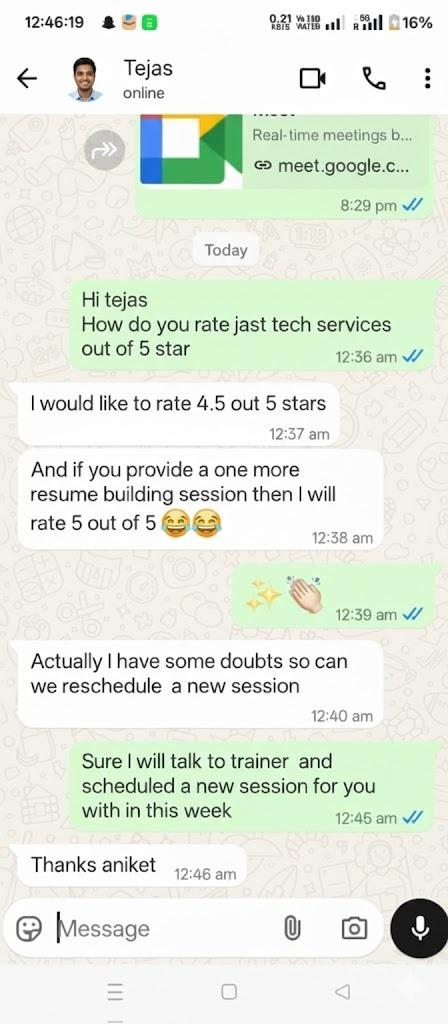
Tejas Kumar
Guidewire Developer • Cognizant
"The practical hands-on scenarios and real-world project assignments made all the difference. I was able to clear the technical interviews on my first attempt."
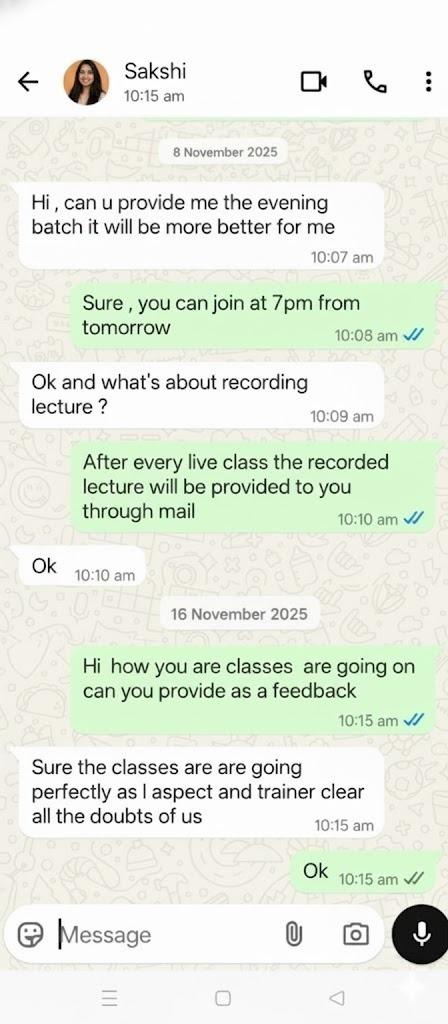
Sakshi Singh
PolicyCenter Specialist • Deloitte
"Excellent mentors with deep industry domain knowledge. The LMS access and 24/7 doubt resolution gave me the confidence to transition into a high-paying role."
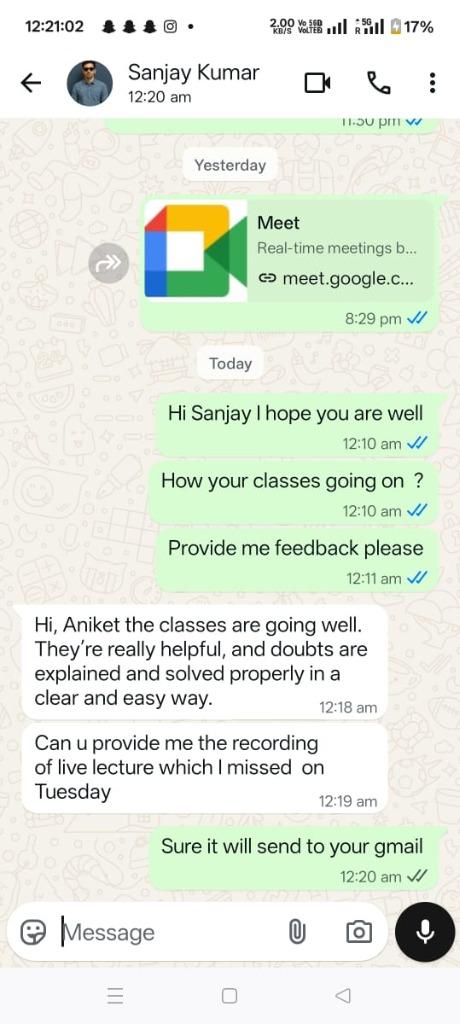
Sanjay Patel
ClaimCenter Consultant • PwC India
"This course completely transformed my career trajectory! From resume review to mock interviews, the placement team supported me every step of the way."
Specialized Training Programs
JastTech For Corporates
JastTech Courses
Why JastTech is the Best Training Institute?
See how we stand out from the competition
Well-structured, up-to-date curriculum designed by industry experts to build strong fundamentals and advanced knowledge.
Outdated or incomplete curriculum that may not cover current industry needs.
Extensive practical sessions, live demos, and hands-on exercises to ensure real learning.
Limited practical exposure with theory-heavy teaching approach.
Learn from certified professionals with years of industry experience and teaching expertise.
Instructors with limited industry experience or practical knowledge.
Work on real-world projects that enhance problem-solving skills and build a strong portfolio.
Lack of real-world projects or unrealistic practice examples.
Regular assignments, quizzes, and assessments to track progress and strengthen concepts.
Irregular assessments or no proper evaluation of learning.
Resume building, interview preparation, and placement assistance to boost your career.
Limited or no career support and placement assistance.
24/7 doubt resolution and personalized guidance from instructors whenever you need it.
Slow doubt resolution or limited support availability.
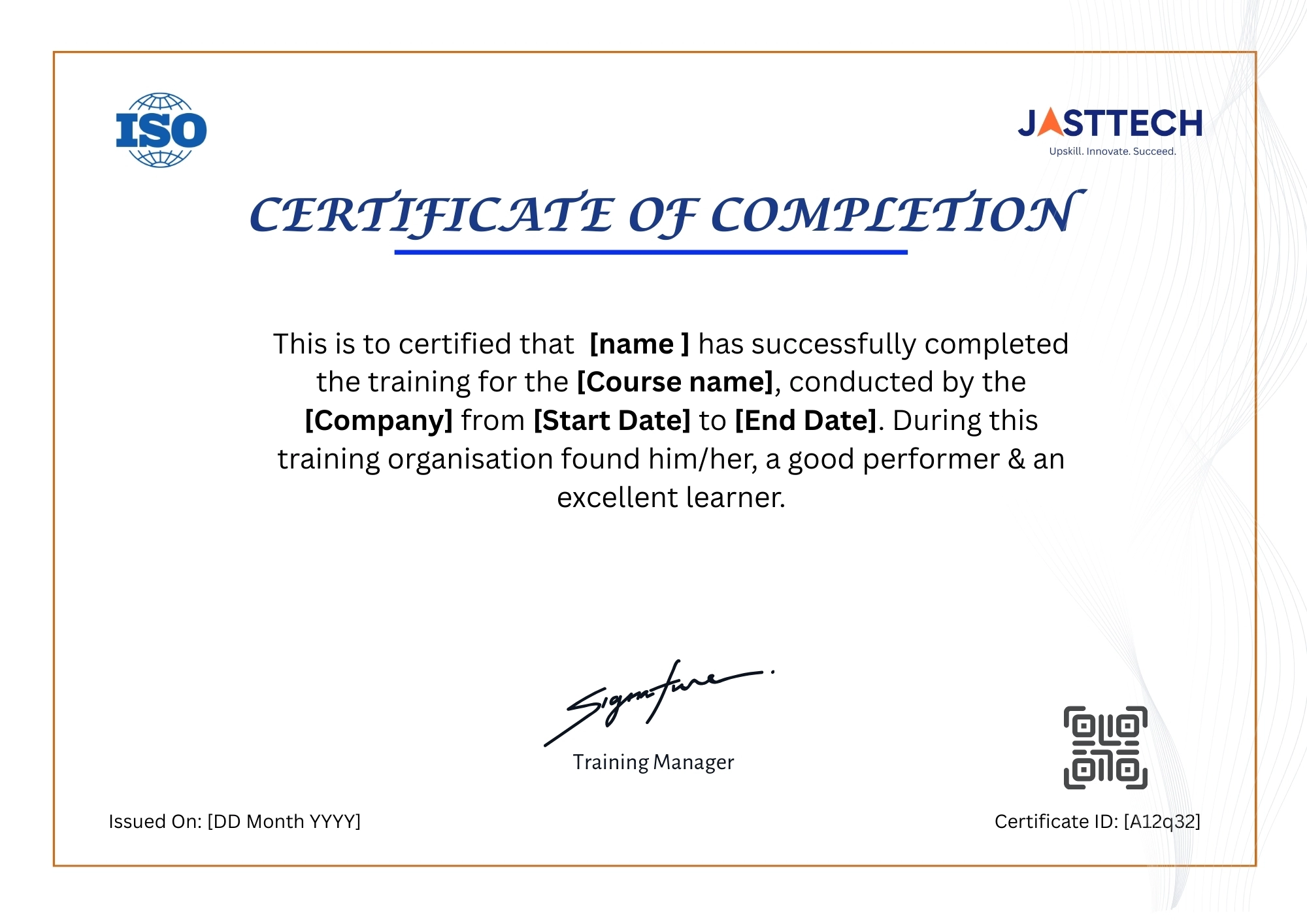
Industry-recognized certificate that validates your skills and enhances your career opportunities.
Certificates with little industry value or recognition.
Lifetime access to course content, recordings, and resources even after completing the course.
Limited access duration with extra charges for resources.
High-quality training at affordable prices with no hidden costs and flexible payment options.
High course fees with hidden charges and no flexibility.
Certification Details
Caesar II Certification Training – Associate
- Exam Name
Caesar II Certification Training – Associate
- Duration
130 minutes
- Format
Multiple Choice & Multi-Response
- Passing Score
720 (Scale: 100–1000)
- Level
Associate
Prepare
Top Interview Questions
Curated questions with expert answers to help you ace your next interview.
Q1: What is the purpose of pipe stress analysis?
To ensure piping systems remain safe, compliant, and free of excessive stresses under operational and environmental loads.
Q2: How do you define a load case in CAESAR II?
Load cases are defined by loading types (pressure, thermal, sustained, occasional) with combinations to simulate real design conditions.
Q3: What’s the difference between static and dynamic analysis?
Static analysis evaluates steady loads, whereas dynamic analysis assesses time-varying or transient loads like vibrations or water hammer.
Q4: How do supports affect stress results?
Supports constrain movement and influence the distribution of forces and stresses; proper selection and placement optimize stress outcomes.
Q5: What codes are used in CAESAR II stress checks?
ASME B31.1 and B31.3 are widely used codes for evaluating allowable stress and design compliance.
Support
Frequently Asked FAQs
Can't find what you're looking for? Reach out to our support team anytime.
Q1: What is CAESAR II?
CAESAR II is a specialized software for conducting pipe stress analysis to evaluate the strength, flexibility, and compliance of piping systems under various loads and conditions.
Q2: Do I need prior engineering experience?
Basic understanding of piping systems and mechanical principles is helpful but the course begins with fundamentals and progresses to advanced topics.
Q3: Will I get a certificate after completion?
Yes. You will receive a certificate from Jast Tech upon successful completion of the course and assessments.
Q4: Which industries use CAESAR II skills?
Industries include oil & gas, petrochemical, power, refinery, chemical processing, and industrial plant engineering.
Q5: Is CAESAR II software included?
CAESAR II software license is usually not included; learners should have access to the software to practice exercises.
The support team was very cooperative and responsive. They made sure all doubts were cleared without delay. Great experience overall.
I had a great experience with the RF Circuit Design course. Thanks to the teaching staff for such a well planned and structured curriculum it really helped me clear my technical certification for my job.
I enrolled in the Post-Silicon Validation Certification Training at JastTech and found it quite different from typical courses. They focus on debugging techniques and real chip-level scenarios, which gave me a better idea of how things work.
One thing I really liked about the Data Analyst course at JastTech is their focus on consistency. Regular sessions and tasks help you stay on track and build a daily learning habit. Also, they provide recordings after live sessions, which help in revision.
I joined JastTech for the DFT course a few months back. At first, I wasn’t sure what to expect, but the classes turned out to be really helpful. The teaching is simple and not too complicated, which helped me keep up.
Take the Next Step in Your Career
Join thousands of learners who have upgraded their skills with our industry-focused training programs. Our experts are here to guide you every step of the way.
We're Here to Help –
Reach Our Global Offices
Hyderabad
JastTech
Training & Development Center
91 Springboard Business Hub ,Madhapur LVS Arcade, 71, Jubilee Enclave, HITEC City, Hyderabad,India Telangana 500081
Pune
JastTech
Training & Development Center
Sr. No. 30/2/1, 3rd Floor, Above Rajrshi Shahu Bank & BOB Balaji Nagar, Dhankawadi, Katraj, Pune, Maharashtra 411043
Noida
JastTech
Training & Development Center
B 8, B Block, Sector 2, Noida, Metro Station Rd, near sector 15 Metro, Uttar Pradesh 201301
Hyderabad
JastTech
Training & Development Center
91 Springboard Business Hub ,Madhapur LVS Arcade, 71, Jubilee Enclave, HITEC City, Hyderabad,India Telangana 500081
Pune
JastTech
Training & Development Center
Sr. No. 30/2/1, 3rd Floor, Above Rajrshi Shahu Bank & BOB Balaji Nagar, Dhankawadi, Katraj, Pune, Maharashtra 411043
Noida
JastTech
Training & Development Center
B 8, B Block, Sector 2, Noida, Metro Station Rd, near sector 15 Metro, Uttar Pradesh 201301
Can't find a JastTech location near you? Contact us for more information.